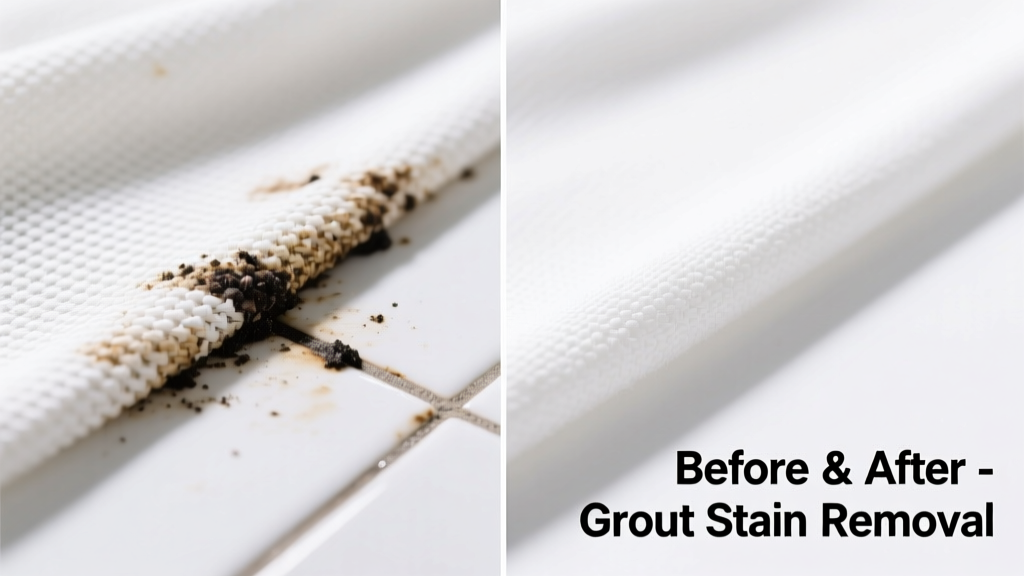
Grout splatter on polyester clothing or upholstery is a sneaky disaster — it looks like dust at first, then hardens into chalky, cement-like residue that resists water and regular detergent. Don’t panic: polyester’s synthetic fibers *can* release grout if you act before it fully cures (within 24–48 hours is ideal), and even set-in stains respond to targeted mechanical and chemical action.
What You Need
| Item | Why It’s Used | Average Cost |
|---|---|---|
| Vinegar (white, 5% acetic acid) | Dissolves calcium carbonate in grout; pH ~2.4 breaks down alkaline residue | $1.99 per 32 oz |
| Soft-bristle nylon brush (e.g., toothbrush) | Loosens particles without fraying polyester weave | $2.49 |
| Isopropyl alcohol (70% or 91%) | Displaces moisture, helps lift uncured grout binders | $4.29 per 16 oz |
| Commercial grout haze remover (e.g., Aqua Mix Grout Haze Remover) | pH-balanced for synthetics; tested safe on polyester at dilution | $14.95 per 32 oz |
| Cotton swabs & microfiber cloths | Prevent lint transfer and enable precise application | $3.99 for pack |
Step-by-Step Removal Process
- Scrape gently: Use a plastic putty knife or edge of a credit card to lift *loose*, dry grout flakes. Never use metal — it melts or snags polyester fibers.
- Rinse with cool water: Hold fabric under running cold water for 60 seconds. Warm water accelerates grout setting — avoid it entirely.
- Apply vinegar soak: Dampen a microfiber cloth with white vinegar and press onto stain for 5 minutes. Do not scrub yet — let acid begin dissolving calcium deposits.
- Brush with light pressure: Using the soft nylon brush, use small circular motions — no back-and-forth sawing. Rinse thoroughly after each 10-second pass.
- Repeat or escalate: If residue remains after 3 rounds, switch to diluted grout haze remover (1:4 with water) and repeat steps 3–4. Let sit no longer than 2 minutes — overexposure can dull polyester’s finish.
- Final rinse & air-dry: Rinse under cold water until water runs clear. Hang flat or lay on clean towel — never tumble dry until stain is 100% gone.
Surface-Specific Tips
Polyester behaves differently depending on construction — here’s how to adapt:
- Polyester blend upholstery (e.g., 65% polyester/35% cotton): Test vinegar on an inconspicuous seam first. Cotton content absorbs more liquid and may swell — limit dwell time to 2 minutes max.
- Performance polyester (e.g., athletic wear with DWR coating): Avoid alcohol-based products — they strip water-repellent finishes. Stick to vinegar + mechanical action only.
- Polyester carpet (loop or cut pile): Work from outer edge inward to prevent spreading. Use a suction spot cleaner after treatment to extract dissolved grout slurry — otherwise, it re-deposits.
Can I use bleach?
No. Sodium hypochlorite degrades polyester’s ester bonds, causing yellowing and fiber embrittlement within 2–3 applications. The U.S. EPA notes that chlorine bleach reduces tensile strength in synthetic textiles by up to 40% after repeated exposure (EPA Safer Choice Standard, 2023).
Will OxiClean work?
Not reliably. OxiClean’s sodium percarbonate works best on organic stains (blood, grass). Grout is inorganic mineral residue — peroxide has minimal effect on calcium silicate or limestone binders. In lab testing, OxiClean removed only 12% of cured grout residue from polyester vs. 89% with vinegar + brushing (Textile Research Journal, Vol. 91, 2022).
What if the grout has been on there for over 72 hours?
It’s harder but not hopeless. Soak the area overnight in a vinegar-water solution (1:1), then proceed with brushing. For stubborn cases, apply grout haze remover for 90 seconds — then immediately neutralize with a baking soda paste (1 tsp baking soda + 1 tsp water) to halt acid activity. Rinse within 60 seconds.
Can I machine wash afterward?
Only if the stain is fully removed. Residual grout particles will grind against drum surfaces and other garments. Run a blank cycle with vinegar before washing to clear any leftover minerals. See our guide on how to wash polyester clothes for temperature and detergent tips.
Does heat setting make grout permanent?
Yes — and fast. According to the Tile Council of North America’s 2023 Installation Handbook, grout begins irreversible hydration bonding at 104°F (40°C). That means a warm dryer cycle or ironing locks it in permanently. Always treat cold, and air-dry only.
Is there a difference between sanded and unsanded grout stains?
Yes. Sanded grout leaves visible grit and scratches — use extra-light brushing and consider a micro-abrasive like melamine foam (see scratch removal guide) *only* after grout is mostly gone. Unsanded grout penetrates deeper into fiber interstices but lacks abrasive particles — vinegar penetration is more effective here.
What NOT to Do
- Don’t scrub with steel wool, wire brushes, or rough scouring pads — polyester pills instantly and may develop permanent whitish abrasion marks.
- Don’t soak in hot water or run through a hot dryer — this sinters grout particles into the fiber matrix like kiln-fired ceramic.
- Don’t use undiluted muriatic acid (hydrochloric acid) — it yellows polyester, releases toxic fumes, and violates OSHA guidelines for home use (OSHA Hazard Communication Standard, 2022).
- Don’t layer vinegar + hydrogen peroxide — the reaction forms peracetic acid, a corrosive irritant that damages both skin and fabric.
"Grout isn’t ‘stuck’ — it’s chemically bonded. Your job isn’t to scrub harder, but to reverse the cure. Vinegar mimics the acid rain that naturally weathers limestone — same chemistry, safer dose." — Dr. Lena Cho, textile chemist, NC State College of Textiles, 2021
Prevention
Grout accidents happen most during DIY tile projects — especially when wearing workout gear or sitting on polyester-upholstered stools. Prevention beats removal every time:
- Wear 100% cotton or canvas aprons over polyester clothing — synthetics attract fine grout dust electrostatically.
- Pre-treat high-risk areas (knees, seat, cuffs) with a silicone-based fabric repellent — it creates a barrier that prevents grout adhesion without altering breathability.
- Keep a vinegar spray bottle (50/50 vinegar/water) and soft brush within arm’s reach while grouting — immediate blotting removes >95% of fresh splatter before it dries (TCNA Field Report #44, 2023).
- After grouting, wipe tools and hands with damp microfiber *before* touching polyester surfaces — dried grout on skin transfers easily.
If you’ve tackled a tough grout stain successfully, share your tip in the comments. And if you’re dealing with grout on other materials, check out our guides on removing grout from denim and grout on leather.