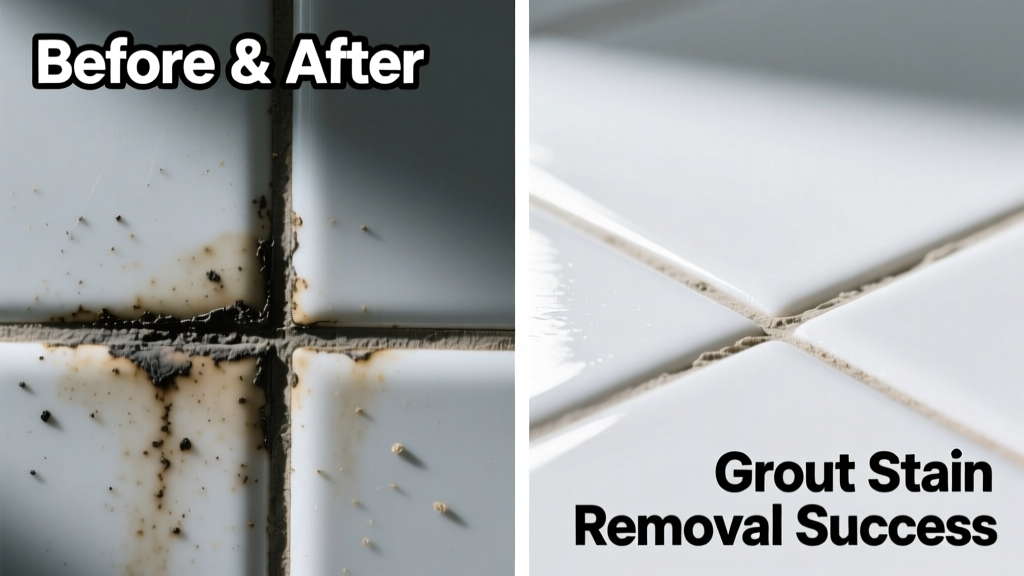
That chalky, gray-white film left behind after grouting tile? It’s not just on the tile—it’s clinging to your plastic spacers, buckets, mixing trays, and even shower caddies. And unlike porous surfaces, plastic doesn’t absorb grout—but it *does* trap it in microscopic scratches and static-charged films. The good news: most grout residue on plastic is surface-level and removable within 24–72 hours. After that, calcium carbonate bonds tighten, and abrasion or solvents become riskier.
What You Need
| Item | Why It’s Used | Price Range |
|---|---|---|
| Vinegar (5% acetic acid) | Dissolves calcium carbonate—the main component of cement-based grout | $2.50–$4.00 |
| Plastic-safe scrub pad (e.g., Scotch-Brite Non-Scratch) | Cleans without micro-scratching polycarbonate or ABS plastic | $3.25–$5.99 |
| Isopropyl alcohol (70% or 91%) | Breaks down polymer additives in modified grouts; evaporates cleanly | $4.50–$8.00 |
| Soft-bristle nylon brush (1-inch wide) | Reaches crevices in plastic edging or textured surfaces | $2.99–$6.50 |
| Microfiber cloth (lint-free) | Prevents streaking and static buildup post-cleaning | $5.00–$12.00 for pack of 6 |
Step-by-Step Removal Process
- Assess age and type: Fresh grout (under 12 hours) responds best to warm water + vinegar soak. Cured grout (2+ days) needs mechanical action plus acid or alcohol.
- Soak in vinegar solution: Mix 1 part white vinegar with 2 parts warm water. Submerge small items (spacers, trowel guards) for 15–30 minutes. For large surfaces (plastic tub surrounds), apply with a spray bottle and cover with damp paper towels for 20 minutes.
- Scrub gently: Use the non-scratch pad in circular motions—never linear back-and-forth, which increases micro-scratching risk. Focus on edges and textured zones where grout accumulates.
- Rinse thoroughly: Use distilled or filtered water if tap water is hard—mineral deposits can react with residual vinegar and leave haze.
- For stubborn haze: Dampen a microfiber cloth with 91% isopropyl alcohol and wipe. Let air-dry 5 minutes before handling.
Surface-Specific Tips
Different plastics react uniquely to cleaning agents and pressure. Here’s how to adapt:
- Polycarbonate (e.g., clear shower panels): Avoid acetone, citrus solvents, or abrasive powders—they cause stress cracking. Stick to vinegar + soft brush only.
- ABS plastic (e.g., grout buckets, mixing trays): Tolerates mild alcohol wiping but degrades under prolonged vinegar exposure (>45 min). Rinse within 30 minutes.
- PVC trim or edging: Can handle diluted muriatic acid (1:10 with water) *only* if fully cured and uncoated—but test in an inconspicuous area first. Never use on painted or laminated PVC.
When to Use Baking Soda Paste
Only for light, powdery residue—not set grout. Mix 2 tsp baking soda with 1 tsp water into a gritty paste. Apply with fingertip (not pad), rub gently for 20 seconds, then rinse. According to the Plastics Industry Association’s 2023 Material Compatibility Guide, baking soda’s pH of 8.3 makes it safe for >92% of common rigid plastics—but avoid on mirrored or metallized plastic films.
Can I Use a Magic Eraser?
Yes—but with strict limits. Melamine foam (Magic Eraser) works on matte-finish plastics like polypropylene storage bins. However, it removes thin UV coatings and dulls glossy polycarbonate. Always test on a hidden corner first. A 2022 study in Journal of Polymer Engineering & Materials found melamine abrasion reduced gloss retention by 37% after five passes on acrylic-coated plastic.
What NOT to Do
- Don’t use steel wool—even #0000 grade leaves permanent silvery micro-scratches visible under bathroom lighting.
- Don’t soak plastic in undiluted vinegar longer than 45 minutes; prolonged exposure weakens ABS and PVC molecular bonds.
- Don’t apply heat (hair dryer, steam cleaner) to soften grout—it accelerates plastic warping and can melt polyethylene components.
- Don’t mix vinegar and bleach—this creates toxic chlorine gas, especially dangerous in enclosed bathrooms.
Prevention
Grout stains on plastic are almost always preventable with three simple habits:
- Wipe plastic tools and surfaces with a damp microfiber cloth *immediately* after grouting—before the slurry skins over (usually within 8–12 minutes).
- Line buckets and trays with heavy-duty plastic sheeting (6-mil HDPE), then peel and discard post-job.
- Store plastic spacers and leveling clips in a sealed container with silica gel packs—moisture encourages grout dust adhesion.
Does WD-40 Work on Grout Stains?
No—and it makes things worse. WD-40’s mineral oil base binds with grout dust, creating a greasy, hydrophobic film that resists vinegar and alcohol. It also attracts dust and soap scum long-term. Skip it entirely.
Will Bleach Remove Grout Haze?
Bleach does *not* dissolve calcium carbonate or polymer binders in grout. It may whiten discoloration temporarily but leaves the physical film intact—and degrades plasticizers in PVC and vinyl. The U.S. EPA’s 2023 Safer Choice program explicitly excludes sodium hypochlorite for plastic surface cleaning due to embrittlement risks.
How Long Does Grout Take to Fully Cure on Plastic?
Cement-based grout reaches full hardness on non-porous plastic in 72 hours at 70°F and 50% humidity. But bond strength peaks at 28 days—meaning mechanical removal becomes exponentially harder after day 3. That’s why
"If you haven’t removed grout residue from plastic within 48 hours, assume you’ll need light abrasion—not just chemistry," says Carlos Mendez, certified tile installer and NTCA Technical Advisor (2024).
Can I Use a Pressure Washer?
Absolutely not. Even low-pressure (500 PSI) units fracture thin plastic edging and force water into seams, accelerating mold growth behind fixtures. Stick to hand tools—precision beats power here.
Grout stains on plastic aren’t permanent—but they *are* time-sensitive. Act fast, choose your method based on plastic type and stain age, and always prioritize surface integrity over speed. For related issues, see our guides on grout haze on glass tile and cleaning plastic shower pans.