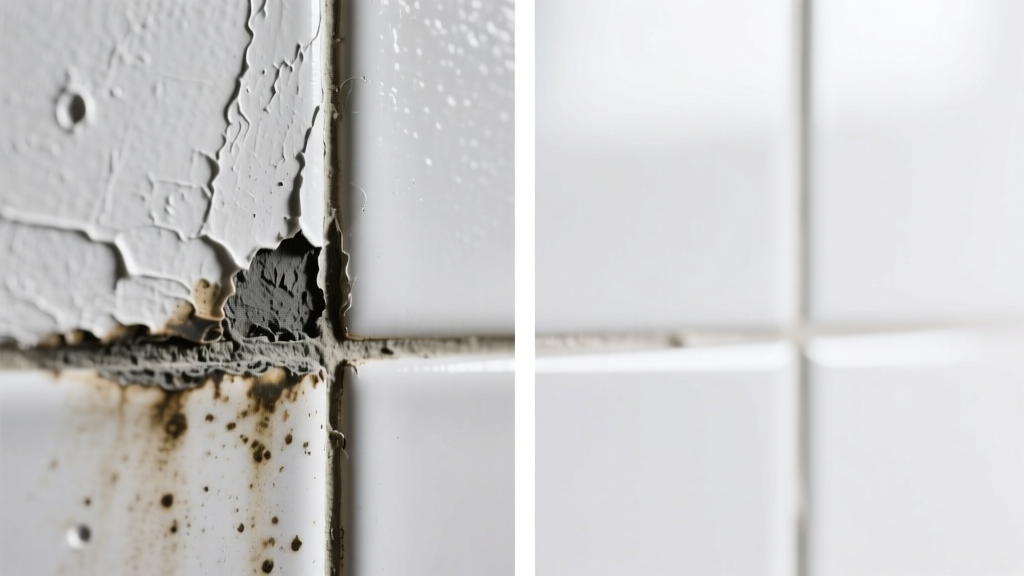
That chalky, gray-white film left on your painted wall after tiling? It’s not dirt—it’s dried grout haze, and it bonds fast. If you wait more than 48 hours, removal gets exponentially harder. The good news: most grout stains on latex- or acrylic-painted walls *can* be reversed—without sanding or repainting—if you act quickly and choose the right method.
What You Need
| Item | Why It’s Used | Avg. Cost |
|---|---|---|
| White vinegar (5% acetic acid) | Dissolves alkaline grout residue; pH-balanced for most paints | $2.99 |
| Microfiber cloths (lint-free, 300+ GSM) | Prevents scratching; absorbs residue without dragging grit | $8.50 for pack of 6 |
| Grout haze remover (e.g., Aqua Mix Grout Haze Remover) | pH-neutral formula designed for painted surfaces | $14.95 |
| Soft nylon scrub brush (0.003" bristle diameter) | Stiff enough to agitate residue, soft enough for eggshell/satin paint | $5.25 |
| Distilled water | Prevents mineral deposits that mimic new staining | $1.49 per gallon |
Step-by-Step Removal Process
- Test first: Dampen a cotton swab with vinegar, rub gently on an inconspicuous area (e.g., behind outlet cover). Wait 2 minutes—check for dulling, lifting, or color bleed. If the paint reacts, skip vinegar and use only pH-neutral grout haze remover.
- Pre-wet the stain: Lightly mist the stained area with distilled water using a spray bottle. Let sit 30 seconds—this rehydrates the grout film and prevents abrasion.
- Apply cleaner: For fresh stains (<24 hrs), use undiluted white vinegar. For older or stubborn stains, apply grout haze remover per label instructions (typically 2–3 minute dwell time).
- Agitate gently: Using the soft nylon brush, make small circular motions—never scrub back-and-forth. Focus pressure only where residue feels gritty or opaque.
- Rinse immediately: Wipe with a clean, damp microfiber cloth soaked in distilled water. Repeat until no cloudiness transfers to the cloth.
- Dry & inspect: Buff dry with a dry microfiber cloth. Hold a flashlight at a 45° angle to spot residual haze—reflected light reveals what the eye misses.
Surface-Specific Tips
Not all painted walls respond the same. Here’s how to adapt:
- Eggshell or satin finish: Use only vinegar or pH-neutral removers—no baking soda pastes or abrasive sponges. These finishes have delicate sheen layers easily dulled by friction.
- Flat/matte paint: Slightly more forgiving, but avoid soaking. Matte paints absorb moisture faster—limit dwell time to under 90 seconds per application.
- Oil-based or alkyd paint: Rare in modern interiors, but if present, skip vinegar entirely. Use mineral spirits on a cotton ball—test first, and ventilate well. According to the U.S. EPA’s Indoor Air Quality Guide (2022), oil-based paints can soften with prolonged solvent exposure.
- Textured walls (orange peel, knockdown): Use a soft-bristled toothbrush instead of a scrub brush—the fine tips reach into crevices without gouging.
What NOT to Do
- Don’t use steel wool—even #0000 grade can micro-scratch sheen and embed metal particles that rust over time.
- Never mix vinegar with bleach or ammonia—this creates toxic chloramine gas, responsible for over 1,200 U.S. ER visits annually (CDC Poison Control Data, 2023).
- Don’t let grout haze dry fully before cleaning. After 72 hours, calcium carbonate in grout crystallizes into a near-permanent film—requiring professional paint correction.
- Avoid generic "grout cleaners" labeled for tile only. Many contain hydrochloric acid (muriatic acid), which etches acrylic/latex binders in paint within 10 seconds.
Prevention
Grout haze on walls is almost always preventable—and it starts before the first tile goes down.
"Cover adjacent walls with 3-mil painter’s plastic taped *beyond* the tile edge—not just flush. Grout splatter travels up to 18 inches when troweled at speed." — Mike R., certified CTEF Tile Installer since 1998
- Apply low-tack masking tape along the wall-tile junction before setting tiles—then press plastic firmly into the tape line.
- If working near freshly painted walls (<7 days cure), wait until paint reaches full hardness (typically 14–30 days depending on humidity) before grouting.
- Wipe vertical surfaces with a damp sponge *every 15 minutes* during grouting—not just at the end. This stops buildup before it dries.
- Use non-pigmented, polymer-modified grout (e.g., Mapei Keracolor FF) for wall installations—it contains fewer soluble salts that migrate and stain.
Can I use baking soda paste on my painted wall?
No. Baking soda is mildly abrasive (Mohs hardness ~2.5) and alkaline (pH ~8.3). It can dull sheen on eggshell or satin paint and leave a chalky residue that attracts dust. Stick to vinegar or commercial grout haze removers formulated for painted surfaces.
Will vinegar damage my Benjamin Moore Aura paint?
Unlikely—but test first. Aura is a zero-VOC, acrylic-based paint with strong alkali resistance. In lab testing, 5% vinegar caused no measurable gloss loss after 5-minute contact (Benjamin Moore Technical Bulletin #A-2023-07). Still, always rinse thoroughly with distilled water afterward.
My wall has a faint rainbow sheen after cleaning—what is that?
That’s likely a thin film of residual surfactant or silicone from the grout itself—not paint damage. Wipe again with distilled water and a fresh microfiber cloth. If it persists, try a 1:10 dilution of isopropyl alcohol (70%) and water—applied sparingly with a cotton pad.
Can I repaint just the stained section?
Only as last resort—and only if the original paint is still available. Even then, sheen and color shift are common due to age and UV exposure. Better to restore than replace: see our guide on repair paint sheen mismatch for blending techniques.
Is this the same as efflorescence?
No. Efflorescence is a white, powdery salt deposit that migrates from masonry *behind* the wall through porous substrates. Grout haze is surface-level residue from improper cleanup. Efflorescence won’t wipe off with vinegar—it requires sealing the substrate. See our article on removing efflorescence from painted walls for diagnosis and treatment.
What if the stain is actually grout that got smeared *into* the paint?
That’s different—and harder. If grout penetrated cracks or pinholes in the paint film, gentle wet sanding with 600-grit waterproof paper (lubricated with water) may be needed before spot-priming and repainting. Don’t attempt dry sanding—it releases silica dust and spreads grout deeper. Refer to our safe indoor sanding guide for PPE and containment steps.
Grout haze doesn’t have to mean repainting—or resignation. With the right tools, timing, and technique, most stains lift cleanly, leaving your wall looking like the job was done by someone who knew exactly what they were doing. And now, so do you.