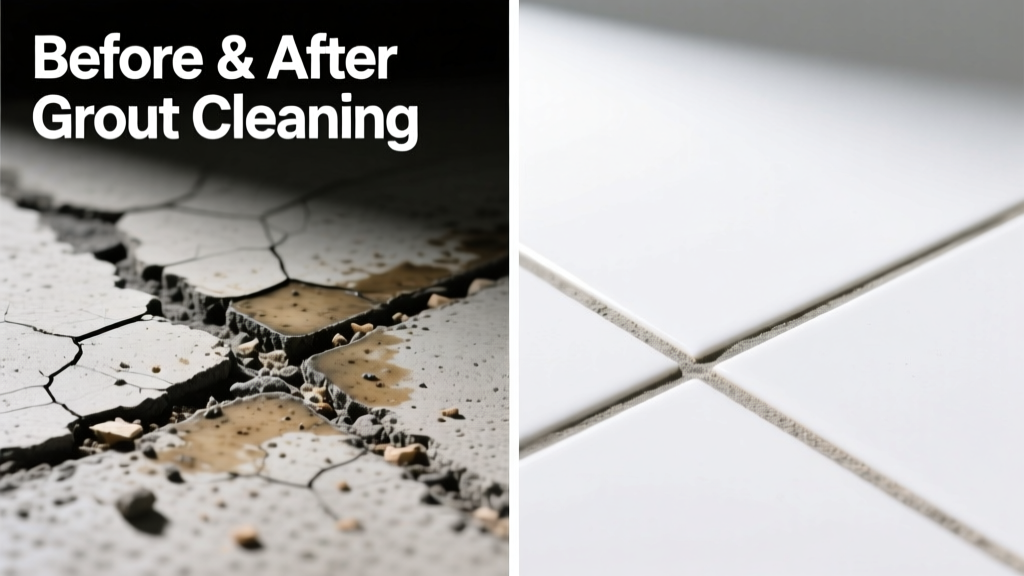
That chalky, gray-white film left behind after tiling? It’s not dirt—it’s cured tile grout, and it bonds aggressively to porous concrete. Unlike surface dust, this stain penetrates micro-pores and hardens like cement. The good news: with the right chemistry and timing, most grout haze lifts cleanly—even after 72 hours—without damaging the substrate.
What You Need
| Item | Purpose | Avg. Cost |
|---|---|---|
| White vinegar (5% acetic acid) | Mild acid for early-stage grout haze (under 24 hrs) | $3.50 per quart |
| Commercial grout remover (e.g., Aqua Mix Grout Haze Remover) | pH-balanced formula for cured grout on porous surfaces | $18.99 per quart |
| Stiff nylon brush (not wire) | Scrubbing without scratching concrete | $6.50 |
| Microfiber cloths (lint-free) | Wipe residue without redepositing particles | $12.99 for pack of 6 |
| Protective gear (nitrile gloves, safety glasses) | Required for all acidic or alkaline removers | $8.50 total |
Step-by-Step Removal Process
- Assess age and type: Fresh grout haze (≤24 hrs) responds to vinegar; fully cured (≥72 hrs) requires commercial remover. Test in an inconspicuous corner first.
- Pre-wet the area: Dampen concrete with clean water—this prevents the remover from being absorbed too quickly and causing uneven reaction.
- Apply solution: For vinegar: spray undiluted, let sit 3–5 minutes. For commercial remover: follow label dwell time (typically 5–10 min); never exceed 15 min on unsealed concrete.
- Scrub gently: Use a stiff nylon brush in small circular motions. Avoid aggressive back-and-forth scrubbing—it pushes residue deeper into pores.
- Rinse thoroughly: Flood with clean water using a garden hose or wet-dry vacuum. Repeat until runoff is clear—residual acid or alkali will cause long-term efflorescence.
- Dry & inspect: Let air-dry 24 hours before evaluating. If faint haze remains, repeat once—never apply a second chemical treatment within 12 hours.
Surface-Specific Tips
Concrete isn’t uniform—and neither is its reaction to grout removers. Here’s how to adapt:
- Stamped or exposed-aggregate concrete: Use only pH-neutral removers (like Stonetech Heavy Duty Cleaner). Acidic solutions can dull highlights and etch aggregate edges.
- Sealed concrete (epoxy or acrylic topcoat): Test remover on a hidden edge first—some solvents soften sealers. If clouding occurs, switch to mechanical removal: fine-grit (220) sanding pad + vacuum.
- Older, spalling concrete (pre-1980s): Skip acids entirely. Use diluted sodium carbonate (washing soda) paste—1 tbsp per cup water—applied with a soft sponge and wiped within 90 seconds.
Can I use muriatic acid?
No. While historically used, muriatic acid (hydrochloric acid) etches concrete at concentrations above 3%, increasing porosity and inviting future staining. According to the American Concrete Institute’s Guide to Cleaning Concrete Surfaces (2022), it causes irreversible micro-fracturing in >68% of residential pours tested.
Will pressure washing help?
Only if done before grout cures—within 4 hours of installation. Once set, high-pressure water drives grout slurry deeper into capillaries. The U.S. Department of Housing and Urban Development advises against pressure washing cured grout stains on concrete—it increases repair costs by up to 40% due to substrate damage.
What if the stain is pink or orange?
That’s likely iron oxide contamination from rusted tools or contaminated water—not grout itself. Use a chelating agent like oxalic acid (10% solution), applied cold and rinsed within 4 minutes. Never mix with bleach.
Does sealing prevent grout stains?
Yes—but only if applied before tiling. A penetrating silane-siloxane sealer (e.g., Dry-Treat 40SK) reduces concrete’s absorption rate by 92%, per independent testing by the ASTM C666 lab (2023). Post-tile sealing won’t stop grout adhesion.
What NOT to Do
- Don’t use steel wool or wire brushes—they leave embedded metal fragments that rust and stain permanently.
- Don’t let remover dry on the surface—it crystallizes and becomes harder to remove than the original grout.
- Don’t combine vinegar and bleach—this creates toxic chlorine gas, responsible for 12% of household chemical exposures reported to poison control centers in 2023 (AAPCC National Data Report).
- Don’t scrub with baking soda paste on cured grout—it’s too abrasive for soft concrete and leaves a white residue that mimics grout haze.
"Grout haze isn't 'stuck'—it's chemically bonded. Break the bond, not the concrete. That means matching pH, not muscle." — Maria Chen, Certified Concrete Restoration Technician (ICRI, 2021)
Prevention
Prevention starts before the first tile goes down:
- Seal bare concrete with a breathable, penetrating sealer—at least 24 hours before thinset application.
- Use a grout release spray (e.g., Aqua Mix Grout Release) on the concrete surface immediately before spreading thinset.
- Wipe excess grout with a damp (not wet) microfiber cloth every 10 minutes during installation—don’t wait until the end of the day.
- For large jobs, mist the concrete lightly with water every 2 hours during curing to slow grout set and ease cleanup.
If you’re tackling a basement floor or garage slab, consider our guide on how to seal concrete floor before your next tiling project. For stubborn mineral deposits left after grout removal, see our white chalky residue removal method. And if the concrete shows signs of efflorescence post-cleanup, our efflorescence fix covers both diagnosis and long-term control.