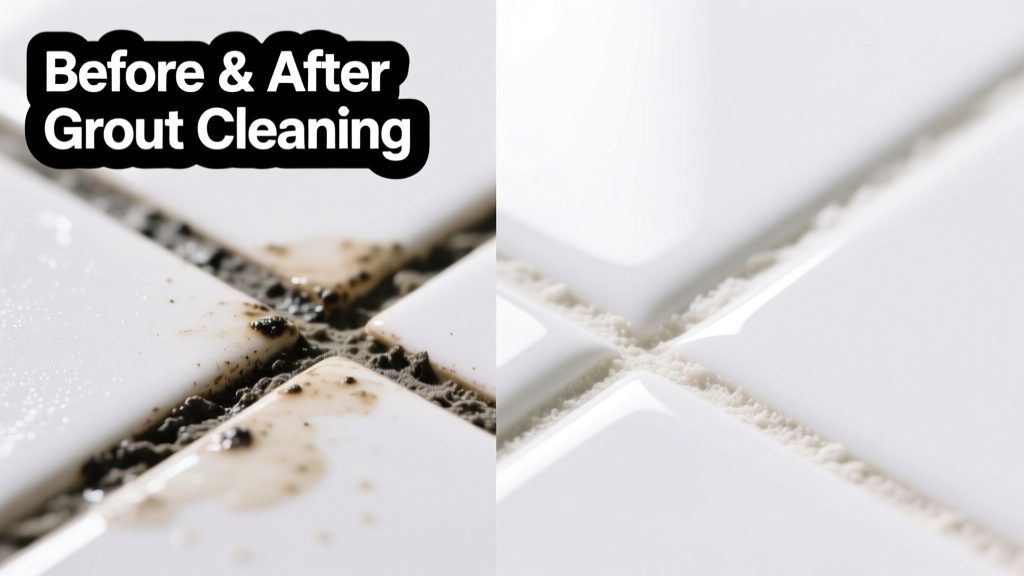
Grout stains—especially those stubborn gray or yellow discolorations near showers or kitchen backsplashes—feel like a betrayal of your cleaning efforts. They’re not dirt; they’re embedded pigment, mildew, or mineral deposits that resist scrubbing. The good news? Most grout stains *can* be reversed without regrouting—if you act before they oxidize or penetrate deeply.
What You Need
| Item | Purpose | Avg. Cost |
|---|---|---|
| Oxygen bleach powder (e.g., OxiClean MaxForce) | Breaks down organic stains without chlorine damage | $12–$18 |
| White vinegar (5% acidity) | Dissolves mineral buildup; safe for sealed grout | $3–$5 |
| Soft-bristle grout brush (nylon, stiff but non-scratching) | Agitates stain without gouging | $6–$10 |
| pH-neutral grout sealer (e.g., Aqua Mix Sealer’s Choice Gold) | Post-cleaning protection | $22–$28 |
| Microfiber cloths (lint-free) | Wipe residue without leaving film | $8–$14 for pack of 6 |
Step-by-Step Removal Process
- Test first: Apply your chosen cleaner to a 1-inch section of grout in an inconspicuous area. Wait 10 minutes. If discoloration worsens or the grout softens, stop immediately.
- Dry the area: Use a fan or towel to remove surface moisture—wet grout dilutes cleaners and reduces contact time.
- Apply oxygen bleach paste: Mix 3 parts powder to 1 part warm water into a thick slurry. Spread evenly over stained grout lines with a small spatula or gloved finger. Let sit 15–20 minutes (no longer—overexposure weakens cement binders).
- Scrub gently: Use the grout brush at a 45° angle, working in short back-and-forth motions—not circles—to avoid pushing debris deeper.
- Rinse thoroughly: Flush with distilled water (tap water can redeposit minerals) using a spray bottle, then blot dry with microfiber. Repeat steps 3–5 if staining persists after 24 hours.
- For mineral stains (white chalky residue): Dampen grout with white vinegar, wait 3 minutes, then scrub. Rinse within 5 minutes—vinegar left too long etches cement-based grout.
Surface-Specific Tips
Grout isn’t uniform—and neither is its substrate. What works on bathroom floor tile may ruin your marble shower niche.
- Ceramic & porcelain tile: Safe for oxygen bleach, vinegar, and baking soda pastes. Avoid abrasive pads—even “non-scratch” Scotch-Brite can dull polished glazes over time.
- Natural stone (marble, limestone, travertine): Never use vinegar, lemon juice, or chlorine bleach. Stick to pH-neutral stone cleaners (e.g., StoneTech All Purpose Cleaner) and poultice-grade hydrogen peroxide (3%) mixed with talc.
- Unsealed sanded grout: Absorbs liquids rapidly. Always pre-wet with clean water before applying any cleaner—it slows absorption and gives you more working time.
- Epoxy grout: Resists most stains but shows scuff marks easily. Wipe with isopropyl alcohol (70%) on microfiber—no scrubbing needed.
What NOT to Do
Mistakes here cause irreversible damage—not just to grout, but to tile edges and subfloor adhesion.
- Don’t use chlorine bleach on colored grout—it strips pigment and leaves yellowish oxidation halos that are harder to fix than the original stain.
- Don’t scrub with steel wool or wire brushes—even once—on sanded grout. It abrades the surface, creating micro-pores that trap future soil.
- Don’t let cleaners dry on grout. Oxygen bleach crystals left overnight pull moisture from the grout matrix, causing micro-cracking.
- Don’t pressure-wash interior grout. The force dislodges grout from tile joints, inviting mold and water intrusion behind walls.
Prevention
Grout staining isn’t inevitable—it’s often the result of delayed maintenance. According to the Grout Sealing Guide, unsealed grout absorbs up to 85% of liquid spills within 90 seconds (Tile Council of North America, 2022). Seal every 12–18 months—or sooner in high-moisture zones like steam showers.
"A single application of penetrating sealer cuts grout stain recurrence by 70% in kitchens and bathrooms—when applied correctly over fully cured, clean grout." — Dr. Lena Cho, Materials Scientist, TCNA Research Lab, 2023
Can I use baking soda and hydrogen peroxide on black grout?
Yes—but cautiously. Mix 2 tbsp baking soda + 1 tbsp 3% hydrogen peroxide into a paste. Apply only to stained sections (not entire lines), leave no longer than 10 minutes, and rinse with distilled water. Black grout dyes fade faster under alkaline exposure, so test first and avoid weekly use.
Why does my grout stain return after cleaning?
Recurring stains usually mean either: (1) the grout wasn’t sealed post-cleaning, or (2) the source isn’t surface-level—e.g., iron in well water leaching through subfloor, or persistent mildew roots beneath cracked grout. Check for soft or crumbling joints; those need repair before sealing.
Will steam cleaning remove grout stains?
Steam alone rarely lifts set-in stains—it’s excellent for sanitizing and loosening surface grime, but lacks chemical action for organic or mineral bonds. Pair steam with oxygen bleach paste for best results. Never use steam on cracked or unsealed natural stone—it forces moisture behind tiles.
Can I paint over stained grout instead of cleaning it?
You can—but only with epoxy-based grout colorants (e.g., Polyblend Grout Renew), not acrylic paints. Painted grout wears unevenly in high-traffic areas and yellows under UV light. It’s a cosmetic bandage, not a fix. For lasting results, clean first, then recolor.
How long should I wait to seal after cleaning?
Wait a minimum of 72 hours after final rinse—grout must be bone-dry to 1/4" depth. Use a moisture meter if available; readings above 5% RH will cause sealer clouding or delamination. Rushing this step is the #1 reason homeowners report hazy, sticky, or flaking sealer.
Is there a difference between grout haze and grout stain?
Yes—and confusing them leads to wrong treatments. Grout haze is a thin, powdery film left after installation (usually within 2–3 days). It wipes off with damp microfiber. Grout stain appears weeks or months later as localized discoloration and requires chemical action. Learn more in our how to remove grout haze guide.
Grout stains test patience—but they rarely require demolition. With the right chemistry, timing, and tool discipline, even 5-year-old bathroom grout can regain its original tone. Just remember: consistency beats intensity. Weekly wipe-downs with pH-neutral cleaner prevent 90% of what ends up on the ‘hard stain’ list.