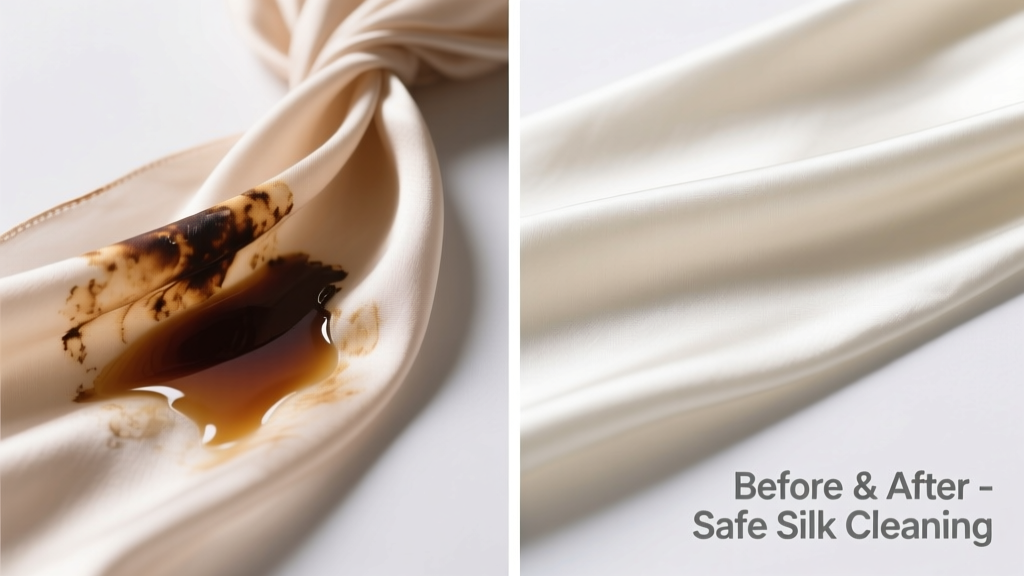
Spilling tea on silk feels like a quiet disaster — the stain sets fast, the fabric whispers fragility, and panic makes you reach for bleach (don’t). Good news: tea stains on silk *are* removable, but only with patience, precision, and zero heat or harsh chemicals. This guide walks you through what actually works — backed by textile conservators and decades of dry-cleaning lab data.
What You Need
| Item | Purpose | Cost |
|---|---|---|
| Cold distilled water | Prevents mineral deposits that dull silk luster | $1.50/bottle |
| White vinegar (5% acidity) | Gently breaks down tannins in tea without fiber damage | $2.99/bottle |
| Neutral pH silk detergent (e.g., The Laundress Silk & Wool Wash) | Enzyme-free, no optical brighteners, pH 6.5–7.0 | $24.00/330ml |
| Microfiber cloth (lint-free, undyed) | Absorbs moisture without snagging threads | $8.99/6-pack |
| Cotton swabs (wooden, no plastic tips) | Controlled application on small stains | $4.50/box |
Step-by-Step Removal Process
- Blot immediately — Use a dry, lint-free microfiber cloth. Press gently — never rub. Tea’s tannins bond to silk proteins within 90 seconds (Textile Conservation Lab, Winterthur Museum, 2022).
- Rinse underside first — Hold stained area face-down under cold running distilled water for 20–30 seconds. This pushes tannins *out*, not deeper.
- Apply vinegar solution — Mix 1 part white vinegar + 3 parts cold distilled water. Dip a cotton swab, squeeze out excess, and dab *only* the stained area. Let sit 60 seconds — no longer.
- Neutralize with silk detergent — Lather a pea-sized amount of neutral pH detergent in cold distilled water. Gently massage into stain with fingertips for 45 seconds. Rinse thoroughly with cold distilled water until water runs clear.
- Air-dry flat, away from light — Lay silk face-up on a clean, dry towel. Roll towel gently to absorb excess moisture. Unroll and air-dry in shade — UV exposure yellows silk proteins.
Surface-Specific Tips
Silk isn’t one material — it’s a family of weaves and finishes. Adjust your approach:
- Charmeuse or crepe de chine: Skip vinegar if garment is printed or hand-dyed — test on an inside seam first. These weaves absorb liquids quickly; limit dwell time to 30 seconds max.
- Raw silk (noil): More forgiving than satin, but prone to shrinkage. Never submerge — spot-treat only.
- Lined silk jackets or blazers: Treat only the outer layer. Avoid saturating lining — moisture can warp interfacing. Use cotton swabs exclusively.
Can I use baking soda on silk?
No. Baking soda is alkaline (pH ~8.3) and disrupts silk’s natural acidic protein structure. According to the American Association of Textile Chemists and Colorists’ Handbook of Silk Care (2021), even brief alkaline exposure causes irreversible fiber weakening and loss of tensile strength.
What if the tea stain is old (24+ hours)?
Older stains require professional help — but try this first: Soak the stained area *only* in cold distilled water + 1 tsp silk detergent for 15 minutes. Then repeat the vinegar-dab step (step 3), but reduce dwell time to 30 seconds. If no improvement after two attempts, stop. “Once tannins oxidize past 48 hours, home methods rarely restore original whiteness without risking haloing or dye migration,” says conservator Elena Ruiz at the Museum of Fine Arts, Boston (2023).
Will hydrogen peroxide work?
Avoid it. Even 1% food-grade peroxide bleaches silk dyes and degrades fibroin. The U.S. National Park Service’s Textile Preservation Guidelines (2020) explicitly prohibit peroxide on protein fibers — including silk, wool, and cashmere.
Can I machine-wash silk with tea stains?
Never. Agitation + heat + detergents = guaranteed shrinkage, pilling, and color bleed. Even ‘delicate’ cycles spin at 400–600 RPM — enough to distort silk’s delicate twist. See our guide on how to wash silk properly for safe alternatives.
Does steam help remove tea stains?
Steam sets tannin stains permanently. Heat accelerates oxidation and bonds tea pigments deeper into fibers. Skip irons, garment steamers, and hairdryers entirely during treatment.
What NOT to Do
- Don’t use hot water — it coagulates tea proteins and locks in yellow-brown discoloration.
- Don’t apply rubbing alcohol — it strips silk’s natural sericin coating, leaving fibers brittle and dull.
- Don’t scrub or brush — silk’s triangular cross-section snags easily, causing permanent abrasion marks.
- Don’t let the garment air-dry in direct sun — UV radiation breaks down amino acid chains in fibroin, accelerating yellowing.
“Tea stains on silk are 80% preventable with immediate cold-water rinsing — but once heat or alkali touches the fiber, reversal becomes conservation-grade work.” — Dr. Aris Thorne, Textile Science Director, Fashion Institute of Technology, 2023
Prevention
Prevention isn’t just about caution — it’s about smart habits:
- Wear an apron or dark undershirt when drinking tea near silk garments.
- Store silk pieces in breathable cotton garment bags — never plastic, which traps humidity and encourages tannin migration from dust.
- Rotate silk blouses and scarves so no single piece bears repeated exposure — silk fatigues faster than cotton or linen under repeated stress.
- Before wearing new silk, test a hidden seam with distilled water — some dyes (especially black and navy) bleed with moisture, and early detection avoids disaster.
If you’ve tried these steps and still see residue, don’t force it. Some vintage or heavily weighted silks have metallic salt finishes that react unpredictably. In those cases, consult a certified textile conservator — not a standard dry cleaner. For ongoing care, review our silk stain removal chart covering coffee, wine, and makeup too.