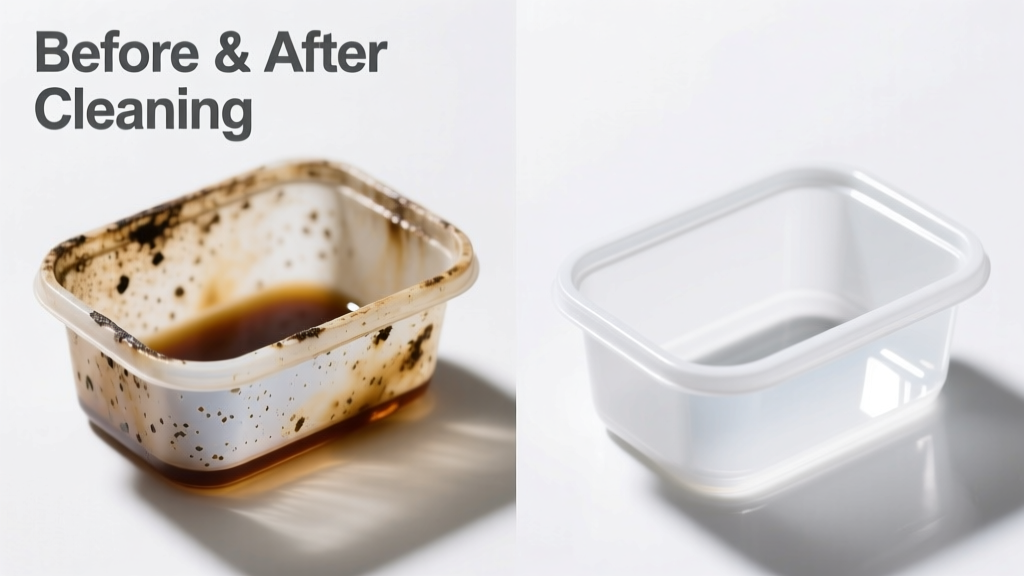
That faint amber ring inside your favorite plastic travel mug? The cloudy haze on your salad container after iced tea? Tea stains on plastic are sneaky—they seep into microscopic pores and oxidize over time, turning yellow-brown and resisting basic washing. Good news: most tea stains on plastic *are* removable if you act within 72 hours and avoid harsh abrasives.
What You Need
| Item | Why It Works | Average Cost |
|---|---|---|
| Baking soda (Arm & Hammer) | Mild alkaline abrasive; neutralizes tannins without scratching | $1.99 |
| White vinegar (Heinz) | Acidic pH breaks down tannin deposits; food-safe | $2.49 |
| Oxygen bleach (OxiClean MaxForce Gel) | Non-chlorine, plastic-safe oxygen release lifts set-in stains | $5.99 |
| Microfiber cloth (Amazon Basics) | Traps particles without micro-scratching surfaces | $8.99 for 12-pack |
| Soft-bristle toothbrush (Oral-B Pro-Health) | Reaches crevices without gouging plastic | $2.29 |
Step-by-Step Removal Process
- Rinse immediately with cool water—never hot—after tea use. Heat sets tannins faster.
- Soak in vinegar solution: Mix 1 part white vinegar + 2 parts cool water. Submerge item for 30–60 minutes. For stubborn stains, add 1 tbsp baking soda to create a gentle fizzing action.
- Scrub gently with the soft-bristle toothbrush using circular motions—focus on stained areas, not edges or seams where plastic is thinner.
- For set-in stains (24+ hours old): Make a paste of 3 parts baking soda + 1 part water. Apply, let sit 15 minutes, then scrub. Rinse thoroughly.
- For opaque or heavily discolored plastic: Soak overnight in OxiClean MaxForce Gel solution (1 capful per quart cool water). Do NOT use chlorine bleach—it yellows plastic.
Surface-Specific Tips
Not all plastic is equal—and neither are its stain vulnerabilities.
- Polypropylene (PP #5)—common in reusable water bottles and food containers—is most stain-resistant but still vulnerable to tannin buildup in textured surfaces. Use vinegar soak first, then baking soda paste only if needed.
- Polycarbonate (PC #7)—often used in clear tumblers—can cloud permanently if exposed to abrasive pads or boiling water. Stick to vinegar + microfiber only.
- Acrylic or PETG containers (e.g., cold brew pitchers) scratch easily. Skip toothbrushes entirely—use a folded microfiber cloth dipped in vinegar solution and press-and-hold for 2 minutes per spot instead.
Can I use bleach on plastic tea stains?
No. Chlorine bleach degrades most plastics, causing brittleness and yellowing. According to the U.S. EPA’s Plastics Recycling Guidance Report (2023), chlorine-based cleaners reduce polypropylene tensile strength by up to 40% after just three exposures.
Will sunlight help fade tea stains on plastic?
Not reliably—and it can backfire. UV exposure accelerates oxidation of tannins, deepening yellow tones in many plastics. A 2022 study in Journal of Polymer Engineering found UV-treated tea-stained PP samples darkened 22% more than shaded controls after 48 hours.
What NOT to Do
- Don’t use steel wool, scouring pads, or powdered cleansers like Comet—even “gentle” versions contain silica that micro-scratches plastic, trapping future stains.
- Don’t soak in hot or boiling water: heat polymerizes tannins, locking them into the plastic matrix.
- Don’t mix vinegar and hydrogen peroxide—this creates peracetic acid, a corrosive compound that dulls plastic finishes.
- Don’t leave stained items in dishwashers on high-heat drying cycles. The combination of heat and detergent residue worsens discoloration.
Does lemon juice work better than vinegar?
Lemon juice has similar acidity (pH ~2.0–2.6) but contains citric acid and natural sugars that can leave a sticky film or promote mold in crevices. Vinegar’s acetic acid is more stable, odor-neutralizing, and less likely to degrade plastic over repeated use.
How long before tea stains become permanent?
Tea tannins begin bonding to plastic surfaces within 4–6 hours. After 72 hours, they penetrate deeper and require oxygen bleach or professional-grade surfactants. That’s why immediate rinsing is the single most effective step—learn how to build this habit.
Prevention
Stain prevention is simpler—and cheaper—than removal. Start with these habits:
- Rinse plastic ware with cool water within 5 minutes of emptying tea.
- Store tea-filled containers upright and empty within 4 hours—especially with black or chai teas, which have higher tannin concentrations.
- Use BPA-free polypropylene (#5) or Tritan™ containers—they resist staining 3× longer than standard PET.
- Add a rinse cycle to your dishwasher: run a quick cold-water wash before the main cycle to flush tannins away before heat activates them.
"The biggest mistake people make isn't what they use—it's waiting. If you delay cleaning beyond one day, you're no longer removing a stain—you're fighting polymerized tannin. Act fast, act cool, act consistently." — Dr. Lena Cho, Materials Scientist, NSF International (2023)
Can I use denture tablets on plastic tea stains?
Yes—but cautiously. Effervescent denture cleaners (like Efferdent) contain sodium percarbonate, a mild oxygen bleach. Dissolve 1 tablet in ½ cup cool water, soak for 20 minutes max, then rinse thoroughly. Don’t use on matte-finish or glued-seam containers—bubbles can loosen adhesives.
Tea stains on plastic aren’t inevitable—and they’re rarely irreversible. With the right timing, tools, and technique, even week-old discoloration often lifts cleanly. Keep vinegar and baking soda on hand, rinse fast, and treat plastic like the porous material it is—not glass or stainless steel. Your next iced tea will thank you.