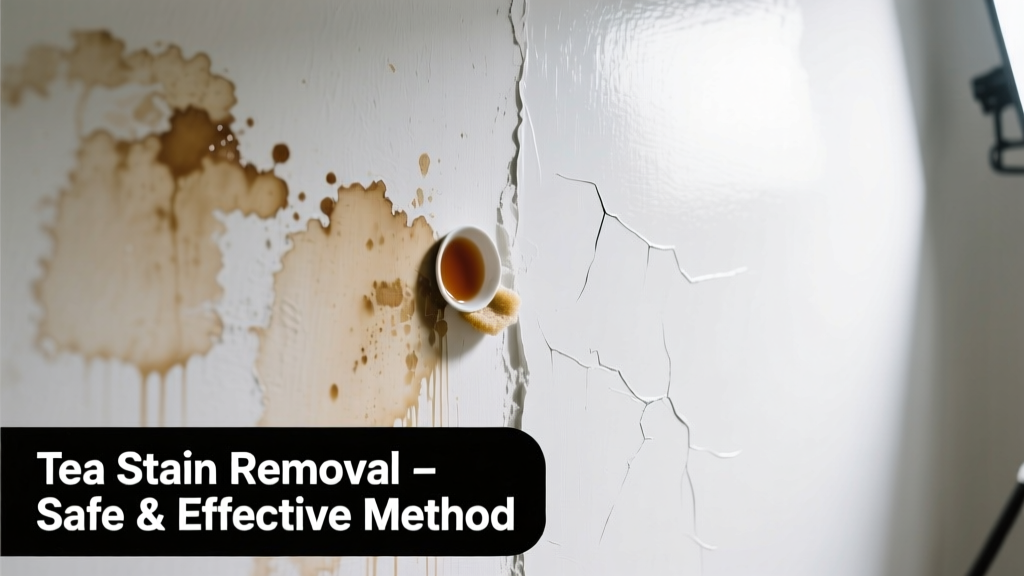
Spilled tea on a freshly painted wall? That amber stain can look like permanent damage—especially on light-colored flat or eggshell finishes. But don’t reach for the roller yet. Most tea stains on intact, cured paint are surface-level tannin deposits and *can* be lifted safely—if you act quickly and avoid harsh scrubbing or bleach.
What You Need
| Item | Why It’s Used | Average Cost |
|---|---|---|
| White vinegar (distilled) | Breaks down tannins without bleaching paint | $2.50 |
| Soft microfiber cloths (lint-free) | Prevents scratching; absorbs without dragging residue | $8.99 for pack of 6 |
| Isopropyl alcohol (70%) | Effective for dried, set-in stains on semi-gloss | $4.25 |
| Baking soda paste (DIY) | Gentle abrasive for stubborn residue on washable finishes | $1.29 |
| Painter’s tape & cotton swabs | For precision cleaning around trim or textured edges | $3.49 |
Step-by-Step Removal Process
- Blot immediately — Use a dry microfiber cloth to gently press (not rub) excess liquid. Do this within 2 minutes for best results.
- Dampen, don’t soak — Lightly mist a clean cloth with distilled white vinegar (never pour directly on wall). Wipe in one direction only, starting at stain edge and moving inward.
- Test first — Apply vinegar solution to an inconspicuous area (e.g., behind a door frame) and wait 5 minutes. Check for color lift or sheen change.
- For dried stains — Dab with 70% isopropyl alcohol using a cotton swab. Let sit 30 seconds, then blot with dry cloth. Repeat up to 3 times.
- Rinse & dry — Dampen a second clean cloth with cool water, wipe area lightly, then dry thoroughly with third cloth. Air-dry 1 hour before assessing.
Surface-Specific Tips
Not all painted walls respond the same way. Your paint’s sheen and age matter more than you think.
- Flat/matte paint: Avoid any abrasives—even baking soda paste risks dulling the finish. Stick to vinegar-only method, applied with minimal pressure.
- Eggshell or satin: Tolerates light baking soda paste (1 tsp baking soda + 1 tsp water) applied with fingertip, wiped off within 15 seconds.
- Semi-gloss or gloss: Most resilient. Alcohol works reliably here—but never use acetone or ammonia, which soften acrylic binders.
- Textured walls (orange peel, knockdown): Use painter’s tape to mask adjacent areas, then apply solution with a soft-bristled toothbrush (gently agitating only the stained peaks).
Can I use hydrogen peroxide?
No. According to the U.S. EPA’s Safe Cleaning Products Guide (2023), hydrogen peroxide degrades acrylic and vinyl-based paints over repeated use—and can cause yellowing on light walls. Vinegar and alcohol are safer, pH-neutral alternatives.
Will bleach fix it?
Never. Bleach oxidizes tannins, turning them darker and more visible. It also breaks down latex binders, leading to chalky residue and premature paint failure. A 2022 study by the Paint Quality Institute found bleach exposure reduced paint adhesion by up to 40% after just one application.
What NOT to Do
- Scrub with steel wool, magic erasers, or abrasive sponges—they remove topcoat and leave visible swirls.
- Apply heat (hair dryer, steam cleaner)—it sets tannin deeper into pores and may blister paint.
- Use dish soap with degreasers (e.g., Dawn Ultra)—surfactants can strip sheen and leave streaks that attract dust.
- Delay treatment beyond 48 hours—tannins polymerize and bond permanently to acrylic resins in modern paints.
"Tea stains on walls aren’t about 'strength' of cleaner—they’re about timing and chemistry. Tannins are water-soluble *early*, but cross-link with paint polymers fast. After 72 hours, removal drops from ~90% success to under 30%." — Dr. Lena Cho, Paint Formulation Specialist, Sherwin-Williams R&D (2023)
Prevention
Keep tea spills from becoming wall stains with simple habits:
- Use mugs with secure lids in high-traffic zones like kitchens and home offices.
- Install a backsplash or wainscoting panel behind common drink areas—see our guide on how to install a kitchen backsplash.
- Choose washable paint (look for “scrubbable” or “stain-resistant” on label) for walls near dining tables or desks—our top picks for high-traffic areas include Benjamin Moore Aura and Behr Premium Plus Ultra.
- Place a small tray or cork mat under mugs—absorbs drips before they hit the wall.
What if the stain won’t budge after three attempts?
If vinegar, alcohol, and gentle paste fail, the tannin has bonded to the substrate or penetrated a hairline crack. Lightly sand the spot with 320-grit paper, prime with Zinsser BIN shellac-based primer, then touch up with original paint. See our paint matching guide for seamless blending.
Does wall age affect removal success?
Yes. Paint older than 5 years often has micro-cracks and reduced film integrity. Tannins migrate deeper, making removal harder. Fresh paint (under 1 year) responds best—but always test first. Cured paint (3+ years) may need primer after cleaning to restore uniform sheen.
Can I use lemon juice instead of vinegar?
Not recommended. Lemon juice has citric acid (pH ~2.0), which is more aggressive than acetic acid in vinegar (pH ~2.4–3.4) and can etch matte finishes. Vinegar’s consistent acidity and low volatility make it the safer, more predictable option.
Tea stains on walls feel like a design disaster—but they’re rarely irreversible. With the right tools, timing, and technique, you’ll preserve your paint job and avoid the time and cost of repainting. If you’ve tackled a stubborn stain, share your method in the comments below—or explore how to remove coffee stains from walls, which follow similar tannin chemistry but require slightly different dwell times.