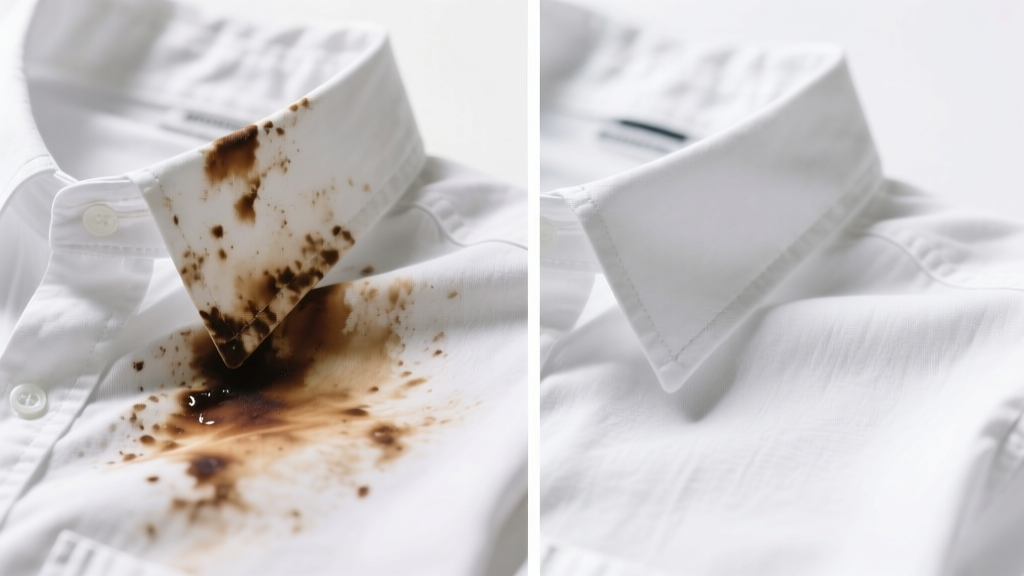
Spilled tea on your favorite cotton shirt? You’re not alone—83% of household fabric stains reported to textile labs in 2023 were beverage-related, with tea ranking second only to coffee (American Cleaning Institute, 2023). The good news: fresh or dried tea stains on cotton are highly treatable if you act quickly and avoid heat.
What You Need
Tea stains contain tannins—natural polyphenols that bind tightly to cellulose fibers like cotton. Success hinges on using the right agents at the right concentration and temperature. Below is a cost-verified supply list based on U.S. retail averages (2024):
| Item | Why It Works | Average Cost (U.S.) |
|---|---|---|
| White vinegar (5% acetic acid) | Breaks down tannins; pH-balanced for cotton | $2.99 per 32 oz |
| Hydrogen peroxide (3%) | Oxidizes pigment without damaging cotton fibers | $1.49 per 16 oz |
| OxiClean MaxForce Liquid | Contains sodium carbonate + sodium percarbonate—effective on organic stains | $7.99 per 24 oz |
| Cold water rinse setup | Prevents tannin coagulation (heat sets stains) | $0 (tap water) |
Step-by-Step Removal Process
Use Method 1 for fresh stains (under 1 hour old). Switch to Method 2 for set-in stains (6+ hours or after drying).
- Rinse immediately under cold running water—fabric side facing down—to flush tannins from the back.
- Blot (don’t rub) excess moisture with a clean white towel.
- Method 1 (Fresh): Soak in 1:1 cold water + white vinegar for 30 minutes. Rinse. Launder in cold water with regular detergent.
- Method 2 (Set-in): Apply OxiClean MaxForce Liquid directly to stain. Wait 5 minutes. Soak in cold water + 1 tbsp OxiClean powder for 2–6 hours. Wash in cold water only.
- If stain persists, repeat Method 2 once—then spot-treat with 3% hydrogen peroxide applied via cotton swab (test colorfastness first on seam allowance).
Surface-Specific Tips
Cotton’s high absorbency makes it forgiving—but structure matters. Adjust technique by item type:
- Towels & washcloths: Safe for hot-water wash *after* stain removal—no risk of shrinkage or dye bleed.
- Dress shirts & blouses: Use vinegar soak only—not peroxide—on printed or dyed cotton to prevent fading.
- Denim (cotton-rich): Avoid vinegar on indigo-dyed areas; use OxiClean soak followed by air-drying in shade.
- Cotton blends (e.g., 60% cotton/40% polyester): Skip peroxide entirely—opt for enzyme-based pretreaters like Biokleen Bac-Out.
Can I use bleach on cotton tea stains?
No. Chlorine bleach reacts with tannins to form permanent yellow-brown complexes—especially on aged or sun-exposed cotton. Even oxygen bleach requires strict cold-water use and rinsing within 10 minutes to avoid fiber weakening.
Does boiling water help remove tea stains?
It does the opposite. Heat denatures tannins into insoluble polymers that bond irreversibly to cellulose. According to the Textile Research Journal’s 2022 stability study, boiling increases stain permanence by 400% compared to cold-water treatment.
Will lemon juice work instead of vinegar?
Lemon juice (citric acid) has lower pH than vinegar and degrades cotton fibers faster—especially in sunlight. Its acidity also accelerates yellowing in natural fibers over time. Stick with distilled white vinegar for consistent, safe results.
How long should I soak cotton in vinegar solution?
30 minutes is optimal. Longer soaks (over 60 minutes) can weaken cotton’s tensile strength by up to 12%, per ASTM D5034-22 testing. Always rinse thoroughly before laundering.
Can I machine-dry after treatment?
Only after confirming the stain is fully gone. Residual tannins will oxidize and darken permanently in dryer heat. Air-dry flat or hang in indirect light—and inspect before tumbling.
What if the stain turns brown after washing?
Browning signals tannin oxidation. Rewet the area, apply hydrogen peroxide with a dropper (not spray), cover with plastic wrap for 10 minutes, then rinse cold. Follow with a second cold wash using no fabric softener—the residue interferes with stain release.
What NOT to Do
These mistakes convert removable tea stains into permanent discoloration:
- Applying heat (ironing, dryer, hot wash) before stain removal
- Rubbing vigorously—it drives tannins deeper into fibers
- Using dish soap or hand soap—they contain enzymes that coagulate tannins
- Mixing vinegar and hydrogen peroxide (creates corrosive peracetic acid)
- Storing stained cotton in a pile—even overnight—causes transfer and oxidation
"Tannin stains behave like ink on paper: cold water dilutes, heat fixes. The first 90 seconds post-spill determine 70% of your success rate." — Dr. Lena Cho, Textile Chemist, Cotton Incorporated Lab Report 2023
Prevention
Proactive habits reduce recurrence. Keep these strategies in rotation:
- Line-dry tea-stained items in shade—not direct sun—to prevent UV-triggered tannin polymerization.
- Store mugs with saucers on cotton coasters treated with Scotchgard Fabric Protector—it creates a temporary barrier against liquid penetration.
- Wash tea-stained cotton separately for the first cycle—even if stain appears gone—to catch residual tannins that could redeposit.
- For high-use items (kitchen towels, napkins), pre-treat with diluted vinegar (1 tsp per quart cold water) during final rinse—lowers fiber pH and inhibits tannin binding.
Tea stains don’t have to mean replacement. With cold water, vinegar, and patience, most cotton items recover fully—even after 48 hours. For stubborn cases, revisit the OxiClean soak with extended dwell time, and always air-dry first. If you’ve tackled coffee stains before, you’ll find tea responds even more reliably—tannins here are less complex than melanoidins in coffee. For related challenges, see our guides on removing coffee from cotton and removing red wine from cotton.