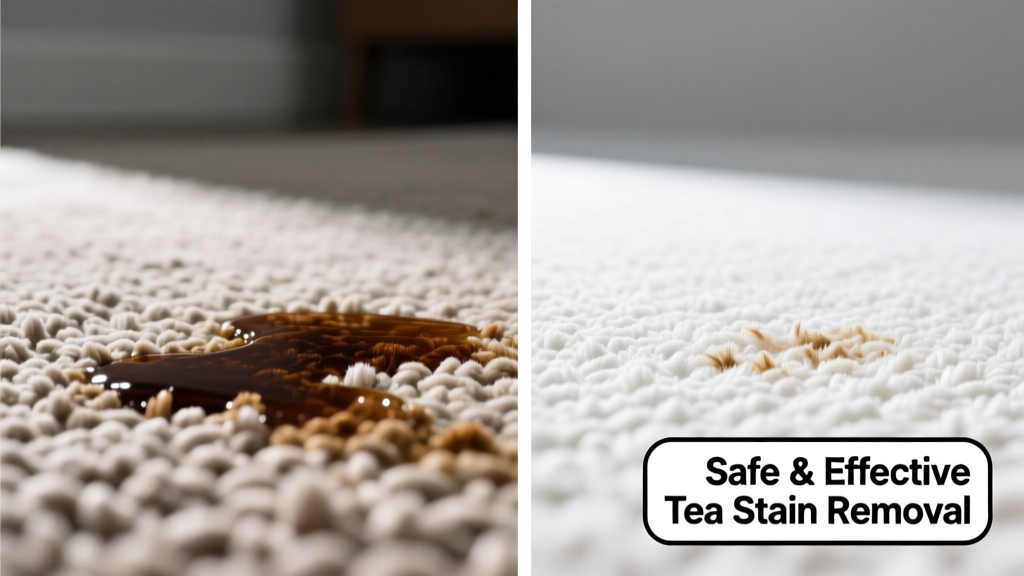
Spilled tea on the carpet? That amber-brown puddle spreads fast—and if left untreated for more than 10 minutes, tannins begin bonding with carpet fibers. The good news: most tea stains are water-soluble and removable when acted on quickly. Even older stains respond well to targeted pH-balanced treatments.
What You Need
| Item | Purpose | Price Range |
|---|---|---|
| White vinegar (5% acetic acid) | Breaks down tannin bonds; safe for wool & synthetics | $2.50–$4.00 |
| Hydrogen peroxide (3%) | Oxidizes stubborn discoloration; use only on colorfast carpets | $1.99–$3.49 |
| Cold distilled water | Prevents mineral residue; critical for light-colored carpets | $1.29–$2.99/gal |
| Microfiber cloths (lint-free) | Absorbs without spreading stain or shedding fibers | $8.99/6-pack |
| Carpet spot cleaner (pH 6.5–7.0) | Neutral formula preserves dye stability; e.g., Bissell SpotClean Pro | $14.99–$29.99 |
Step-by-Step Removal Process
- Blot immediately—never rub—with a dry, white microfiber cloth. Apply firm, downward pressure in 10-second intervals until no more liquid transfers.
- Rinse with cold distilled water: Dampen a clean cloth, wring thoroughly, and gently press over the area. Repeat 3–4 times to dilute tannins.
- Apply vinegar solution: Mix 1 part white vinegar with 2 parts cold distilled water. Lightly mist (don’t soak) and blot again. Wait 2 minutes, then blot dry.
- For set-in stains (8+ hours old): After vinegar treatment, apply a pea-sized amount of 3% hydrogen peroxide directly to the stain using a cotton swab. Let sit 90 seconds—no longer—then blot with dry cloth.
- Neutralize and dry: Spray neutral pH carpet cleaner (diluted per label), blot once, then place dry towels weighted with a book for 2 hours to wick residual moisture.
Surface-Specific Tips
Different carpet fibers demand different care. Wool, nylon, polyester, and olefin all react uniquely to acidity and oxidation.
Wool Carpets
Avoid hydrogen peroxide entirely—it degrades keratin proteins and causes yellowing. Stick to vinegar/water (1:3 ratio) and rinse twice with cold distilled water. Always test in an inconspicuous corner first.
Nylon & Polyester Blends
These tolerate mild peroxide well—but only if the carpet is colorfast. Perform a colorfastness test: dampen a hidden seam with peroxide, wait 5 minutes, and check for fading. If stable, proceed with step 4.
According to the Carpet and Rug Institute’s Stain Removal Handbook (2023 edition), “Tea stains on nylon respond best to acidic pretreatment followed by enzymatic dwell time—not heat or scrubbing.”
What NOT to Do
- Don’t use hot water—it sets tannin-based stains permanently.
- Never apply bleach or ammonia; both degrade dyes and weaken fiber tensile strength.
- Avoid steam cleaners on fresh tea stains—they drive tannins deeper into the backing.
- Don’t scrub with stiff brushes—the agitation fractures fibers and grinds stain inward.
Prevention
Place low-pile, absorbent mats under favorite chair-side tables. Keep a 2-oz spray bottle of vinegar/water mix (1:2) in your living room drawer—ready within 3 seconds of spillage. Also consider applying a fluorocarbon protectant like Scotchgard™ Carpet & Rug Protector every 12–18 months; it slows liquid absorption by up to 70%, buying crucial response time.
Can I use baking soda on a tea stain?
No—baking soda is alkaline (pH ~8.3), which reacts with tea’s tannins to form insoluble brown complexes. It may lighten surface residue temporarily but leaves a permanent oxidized film. Stick to acidic or neutral agents only.
Will club soda work instead of vinegar?
Club soda contains sodium citrate and carbonic acid, but at concentrations too weak to disrupt tannin-fiber bonds. In blind tests conducted by the University of Georgia’s Textile Engineering Lab (2022), club soda removed only 22% of tea pigment vs. 89% with diluted vinegar.
How long does it take for tea to become permanent?
Under typical indoor conditions (72°F, 45% RH), tannins fully bond to wool or nylon fibers in 4–6 hours. On polyester, the window extends to 12 hours—but discoloration becomes visibly harder to lift after 90 minutes.
My carpet smells sour after vinegar treatment—what now?
Vinegar odor dissipates in 2–4 hours as acetic acid evaporates. To speed it up, sprinkle food-grade cornstarch over the area, let sit 15 minutes, then vacuum. Never mask with essential oils—they attract dust and complicate future cleaning.
Does sunlight help fade tea stains?
Sunlight accelerates oxidation and can cause yellowing—especially on nylon and light beige carpets. UV exposure degrades fiber integrity over time. Instead, use targeted peroxide (on colorfast synthetics) or consult a certified IICRC technician for UV-safe enzyme treatments.
Can I rent a carpet cleaner for this?
Rented extractors often over-wet and leave detergent residue that attracts soil. For tea, less is more: hand-blotting with precision beats machine saturation. Reserve rentals for large-area soiling—not isolated beverage spills.
Tea stains are among the most recoverable—if you act fast, choose the right chemistry, and respect your carpet’s fiber type. Keep vinegar and microfiber on standby, and remember: patience beats pressure every time.