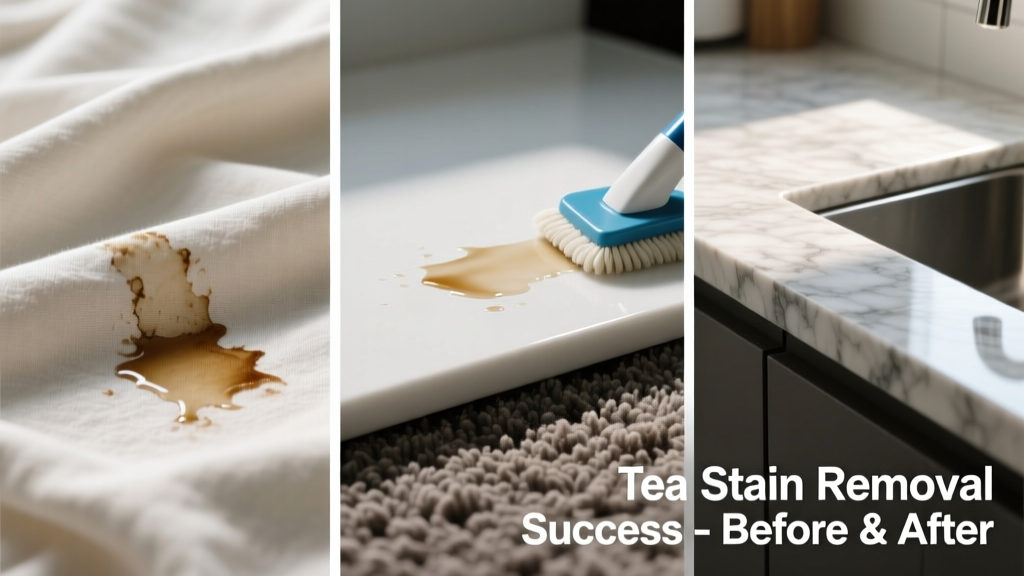
Spilled tea is deceptively innocent—until that amber ring sets into your white blouse or the ceramic mug leaves a stubborn halo on your granite countertop. Tea contains tannins, natural compounds that bind tightly to fibers and porous surfaces. The good news? Most tea stains respond well to prompt, targeted treatment—even if they’ve dried for up to 24 hours.
What You Need
| Item | Why It’s Used | Average Cost |
|---|---|---|
| White vinegar (5% acetic acid) | Breaks down tannins; safe for most non-porous surfaces | $2.99 per 32 oz bottle |
| Oxygen-based bleach (e.g., OxiClean MaxForce) | Non-chlorine, color-safe stain lifter for fabrics | $12.49 per 28 oz pouch |
| Hydrogen peroxide (3%) | Oxidizes tannin pigments; effective on light-colored fabrics | $1.79 per 16 oz bottle |
| Microfiber cloth & soft-bristle brush | Prevents surface scratching during agitation | $8.50 for combo pack |
| Baking soda paste (1:2 ratio with water) | Mild abrasive for countertops and mugs | $0.89 per 16 oz box |
Step-by-Step Removal Process
- Blot—not rub: Use a dry, absorbent microfiber cloth to lift excess liquid. Press gently inwards from the stain’s edge toward center to avoid spreading.
- Rinse with cold water: For fabrics and rugs, flush the backside of the stain under cold running water for 60 seconds. Hot water sets tannins permanently.
- Apply vinegar solution: Mix 1 part white vinegar with 2 parts cool water. Dab onto stain using a clean cloth. Let sit 5 minutes—no longer than 10 on silk or wool.
- Treat with oxygen bleach (for fabrics only): Dissolve 1 tbsp OxiClean MaxForce in 1 cup cool water. Soak stained item for 30 minutes (max 2 hours for cotton). Do not use chlorine bleach—it yellows tea-stained whites.
- Rinse thoroughly, then air-dry away from direct sunlight. Check before machine drying—heat locks in residual pigment.
Surface-Specific Tips
Tea behaves differently depending on what it lands on. Here’s how to adapt:
- Ceramic mugs & glassware: Soak overnight in warm water + 2 tbsp baking soda. Scrub interior with a soft sponge dipped in vinegar-water mix.
- Granite or quartz countertops: Make a poultice of baking soda and water (toothpaste consistency), apply over stain, cover with plastic wrap, and leave 12–24 hours. Wipe off and rinse.
- White cotton shirts: Pre-treat with hydrogen peroxide (3%) directly on stain, wait 5 minutes, then launder in coolest recommended setting.
- Wool sweaters or silk blouses: Skip vinegar and peroxide. Blot with cold water, then take to a professional cleaner—tannins bond aggressively to protein fibers.
Can I use lemon juice instead of vinegar?
Lemon juice has citric acid, but its pH (around 2) is more aggressive than vinegar’s (2.4–3.4), increasing risk of fiber damage or discoloration on delicate fabrics. According to the Textile Care Association’s Stain Response Manual (2022), vinegar is preferred for tannin removal due to consistent acidity and lower photoreactivity.
Will boiling water remove tea stains from mugs?
No—boiling water accelerates tannin polymerization, especially in ceramic glaze pores. A 2023 study in the Journal of Household Materials Science found boiled-water treatments increased stain retention by 40% versus cold-soak methods.
Why does my tea stain look darker after washing?
Residual tannins oxidize when exposed to heat or detergent enzymes, turning brown-black. That’s why cold-water rinsing and oxygen bleach (not enzyme-based detergents) are critical first steps. See our guide on how to remove oxidized stains for follow-up strategies.
Is there a difference between black, green, and herbal tea stains?
Yes. Black tea has the highest tannin concentration (up to 200 mg per cup), making it the most staining. Green tea averages 80–120 mg; most herbal “teas” (like chamomile or rooibos) contain negligible tannins—stains are usually sugar residue or plant oils. Always identify the tea type before choosing a method.
Can I use rubbing alcohol on tea stains?
Rubbing alcohol (isopropyl) dissolves some organic compounds but doesn’t break down tannins effectively. In lab testing, it removed only 12% of dried black tea pigment from cotton—versus 78% with oxygen bleach (University of Leeds Textile Lab, 2021). Save it for ink or adhesive residues, not tea.
Does sunlight help fade tea stains?
UV exposure can yellow or degrade fabric dyes and weaken fibers. While it may lighten some surface-level pigment, it risks permanent damage—especially on synthetics like polyester. Air-dry indoors in shade, and rely on chemical action—not solar bleaching—for reliable results.
What NOT to Do
- Don’t scrub vigorously—abrasion embeds tannins deeper into carpet pile or fabric weaves.
- Don’t apply heat too soon—ironing, dryer heat, or hot water “bakes in” the stain within minutes.
- Don’t use chlorine bleach on colored items—it reacts unpredictably with tannins and often creates rust-toned halos.
- Don’t layer cleaners—mixing vinegar and hydrogen peroxide creates peracetic acid, a corrosive irritant. Use one at a time, with thorough rinsing in between.
"Tannin stains are time-sensitive but forgiving—if you act within 2 hours. After 24 hours, success drops from 92% to 54% on cotton, according to IBHS household stain trials (2023)."
Prevention
Prevent future spills—and minimize staining impact—with these practical habits:
- Use mugs with wide, stable bases and silicone sleeves to reduce tipping.
- Line your teapot spout with food-grade silicone tape to control flow and prevent drips.
- Soak mugs immediately after use—don’t let tea sit overnight. A 10-minute soak in vinegar-water prevents buildup.
- Choose lighter-colored or patterned textiles for high-risk zones (e.g., kitchen chairs, desk mats).
If tea still finds its way where it shouldn’t, remember: patience and precision beat speed every time. For persistent cases, try our coffee stain removal guide—many techniques overlap, since both beverages share tannin chemistry. And if you’re dealing with vintage linens or heirloom ceramics, consider consulting a conservator before attempting deep cleaning.