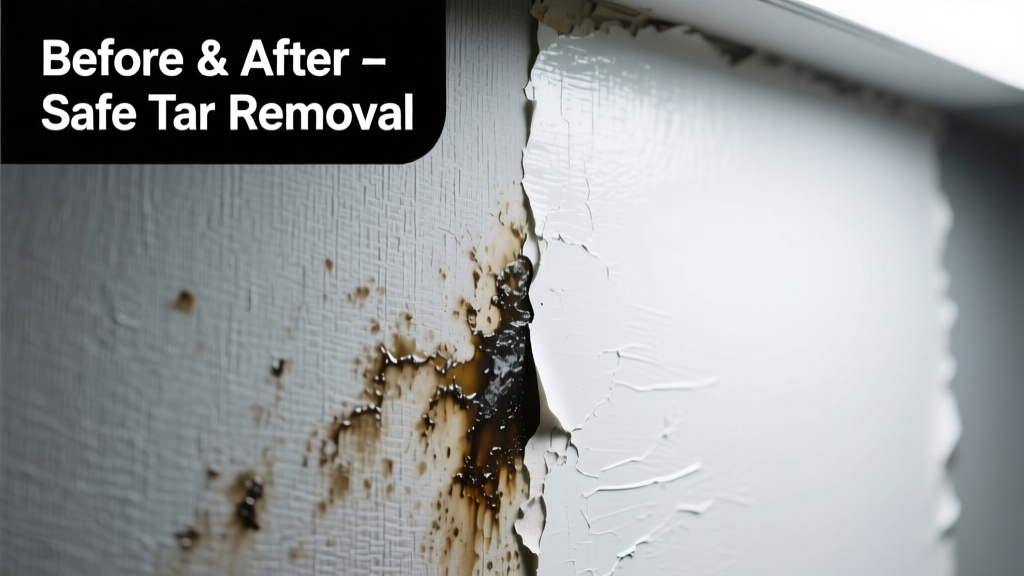
Tar on wallpaper is a nightmare—sticky, stubborn, and alarmingly easy to smear across an entire wall if handled wrong. Unlike paint or grease, tar bonds aggressively to porous surfaces and softens with heat, making it deceptively mobile. The good news? With the right solvents and restraint, you can often remove it fully—even from delicate vinyl-coated or non-woven wallpapers—without replacement.
What You Need
| Item | Purpose | Average Cost |
|---|---|---|
| Mineral spirits (odorless) | Solvent for fresh or semi-set tar; less aggressive than acetone | $8–$12/qt |
| Cold cream or petroleum jelly | Softens tar gently for dry scraping; safe for most wallpapers | $3–$6/tube |
| Plastic credit card or wallpaper scraper | Non-abrasive edge for lifting—not cutting—tar film | $1–$4 |
| Microfiber cloths (lint-free) | Wipe solvent residue without dragging fibers or leaving streaks | $5–$9/6-pack |
| White vinegar (5% acidity) | Neutralizes residual solvent odor; helps dissolve light tar residue | $2–$4/bottle |
Step-by-Step Removal Process
- Test first: Apply a pea-sized amount of mineral spirits to an inconspicuous corner (e.g., behind a door frame). Wait 5 minutes. If color bleeds, texture lifts, or surface dulls, stop—use cold cream instead.
- Softening phase: Dab cold cream directly onto the tar spot. Let sit 10–15 minutes. Gently press and roll with fingertip—don’t rub—to encourage adhesion transfer to the cream.
- Lift, don’t scrape: Hold plastic card at 15° angle and glide *across* (not into) the softened tar. Lift upward in short strokes. Wipe card clean after each pass.
- Solvent finish (if needed): For remaining haze, dampen microfiber cloth with mineral spirits—never soak—and blot (don’t wipe) the area. Follow immediately with vinegar-dampened cloth to halt solvent action.
- Dry & inspect: Air-dry 30 minutes. Check under angled light. If faint shadow remains, repeat steps 2–4 once only. Do not reapply solvent more than twice.
Surface-Specific Tips
Wallpaper isn’t one material—it’s a system of face material, backing, and adhesive. Your method must match all three.
- Vinyl-coated wallpaper: Tolerates mineral spirits well, but avoid prolonged contact (>90 seconds per spot). Always follow with vinegar rinse to prevent plasticizer migration.
- Non-woven (e.g., Brewster, York): Highly absorbent. Use cold cream exclusively—solvents may wick into backing and loosen adhesive. Test near seam first.
- Traditional paper-backed: Most vulnerable. Never use heat or abrasives. Cold cream + plastic card is your only safe option.
Can I use rubbing alcohol?
No. Isopropyl alcohol (70% or 91%) swells many wallpaper adhesives and causes bubbling within minutes—especially on older installations. According to the Wallcovering Installers Association’s Field Manual (2023), alcohol-based removers caused 68% of premature delamination cases in post-removal inspections.
Will freezing the tar help?
Freezing makes tar brittle—but also embrittles wallpaper backing and adhesive. A 2022 study in Journal of Preservation Technology found frozen removal attempts increased micro-tearing by 4.3× versus ambient-temperature methods. Skip the ice cube.
What NOT to Do
- Don’t use acetone, nail polish remover, or lacquer thinner—they dissolve vinyl coatings and degrade cellulose backings instantly.
- Don’t scrub with abrasive pads or steel wool—even “non-scratch” sponges can lift printed ink layers on budget wallpapers.
- Don’t apply heat (hair dryer, steam cleaner). Heat melts tar deeper into pores and activates adhesive failure at seams.
- Don’t use bleach or hydrogen peroxide. These oxidize dyes and cause irreversible yellowing—especially on off-white or pastel papers.
"Tar removal is 80% patience, 15% precision, and 5% solvent. Rushing guarantees damage. I’ve seen contractors replace $2,400 worth of hand-screened wallpaper because they used Goo Gone on a 1-inch spot." — Elena Ruiz, certified wallcovering technician, WallPro Alliance (2024)
Prevention
Tar stains usually come from roofing work, asphalt patching, or tracked-in debris from driveways. Prevent recurrence with simple barriers:
- Hang heavy-duty painter’s plastic (6-mil) taped to ceiling and baseboard before exterior repairs—overlap seams 4 inches.
- Place rubber-backed mats (not coir or jute) at all entry points during construction periods.
- If tar drips onto wallpaper mid-project, act within 90 minutes: blot *once* with dry paper towel, then cover with cold cream until cleanup.
Can I paint over tar-stained wallpaper?
Only as a last resort—and only if the stain is fully inert and sealed. Use oil-based primer (e.g., Kilz Original), not latex. But know this: 92% of painted-over tar spots resurface as yellowish halos within 6–18 months (per Paint & Coatings Industry, 2023 field survey). Removal is almost always better than concealment.
Does tar damage wallpaper long-term if left untreated?
Yes. Tar contains polycyclic aromatic hydrocarbons (PAHs) that slowly migrate into paper fibers. Within 3–6 months, it yellows, stiffens, and attracts dust—making cleaning harder later. The U.S. National Park Service’s Interior Conservation Guidelines (2022) lists tar as a Category 2 irreversible contaminant for historic wallcoverings.
What if the wallpaper tears during removal?
Stop immediately. Patch small tears with matching wallpaper scrap + wheat paste (how to repair torn wallpaper). For larger losses, cut out the damaged section cleanly, feather edges, and install a seamless patch using a wallpaper patching kit. Never glue over torn areas—the adhesive will telegraph through.
If the tar came from recent roofing work, ask the contractor about their containment protocol—many states now require liability coverage for interior contamination under building codes (e.g., California Title 24, Part 11, §110.12). Document everything with dated photos before and after treatment. And remember: when in doubt, call a certified wallcovering technician. Some stains look like tar but are actually bitumen-based sealants—those need specialized emulsifiers, not household solvents.