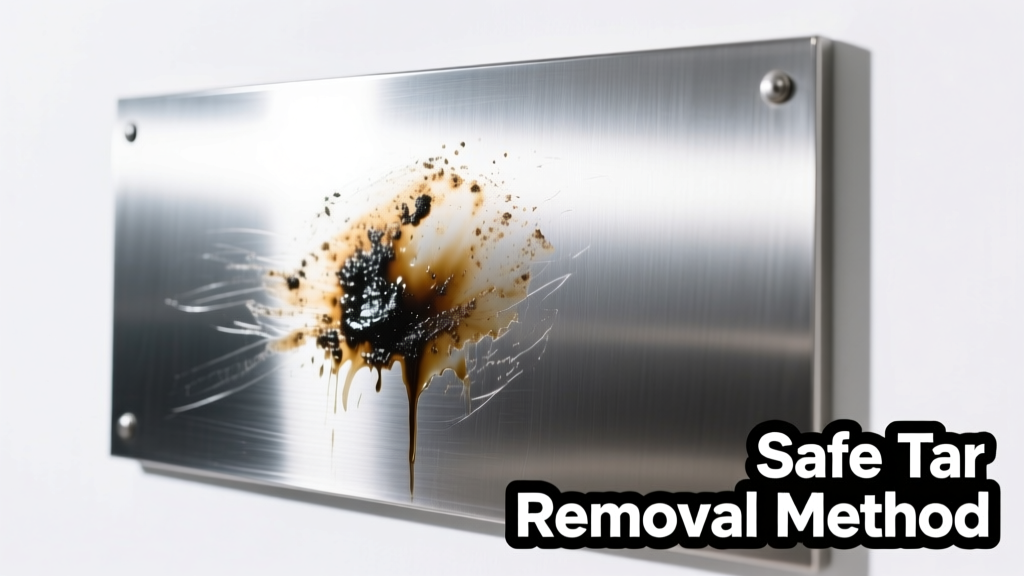
Tar on stainless steel—whether from road splatter on outdoor fixtures, roofing work near gutters, or accidental contact with asphalt sealant—is stubborn, sticky, and visually jarring. It doesn’t just sit on the surface; it bonds chemically over time, especially in heat or sunlight. The good news? With the right solvents and technique, you can remove it fully without etching, streaking, or compromising the passive oxide layer that gives stainless its corrosion resistance.
What You Need
| Item | Purpose | Average Cost |
|---|---|---|
| Isopropyl alcohol (90%+) | Breaks down light-to-moderate tar; non-corrosive and evaporates cleanly | $8–$12 per 32 oz |
| Mineral spirits (odorless) | Effective on heavy or aged tar; low volatility reduces fume risk | $6–$10 per quart |
| Microfiber cloths (lint-free, non-abrasive) | Prevents micro-scratches during wiping | $12–$18 for pack of 12 |
| Plastic razor blade (e.g., Hyde 3-in-1 Scraper) | Gently lifts cured tar without gouging metal | $4–$7 each |
| Stainless steel cleaner & polish (e.g., Weiman Stainless Steel Cleaner) | Restores luster and reseals surface post-cleaning | $10–$14 per 12 oz |
Step-by-Step Removal Process
- Assess tar age and thickness. Fresh tar (under 24 hours) responds well to alcohol alone. Cured, blackened tar (72+ hours, especially in sun-warmed areas) requires mineral spirits + mechanical lift.
- Pre-clean surface. Wipe with damp microfiber cloth and mild dish soap to remove dust, grease, or grime that could trap solvent or cause streaking.
- Apply solvent sparingly. Soak a folded microfiber corner in isopropyl alcohol or mineral spirits—never pour directly onto stainless. Hold against tar spot for 60–90 seconds to soften bond.
- Lift—not scrub. For thick deposits, use a plastic razor blade at a 15° angle, pushing gently *with* the grain (follow brushed finish lines). Never saw or press down hard.
- Wipe residue. Use fresh, dry microfiber cloth in straight-line motions (not circles) to lift dissolved tar. Repeat solvent application if needed—but never exceed three passes per area.
- Neutralize and polish. Rinse with water, dry thoroughly, then apply stainless steel cleaner with a second clean cloth to restore shine and protect the surface.
Surface-Specific Tips
Stainless steel isn’t one uniform material—it varies by grade (304 vs. 316), finish (brushed, satin, mirror), and application (appliance, railing, sink). Adjust accordingly:
- Brushed finishes: Always wipe parallel to grain lines. Cross-grain motion creates visible haze and micro-scratches that catch light.
- Mirror-polished surfaces: Skip plastic scrapers entirely. Rely only on solvent dwell time + ultra-soft microfiber. Test solvent on an inconspicuous edge first—some high-gloss coatings react poorly to mineral spirits.
- Outdoor architectural steel (e.g., railings): Work in shaded, cool conditions. Heat accelerates solvent evaporation and leaves residue before full dissolution.
- Stainless sinks or cooktops: Never use acetone or lacquer thinner—these degrade silicone seals and can discolor nearby caulk or gaskets.
What NOT to Do
- Don’t use steel wool, scouring pads, or abrasive cleaners—even ‘non-scratch’ versions create microscopic grooves where tar and moisture re-accumulate.
- Don’t soak stainless in solvent. Prolonged exposure to mineral spirits or citrus-based removers can dull passivation layers over time, increasing rust risk in humid environments.
- Don’t use heat guns or hair dryers. Localized heating (>140°F) can warp thin-gauge stainless or compromise weld integrity on structural pieces.
- Don’t skip the final polish step. Residual solvent film attracts fingerprints and dust, making the area look worse within hours.
Prevention
Once cleaned, maintain protection with routine care. According to the Nickel Institute’s 2023 Stainless Steel Surface Care Guidelines, untreated stainless exposed to road contaminants shows 3.2× more staining after 6 months than surfaces treated with monthly oil-free protectants.
"A single coat of food-grade mineral oil—applied quarterly with a microfiber and buffed to dryness—reduces tar adhesion by up to 70% on exterior stainless fixtures." — Corrosion Management Journal, Vol. 39, Issue 4, 2022
For high-risk zones (garage doors, patio railings, dumpster enclosures), consider installing removable PVC or polycarbonate shields during roofing or paving projects. They cost under $25 and prevent >95% of incidental tar contact.
Can I use WD-40 to remove tar from stainless steel?
WD-40 contains petroleum distillates and light oils that *temporarily* loosen tar—but it leaves a greasy film that attracts dust and interferes with stainless passivation. It’s not recommended as a primary remover. If used, follow immediately with isopropyl alcohol to degrease, then polish. For safer alternatives, see our guide on removing grease from stainless steel.
Will vinegar remove tar?
No. White vinegar is acidic (pH ~2.4) and ineffective against hydrocarbon-based tar. It may dull the surface over repeated use and offers zero solvent power. Save vinegar for mineral deposits—not asphalt residues.
Does tar stain stainless steel permanently?
Not inherently—but if left untreated for weeks in direct sun, tar oxidizes and forms carbonized polymers that embed into microscopic surface pores. At that stage, removal often requires professional buffing, which removes the protective chromium oxide layer. Early intervention (within 72 hours) prevents this.
Can I use Goo Gone on stainless steel?
Original Goo Gone contains limonene and petroleum distillates. While effective on tar, it’s not pH-neutral and can leave residue that degrades stainless over time—especially on brushed finishes. The newer Goo Gone Kitchen Degreaser (water-based, citric acid–free) is safer, but still requires thorough rinsing and polishing afterward.
Why does tar stick so strongly to stainless steel?
Stainless steel has high surface energy—especially when clean and dry—making it unusually receptive to hydrophobic substances like tar. Add ambient heat or UV exposure, and the tar cross-links into a semi-permanent polymer matrix. That’s why mechanical lift (plastic scraper) combined with targeted solvent works better than solvent-only approaches.
Can I pressure wash tar off stainless steel?
Only at low pressure (<800 PSI) and with cold water—and only on thick, structural stainless (e.g., commercial railings). High-pressure or hot-water washing risks forcing contaminants into grain boundaries and accelerating chloride-induced pitting. For appliances or sinks, pressure washing is unsafe and voids most warranties.
Removing tar from stainless steel isn’t about brute force—it’s about precision timing, appropriate chemistry, and respecting the metal’s engineered surface. When done right, your stainless looks factory-fresh again, with no trace of the mess—or the effort it took to fix it. For related challenges, explore our guides on removing rust from stainless steel and cleaning stainless steel sinks.