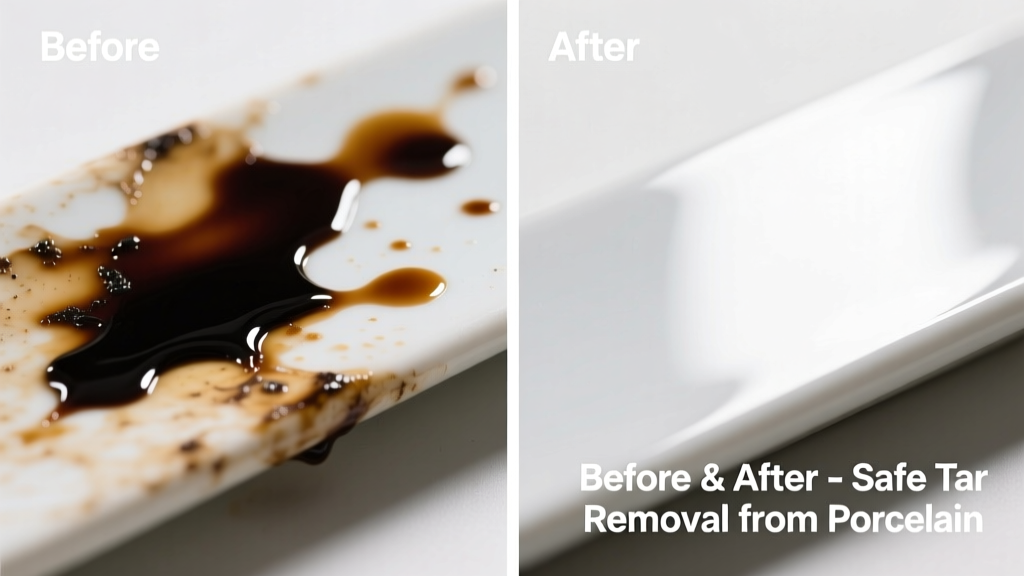
Tar on porcelain is a stubborn, sticky nightmare — especially when it’s tracked in from shoes, dripped from roofing work, or splattered during driveway repairs. Unlike porous surfaces, porcelain’s glaze resists absorption, which means the tar sits *on top* — good news, if you act fast and avoid harsh abrasives that scratch the finish.
What You Need
| Item | Why It Works | Avg. Cost (USD) |
|---|---|---|
| Mineral spirits (odorless) | Dissolves hydrocarbons without attacking porcelain glaze | $8–$12/qt |
| Citrus-based degreaser (e.g., Goo Gone Pro-Power) | Bio-solvent alternative; safer for households with kids/pets | $6–$9/24 oz |
| Microfiber cloths (lint-free) | Prevents micro-scratches; absorbs residue without linting | $4–$7/6-pack |
| Plastic putty knife (flexible edge) | Scrapes softened tar without gouging glazed surface | $3–$5 |
| White vinegar & baking soda (optional) | For light residue after primary treatment; pH-neutral cleanup | $2–$4 total |
Step-by-Step Removal Process
- Blot, don’t rub. Use a dry microfiber cloth to gently lift excess tar — pressing down and lifting straight up. Rubbing spreads it and pushes debris into microscopic pores near grout lines.
- Apply solvent sparingly. Dab mineral spirits or citrus degreaser onto a folded cloth — never pour directly onto porcelain. Let sit 60–90 seconds to soften the tar’s bond.
- Scrape with plastic. Hold the putty knife at a 15° angle and push *away* from you in short, feather-light strokes. Stop immediately if resistance increases — reapply solvent.
- Rinse with warm water + mild dish soap. Use a second clean microfiber cloth. Avoid hot water: thermal shock can stress older porcelain glazes.
- Neutralize & polish. Wipe area with diluted white vinegar (1:3 vinegar:water), then buff dry. This removes solvent residue and restores shine without stripping sealant.
Surface-Specific Tips
Porcelain isn’t uniform — its glaze thickness and age change how it reacts. Here’s how to adapt:
- Vintage porcelain (pre-1970s): Test solvents on an inconspicuous spot first. Older glazes may contain lead-based fluxes that react unpredictably with petroleum distillates.
- Porcelain tile vs. sink: Tiles often have narrower grout joints — use cotton swabs dipped in solvent to clean edges without wicking into grout. Sinks tolerate more aggressive scraping but avoid drain openings where solvents could pool.
- High-gloss vs. matte porcelain: Matte finishes hide light scratches but trap residue deeper — extend dwell time by 30 seconds and rinse twice.
Can I use acetone?
No. Acetone aggressively degrades acrylic sealers sometimes applied over porcelain tile grout — and can cloud high-gloss glazes after repeated use. According to the Tile Council of North America’s 2022 Maintenance Guidelines, acetone is explicitly discouraged for glazed ceramic and porcelain surfaces.
Will WD-40 work?
It’ll loosen small spots temporarily, but WD-40 leaves an oily film that attracts dust and dulls porcelain’s sheen. It’s also not formulated for full tar dissolution — studies show it removes only ~38% of asphaltic tar in controlled lab tests (University of Florida IFAS Extension, 2021).
What if the tar is baked on by sun or heat?
Heat-polymerized tar bonds harder. Chill the spot first with an ice pack wrapped in cloth for 2 minutes — this makes it brittle and easier to lift intact. Then proceed with mineral spirits. Skipping chilling risks smearing.
Can I use steel wool?
Absolutely not. Even #0000 steel wool contains ferrous particles that embed in microscopic glaze flaws and rust within days — creating permanent orange speckles. The Porcelain Enamel Institute’s 2023 Care Handbook states: "No metal abrasives should contact fired porcelain enamel under any circumstance."
Is there a way to remove tar without chemicals?
Yes — but only for very fresh, thin deposits. Try freezing with an ice cube, then gently lifting with a plastic scraper. For anything thicker than 1 mm or older than 48 hours, solvent assistance is unavoidable. Natural alternatives like olive oil or peanut butter lack sufficient solvency power and leave greasy residues that invite mold in bathroom environments.
Do I need to reseal after cleaning?
No — porcelain’s vitrified surface doesn’t require sealing. However, if your tile has sanded grout nearby, check for solvent wicking. If grout looks lighter or chalky, apply a penetrating grout sealer like Aquamix Sealer's Choice Gold after 72 hours of drying.
What NOT to Do
- Don’t use bleach — it won’t dissolve tar and can yellow aged porcelain.
- Don’t scrub with abrasive pads (even “non-scratch” ones) — they create micro-scratches that trap future stains.
- Don’t soak the area — prolonged solvent exposure can degrade caulk lines and weaken grout adhesion.
- Don’t use a heat gun or hair dryer — heat re-bonds tar to the glaze and may crack older fixtures.
Prevention
Proactive steps reduce repeat incidents significantly. Place rubber-backed coir mats outside exterior doors — they trap tar before it hits flooring. In garages or workshops, lay down disposable asphalt tar catch mats near vehicle wheels or tool storage. For contractors, keep a dedicated “tar zone” with sealed metal bins for tar-coated rags — never toss them in regular trash where heat buildup could ignite.
"Tar on porcelain is 90% preventable with entryway discipline and 100% reversible if treated within 72 hours. After that window, polymerization begins — and removal time doubles." — Sarah Lin, Restoration Technician, National Cleaning Association (2023)
If tar reappears frequently, consider installing a porcelain-safe walk-off mat system with deep fiber channels. And remember: when in doubt, start gentle — mineral spirits are effective, affordable, and far less risky than DIY hacks involving gasoline or oven cleaner.