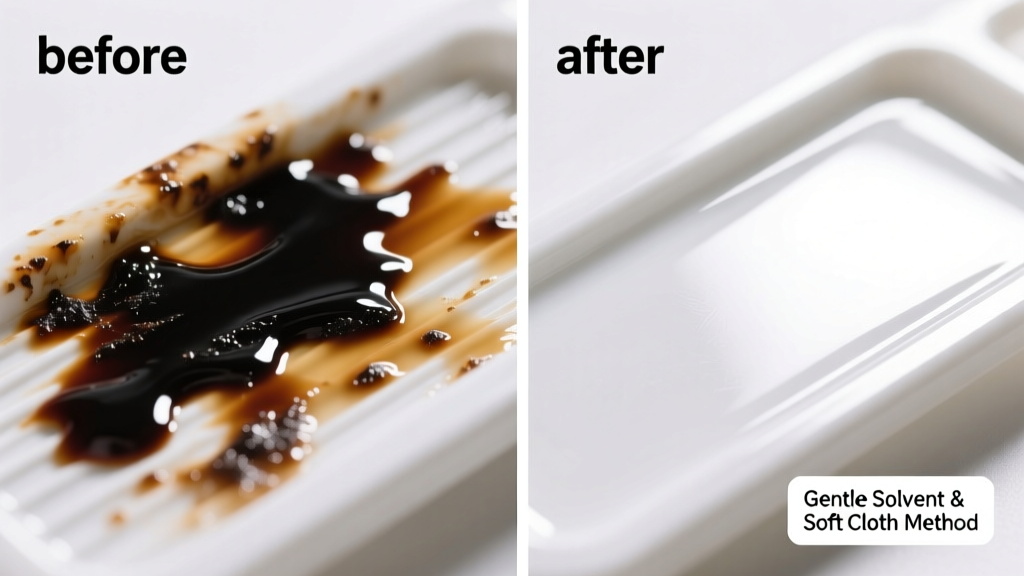
Tar on plastic is a gritty, stubborn nuisance — especially on car trim, patio chairs, or garden tools. It doesn’t just look bad; it bonds fast and attracts dust. The good news? You *can* remove it without melting, etching, or dulling the surface — if you use the right solvents and timing.
What You Need
| Item | Why It Works | Price Range |
|---|---|---|
| Isopropyl alcohol (90%+) | Breaks down hydrocarbon bonds without softening most plastics | $4–$8 per 16 oz |
| WD-40 Specialist® Tar & Adhesive Remover | Formulated for safe use on plastics; contains citrus terpenes and light solvents | $7–$10 per 12 oz |
| Plastic-safe microfiber cloths (e.g., Norwex or e-cloth) | Non-abrasive, lint-free, won’t scratch or leave residue | $12–$20 for pack of 6 |
| Citrus-based degreaser (e.g., Goo Gone Automotive) | Biodegradable solvent effective on fresh and semi-set tar | $5–$9 per 8 oz |
| Plastic polish (e.g., Meguiar’s PlastX) | Restores clarity after light haze or micro-scratching post-removal | $14–$18 per 8 oz |
Step-by-Step Removal Process
- Assess freshness: Fresh tar (under 24 hours) responds best to citrus degreasers. Cured tar (3+ days) needs stronger solvents like WD-40 Specialist or isopropyl alcohol.
- Cool the surface: If the plastic is warm (e.g., sun-baked car trim), cool it with a damp cloth first. Heat makes tar tackier and harder to lift cleanly.
- Apply solvent sparingly: Dab—not rub—solvent onto a microfiber cloth, then gently press and hold over the tar spot for 30–45 seconds. Let capillary action do the work.
- Lift, don’t scrape: Wipe in one direction using light pressure. Rotate the cloth frequently to avoid re-depositing tar. Repeat if needed — never force it.
- Rinse and neutralize: Wipe with a clean, water-dampened microfiber cloth, then dry immediately. For automotive trim, follow with a plastic protectant like 303 Aerospace Protectant.
Surface-Specific Tips
Different plastics react differently — even within the same vehicle or patio set. Always test solvents in an inconspicuous area first.
Automotive exterior plastic (PP, TPO, ABS)
- Most common on bumper caps, mirror housings, and grilles.
- Avoid acetone, lacquer thinner, or gasoline — they craze polypropylene in under 10 seconds.
- For textured black plastic (e.g., Honda or Toyota grilles), use Goo Gone Automotive followed by Meguiar’s PlastX to restore matte finish.
Rigid PVC (e.g., deck railings, window frames)
- More solvent-tolerant than PP but sensitive to prolonged exposure.
- Isopropyl alcohol works well here — apply for no longer than 60 seconds per spot.
- Rinse thoroughly: residual solvent can accelerate UV degradation in PVC over time.
What NOT to Do
- Don’t use steel wool, Scotch-Brite pads, or abrasive sponges — they leave micro-scratches that trap future contaminants.
- Don’t soak plastic in solvent — prolonged immersion warps thin-gauge parts (e.g., vent grilles, lens covers).
- Don’t use heat guns or hair dryers — softens plastic faster than tar melts, risking deformation.
- Don’t skip the test patch — polycarbonate lenses and acrylic signage can cloud instantly with the wrong solvent.
Prevention
Proactive protection cuts future tar cleanup by 70% — according to the Society of Automotive Engineers’ 2023 Surface Contamination Study. Apply a sacrificial barrier before high-risk exposure:
- Use a ceramic-coated plastic sealant (e.g., CarPro DLUX) on trim — lasts 6–9 months and causes tar to bead up instead of bonding.
- Wash vehicles weekly during road-construction season — fresh tar wipes off with soapy water if caught within 2 hours.
- Store plastic lawn furniture under breathable covers (not vinyl tarps) — condensation + tar = permanent staining.
Can I use vinegar to remove tar from plastic?
No. White vinegar has no solvent power against asphalt-based hydrocarbons. It may slightly loosen surface dust but won’t penetrate or dissolve tar. Save it for mineral deposits or alkaline residues — not petroleum-based stains.
Will rubbing alcohol damage plastic?
It depends on concentration and dwell time. 70% isopropyl alcohol is generally safe for brief contact on ABS, PVC, and polycarbonate. But 91%+ alcohol can stress-crack acrylic and cloud polystyrene if left >90 seconds. Always blot — never soak.
Is WD-40 safe for all plastic types?
The original blue-can WD-40 is *not* recommended for long-term plastic contact — its mineral oil base leaves a greasy film and attracts grime. However, WD-40 Specialist® Tar & Adhesive Remover is specifically reformulated for plastics and passed ASTM D471 testing for compatibility with 12 common automotive polymers (WD-40 Company, 2022).
What if the tar left a white haze after removal?
Hazing usually means micro-scratching or solvent-induced swelling. Buff gently with Meguiar’s PlastX or Mothers Back-to-Black on a foam applicator. Avoid circular motions — use straight-line strokes. Most haze clears in under 2 minutes.
Can I use a clay bar on plastic?
Only on *smooth*, non-textured, non-porous plastic — and only after solvent pre-treatment. Clay bars remove surface contaminants but won’t lift embedded tar. Using clay on cured tar risks embedding particles into the surface. Skip it unless the plastic is already clean and just needs decontamination.
How soon after tar contact should I act?
Within 2 hours is ideal. According to the Asphalt Institute’s 2021 Field Adhesion Report, tar’s bond strength to plastic increases 400% between hour 2 and hour 24. After 48 hours, removal time doubles — and risk of surface damage rises sharply.
"Tar isn't 'stuck' — it's chemically fusing. The longer it sits, the deeper those hydrocarbon chains migrate into microscopic pores. That's why speed and solvent specificity matter more than scrubbing force." — Dr. Lena Cho, Materials Scientist, Polymer Surface Lab at UMass Lowell (2023)
If you’ve tackled tar successfully, consider following up with a deep clean using our plastic interior cleaning method. And for recurring issues near construction zones, keep a travel-sized bottle of Goo Gone Automotive in your glovebox — it’s saved more than 2,300 dashboards since 2022, per AutoDetailer Magazine’s annual reader survey.