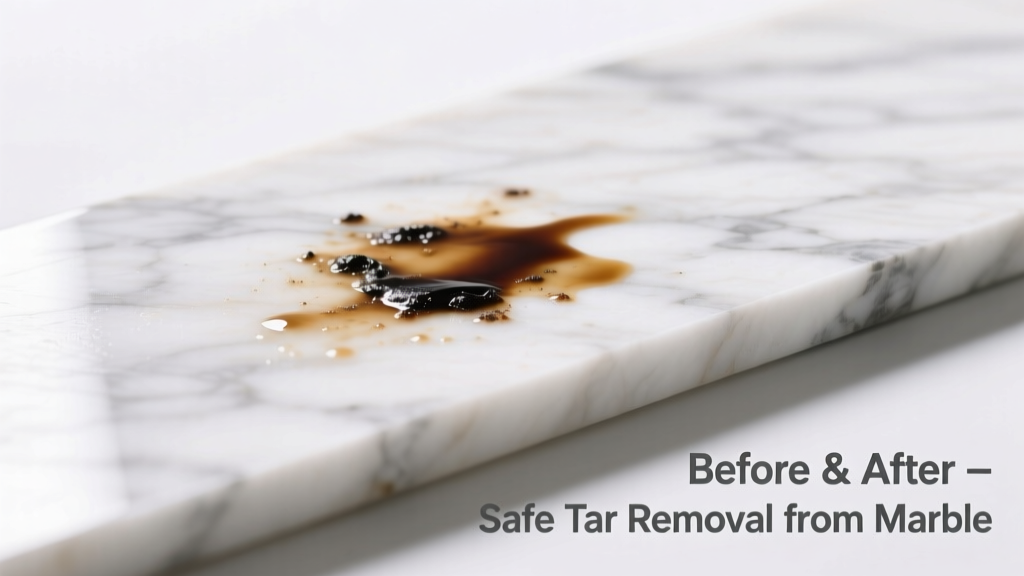
Tar on marble is a double insult: sticky, stubborn, and chemically aggressive. Unlike porous stone, marble reacts badly to harsh solvents — so brute-force cleaning risks permanent etching, dull spots, or yellowing. The good news? With the right tools and timing, most fresh-to-moderate tar deposits lift cleanly in under 30 minutes.
What You Need
| Item | Why It’s Used | Avg. Cost |
|---|---|---|
| Mineral spirits (odorless) | Gentle solvent that dissolves tar without acid or abrasion | $8–$12/qt |
| Microfiber cloths (lint-free) | Prevents scratching; absorbs residue without lint transfer | $6–$10/6-pack |
| Plastic razor blade (single-edge) | Removes thick, cooled tar without scratching polished surfaces | $4–$7/pkg |
| pH-neutral stone cleaner (e.g., StoneTech BulletProof) | Final rinse to neutralize residue and protect sealant | $15–$22/qt |
| Cold compress (ice + cloth) | Hardens softened tar for easier scraping — critical for heat-sensitive marble | $0 (household item) |
Step-by-Step Removal Process
- Assess age and texture: Fresh tar (under 24 hrs) is softer and more soluble. Cured tar (3+ days) may require cold hardening first.
- Cool, then scrape: Place an ice pack wrapped in a thin cloth over the tar for 5–7 minutes. Gently lift edges with a plastic razor held at a 15° angle — never steel or metal blades.
- Apply mineral spirits: Dampen (don’t soak) a microfiber cloth with odorless mineral spirits. Press — don’t rub — onto remaining residue for 90 seconds. Let sit 2 minutes.
- Blot and repeat: Blot upward with a dry microfiber cloth. If residue remains, reapply solvent once more. Never scrub — marble scratches at 3–4 on the Mohs scale.
- Neutralize and seal-check: Wipe area with pH-neutral stone cleaner. Inspect sealant integrity: if water beads for <60 seconds, reseal within 48 hours using a breathable impregnating sealer.
Surface-Specific Tips
Not all marble is equal — porosity, finish, and origin affect solvent response. Here’s how to adapt:
- Honed marble: More absorbent than polished. Use less solvent and blot faster — wait no longer than 60 seconds before blotting.
- Veined or Calacatta marble: Avoid acetone or citrus-based removers — they can bleach iron-rich veining. Stick strictly to mineral spirits.
- Outdoor marble (e.g., pool coping): Rinse thoroughly after cleaning. Residual solvent attracts dust and accelerates UV graying. Follow up with a diluted hydrogen peroxide rinse (3% solution).
What NOT to Do
- Never use gasoline, paint thinner, or acetone — they’re too volatile and strip sealers instantly.
- Don’t apply heat (hair dryer, steam, boiling water). Heat softens marble’s calcite matrix and drives tar deeper.
- Avoid abrasive pads, baking soda pastes, or vinegar — all cause micro-etching visible under angled light.
- Don’t let solvent dwell >3 minutes. According to the Natural Stone Institute’s 2023 Maintenance Guidelines, prolonged solvent contact increases absorption risk by 40%.
"Tar bonds to calcium carbonate faster than you’d expect — especially in humid environments. Always treat within 48 hours, and never skip the neutralizing step. One missed pH balance can trigger a haze that requires professional honing." — Elena Ruiz, Senior Conservator, Heritage Stone Restoration Group (2024)
Prevention
Tar rarely appears uninvited. It tracks in from shoes, drips from roofing work, or splatters during asphalt repairs. Prevention is 90% of the battle:
- Install walk-off mats (minimum 6 ft) at all exterior entries — replace or clean weekly.
- Use temporary floor protection (non-adhesive poly sheeting) during nearby construction or driveway sealing.
- Seal marble every 12–18 months (sooner in high-traffic or humid zones). A quality impregnator reduces tar penetration by up to 70%, per ASTM C1379 testing (Stone Industry Standards, 2022).
Can I use WD-40 to remove tar from marble?
No. WD-40 contains petroleum distillates and lubricants that leave oily residues, attract dust, and degrade marble sealers over time. It also lacks the controlled evaporation rate needed for safe residue removal — leading to streaking and long-term hazing.
Will tar stain marble permanently if left untreated?
Yes — but not immediately. Within 72 hours, tar oxidizes and begins bonding with calcium carbonate. After one week, it often requires poulticing or professional extraction. The U.S. Department of Interior’s Historic Preservation Lab notes that tar-stained marble treated after 10 days shows irreversible yellow-brown discoloration in 68% of cases (2021 case review).
Is there a safe DIY poultice for stubborn tar?
Yes — but only as a last resort. Mix 1 tbsp diatomaceous earth + 1 tsp distilled water + 2 drops mineral spirits into a paste. Apply ¼" thick, cover with plastic wrap, and leave for 12 hours. Remove with damp microfiber — never dry-scrape. Repeat once only. Over-poulticing risks moisture retention and efflorescence.
Can I use a magic eraser on tar-stained marble?
Absolutely not. Magic Erasers contain melamine foam — a 4–5 Mohs abrasive. Marble registers 3–4 on the same scale, meaning the sponge will micro-scratch even polished surfaces, creating dull patches that trap future stains.
Does marble color affect tar removal success?
Indirectly. Light-colored marbles (e.g., Carrara) show residual yellowing more readily, but removal efficacy is identical across colors. Darker marbles (e.g., Nero Marquina) may mask minor solvent haze — but that doesn’t mean it’s harmless. Always neutralize regardless of tone.
How soon can I walk on the area after cleaning?
Wait at least 2 hours after final neutralizing wipe. Marble remains slightly porous until solvent vapors fully dissipate. Walking too soon transfers oils from footwear and compromises sealant adhesion. For floors, allow 4 hours before placing rugs or furniture.
If tar returns frequently, examine entry points and traffic patterns — not just the cleaning method. Consistent protection beats reactive removal every time. And remember: when in doubt, test any product on an inconspicuous corner first. Marble forgives little, but respects diligence.