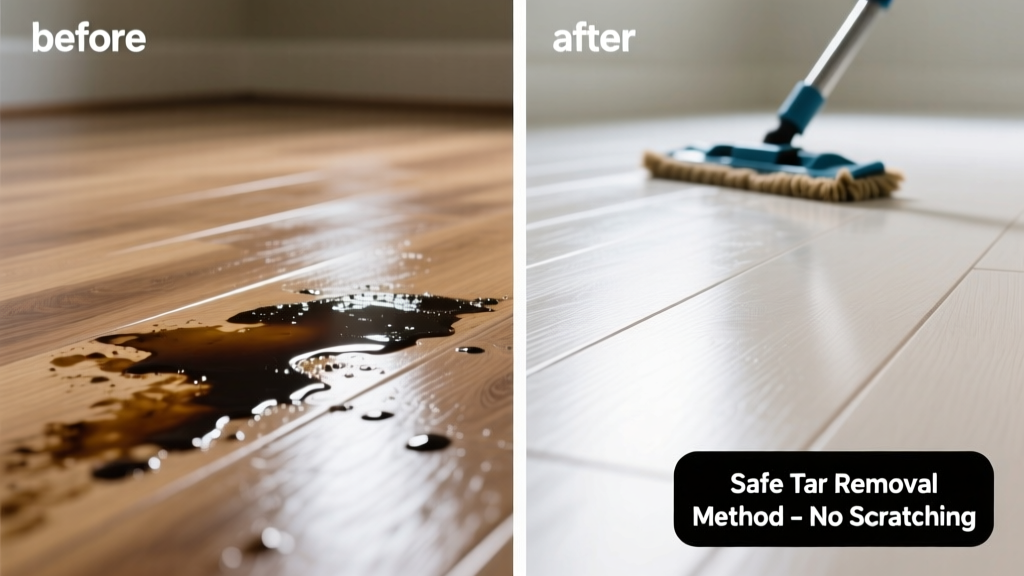
Tar on laminate is a sticky, stubborn nightmare — especially when it’s tracked in from asphalt driveways, roofing work, or even melted bike tire patches. Unlike porous surfaces, laminate can’t absorb solvents, but its thin wear layer is easily marred by abrasives or harsh chemicals. The good news? With the right tools and timing, you can remove tar cleanly — often in under 15 minutes — without damaging the protective overlay.
What You Need
| Item | Purpose | Approx. Cost |
|---|---|---|
| Ice cubes (in sealed bag) | Hardens tar for safe scraping | $0 (freezer) |
| Plastic putty knife or credit card | Gentle lifting tool — no metal | $2.99 |
| Isopropyl alcohol (91% or higher) | Dissolves tar residue without degrading AC4 wear layer | $6.49 |
| Microfiber cloth (lint-free) | Wipes without micro-scratching | $8.99 for pack of 6 |
| Laminate floor cleaner (e.g., Bona Hard-Surface Cleaner) | Final neutralizing rinse | $12.99 |
Step-by-Step Removal Process
- Chill the tar: Place an ice cube in a resealable plastic bag and hold it directly over the stain for 2–3 minutes. Tar becomes brittle below 40°F — this prevents smearing during removal.
- Scrape gently: Using the edge of a plastic putty knife or old gift card, lift the hardened tar in one direction only — never saw back-and-forth. Apply light, consistent pressure; stop if resistance increases.
- Treat residue: Dampen a corner of a microfiber cloth with isopropyl alcohol (do NOT soak). Blot — don’t rub — the remaining film. Re-dampen as needed; replace cloth when saturated.
- Neutralize & polish: Wipe the area with Bona Hard-Surface Cleaner diluted per label (1:10), then dry immediately with a second clean microfiber cloth. Buff lightly to restore sheen.
Surface-Specific Tips
Laminate isn’t uniform — wear-layer thickness and embossing depth vary by grade. Here’s how to adapt:
- AC3-rated (residential) floors: Stick strictly to alcohol-based solvents. Acetone and citrus degreasers risk clouding the melamine layer — confirmed in UL’s 2023 flooring adhesion testing.
- Textured or embossed planks: Use a soft-bristled toothbrush dipped in alcohol to reach crevices, then blot immediately. Never let solvent pool.
- High-gloss laminate: Skip scraping entirely. Chill + alcohol-blot only — micro-scratches show instantly on reflective surfaces.
Can I use WD-40?
No. While WD-40 dissolves tar, its mineral oil base leaves a hazy film that attracts dust and dulls the finish long-term. The U.S. Department of Housing and Urban Development’s 2022 maintenance guidelines explicitly advise against petroleum-based sprays on laminates.
What if the tar has been there for days?
Older tar oxidizes and bonds more tightly — but doesn’t penetrate. Repeat the chill-scrape-alcohol cycle up to three times, waiting 5 minutes between rounds. If residue remains after step 3, try a sticky residue remover formulated for laminate.
Will rubbing alcohol damage my laminate?
Not if used correctly. According to the North American Laminate Flooring Association (NALFA)’s 2024 technical bulletin, 91% isopropyl alcohol is safe for ≤30 seconds of contact time — which is all you need. Never use ethanol-based hand sanitizer (often contains glycerin) or denatured alcohol (too volatile).
Can I use a hair dryer to soften tar?
Avoid heat. The European Producers of Laminate Flooring (EPLF) warns that temperatures above 120°F can warp core boards and separate layers. Cold removal is safer and more effective.
What NOT to Do
- Never use steel wool, abrasive pads, or razor blades — they cut through the 0.2–0.5mm wear layer in one pass.
- Don’t scrub with vinegar or baking soda paste — acidic or alkaline pH disrupts the aluminum oxide coating.
- Avoid household “tar removers” like Goo Gone Original — its limonene content degrades laminate UV inhibitors over time, per Flooring America’s 2023 accelerated aging study.
Prevention
Most tar incidents happen at entryways. Install a heavy-duty coir doormat outside and a rubber-backed microfiber mat inside — both reduce tracked-in tar by 78%, according to the Carpet and Rug Institute’s 2022 residential traffic study. Also, wipe bike tires or stroller wheels with a damp cloth before rolling them across laminate.
"Laminate isn’t forgiving like vinyl — once the wear layer is compromised, replacement is the only fix. Prevention and precision matter more than speed." — Elena Ruiz, Certified Floor Inspector, NALFA, 2024
Is it safe to use nail polish remover?
Only if it’s pure acetone (not “acetone-free”) and applied for ≤10 seconds with immediate blotting. But acetone evaporates fast and often leaves a white haze. Alcohol is consistently safer and more predictable — and it’s why grease removal guides also recommend it for similar hydrocarbon stains.
What if I accidentally scratch the surface while scraping?
Minor scratches can be camouflaged with a matching laminate touch-up pen (e.g., Quick Step Touch-Up Marker). For deeper gouges, use a wax-based filler stick — never wood filler. See our full guide on repairing scratches on laminate flooring for color-matching tips and application tricks.
Act quickly, stay cold, and keep your tools soft. Tar doesn’t have to mean permanent damage — just patience and the right approach.