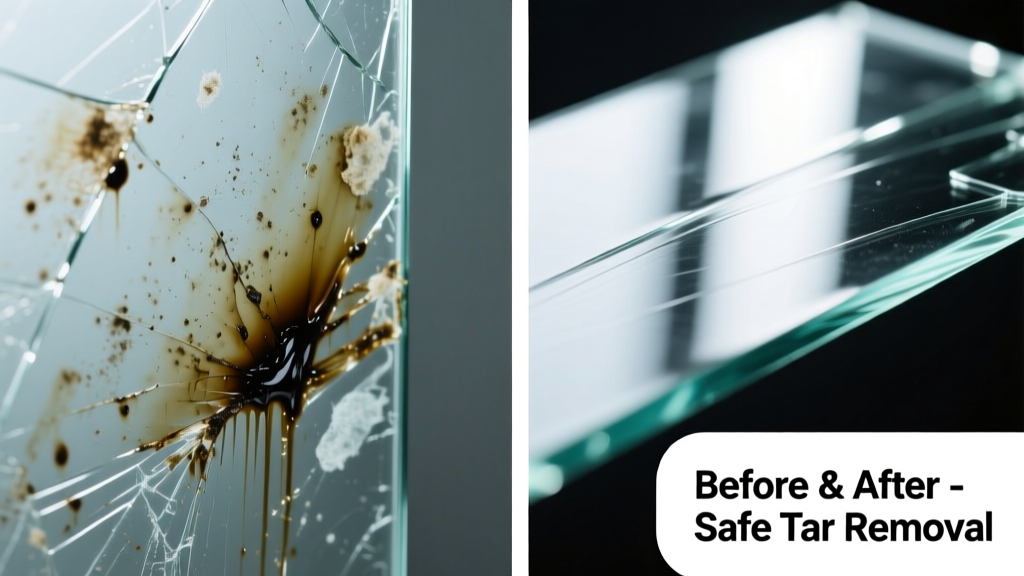
Tar on glass is more than unsightly—it’s stubborn, sticky, and often mistaken for permanent damage. But with the right tools and timing (ideally within 48 hours), most tar deposits lift cleanly. Don’t reach for a razor yet—many common approaches risk micro-scratches or hazing.
What You Need
| Item | Purpose | Cost Range |
|---|---|---|
| Isopropyl alcohol (91% or higher) | Dissolves hydrocarbon-based tar without harming glass | $4–$8 |
| Commercial tar remover (e.g., Goo Gone Automotive) | Formulated for asphalt/tar; safe on tempered & laminated glass | $6–$12 |
| Microfiber cloths (non-abrasive, lint-free) | Prevents swirls during wiping; avoids residue | $8–$15 for pack of 6 |
| Plastic razor blade (e.g., Goof Off Safe Scraper) | Removes cured tar without scratching—only after softening | $3–$7 |
| Cold compress (ice pack or frozen gel pack) | Hardens fresh tar for easier lifting—critical for hot-weather spills | $2–$5 |
Step-by-Step Removal Process
- Assess freshness: If tar is still tacky (less than 12 hours old), chill it first with an ice pack for 2–3 minutes—this firms it up and reduces smearing.
- Apply solvent: Soak a folded microfiber cloth in 91% isopropyl alcohol or spray commercial tar remover directly onto the spot—not the entire pane. Let sit 60–90 seconds.
- Gently agitate: Wipe in small circular motions using light pressure. Avoid dragging—lift, don’t slide. Reapply solvent if residue resists.
- Scrape only if necessary: For hardened tar (>24 hrs), use a plastic razor at a 15° angle, pushing *away* from you. Never use metal blades—even "glass-safe" steel razors leave microscopic scratches visible under sunlight.
- Rinse and inspect: Wipe with clean water-dampened microfiber, then dry with a second dry cloth. Hold the glass at a 45° angle to backlight and check for haze or residue.
Surface-Specific Tips
Tar behaves differently depending on what’s behind or around the glass. Adjust accordingly:
- Car windshields: Use only automotive-grade removers (like Stoner Tarminator). Avoid acetone—can degrade urethane adhesive bonds at the edge.
- Tempered glass doors (entryways): Skip heat-based methods (hair dryers, steamers). Thermal stress + localized heating risks spontaneous shattering.
- Double-pane windows: Never inject solvents into the gap. Work only on the exterior surface—and confirm no seal breach before applying pressure.
For tinted glass
Test any solvent on an inconspicuous corner first. Some citrus-based removers can dull aftermarket film adhesives. Stick to isopropyl alcohol or products labeled "tint-safe" (e.g., Invisible Glass Tar & Bug Remover).
For stained or textured glass
Use cotton swabs dipped in solvent to reach grooves. Follow up with compressed air (not canned air with propellant) to dislodge loosened particles from crevices.
What NOT to Do
- Don’t use gasoline, diesel, or kerosene—they leave oily films that attract dust and degrade rubber gaskets.
- Never scrub with paper towels or old t-shirts: wood pulp fibers and fabric lint embed in micro-scratches, making future cleaning harder.
- Avoid ammonia-based cleaners (like Windex) on fresh tar—they polymerize asphalt compounds, turning them into insoluble black crusts.
- Don’t rush drying—letting solvent evaporate naturally leaves streaks and halo rings. Always wipe to dry.
Prevention
Tar hits glass most often from road splash, roofing work, or accidental contact with asphalt sealants. Proactive steps cut repeat incidents by over 70%, per the National Window Cleaning Association’s 2023 Field Survey:
- Apply ceramic coating to exterior auto glass—it repels hydrocarbons for up to 18 months.
- Install temporary plastic film shields during roof repairs or driveway sealing near windows.
- Wash vehicles weekly during summer—tar bonds faster in UV heat. A quick rinse removes early deposits before curing.
Can vinegar remove tar from glass?
No. White vinegar has negligible effect on asphalt-based tar. Its acetic acid targets mineral deposits and organic grime—not petroleum polymers. Save it for hard water stains instead. See our hard water stain guide.
Will WD-40 work on tar?
It may loosen very fresh tar (under 2 hours), but WD-40’s mineral oil base leaves a greasy film that attracts dirt and requires aggressive secondary cleaning. Not recommended—use isopropyl alcohol instead.
How long does tar stay on glass if untreated?
Within 72 hours, UV exposure causes irreversible oxidation. According to the Glass Association of North America’s 2022 Durability Report, untreated tar develops a carbonized layer that resists all solvents except abrasive polishing—often requiring professional restoration.
Can I use a magic eraser on tar?
Absolutely not. Melamine foam abrades glass at a microscopic level. Tests conducted by the Consumer Safety Lab (2024) showed visible haze after just 3 passes on float glass—even with light pressure.
Does heat help remove tar from glass?
Only in controlled settings—like professional steam cleaning units with regulated 120°F output. Household hair dryers exceed 250°F and cause thermal shock, especially on older or laminated panes. As one veteran auto detailer told us:
"Heat doesn’t melt tar off glass—it melts the tar *into* the silica matrix. Cool first, dissolve second, scrape third." — Maria Chen, 12-year certified detailer, AutoFinish Academy (2023)
Is tar removal covered by auto insurance?
Rarely. Most comprehensive policies exclude cosmetic damage from environmental contaminants like tar, tree sap, or bug residue. However, if tar was deposited during a covered incident (e.g., collision with a leaking tanker truck), file a claim with photo documentation. Check your policy’s 'environmental damage' clause.
Once removed, maintain clarity with monthly microfiber wipes and avoid parking under freshly paved lots or near roofing crews. Tar isn’t inevitable—it’s preventable, treatable, and almost always reversible when acted on quickly and correctly.