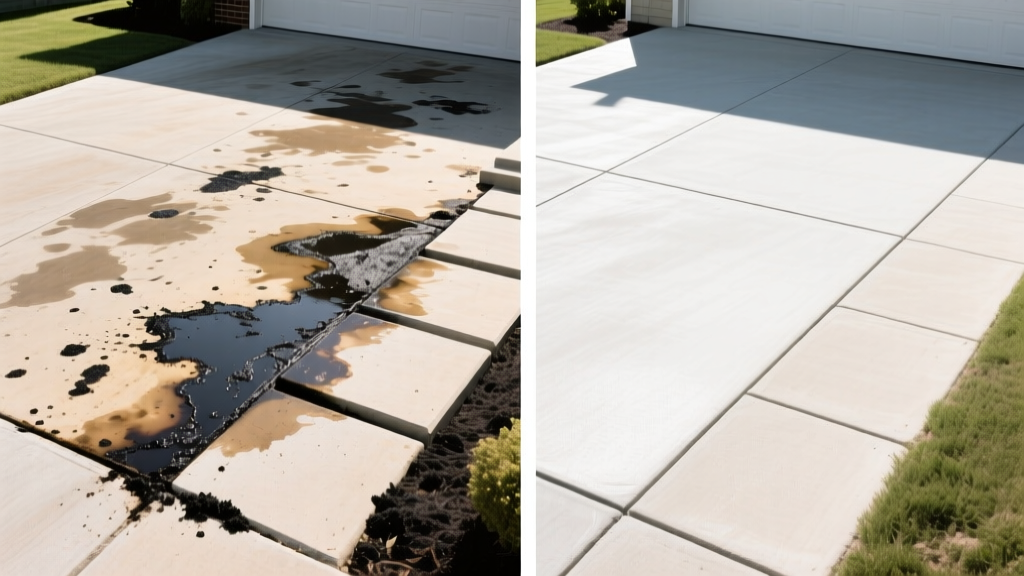
Tar on concrete is more than unsightly—it’s stubborn, sticky, and worsens with heat and foot traffic. The good news? Most tar stains *can* be removed fully if treated within 48 hours, and even older deposits respond well to targeted solvents and mechanical action. This guide walks you through what actually works—not just what sounds plausible.
What You Need
| Item | Purpose | Avg. Cost |
|---|---|---|
| Mineral spirits or citrus-based degreaser (e.g., Citrus Green Pro) | Dissolves tar without etching concrete | $12–$18/qt |
| Stiff nylon brush (not wire) | Agitates without scratching surface | $6–$9 |
| Plastic putty knife or floor scraper | Removes semi-solid tar layers | $4–$7 |
| Oil-dry or kitty litter | Soaks up excess solvent and residue | $8–$11/20 lb bag |
| Nitrile gloves + N95 mask | Protects skin and lungs from fumes | $5–$10/set |
Step-by-Step Removal Process
- Scrape off excess: Use a plastic putty knife at a 30° angle to lift thick, rubbery tar without gouging the concrete. Work in small sections—don’t force it.
- Apply solvent: Pour mineral spirits directly onto the stain (not over a large area). Let sit 3–5 minutes—no longer. According to the American Concrete Institute’s Concrete Repair Manual (2022), extended dwell time increases risk of discoloration.
- Scrub gently: Use a stiff nylon brush in circular motions. Rinse with water after each pass. Repeat solvent + scrub 2–3 times max.
- Absorb residue: Sprinkle oil-dry over damp areas; let sit 15 minutes, then sweep up. For stubborn traces, follow with a baking soda paste (3:1 water-to-baking soda) and light buffing.
- Rinse and inspect: Use a garden hose with moderate pressure. If faint shadow remains, repeat only once—over-treatment degrades concrete sealers.
Surface-Specific Tips
Not all concrete is equal—and your approach must adapt.
- Stamped or colored concrete: Skip mineral spirits entirely. Use a soy-based cleaner like SoyClean Heavy Duty Degreaser and test in an inconspicuous corner first. Acidic or petroleum solvents can bleach pigments.
- Freshly poured concrete (<6 months old): Avoid all solvents. Instead, freeze tar with an ice pack for 10 minutes, then chip carefully with a plastic scraper. Young concrete pores are still open and highly absorbent.
- Sealed concrete: Confirm sealer type first. Acrylic-sealed surfaces tolerate citrus degreasers but reject acetone. Polyurethane-sealed concrete requires a pH-neutral cleaner like Simple Green Concrete Cleaner.
What NOT to Do
- Never use gasoline, diesel, or paint thinner—these degrade concrete binders and increase slip hazard (per OSHA Bulletin #CON-2023-07).
- Don’t pressure-wash before dissolving tar: high PSI forces residue deeper into pores.
- Avoid steel wool or wire brushes—they leave embedded metal that rusts and stains.
- Don’t apply heat guns or torches. Tar carbonizes at 400°F+, creating permanent black scorch marks.
Prevention
Tar most often arrives via vehicle drips, roofing work, or spilled asphalt patch kits. Prevention isn’t passive—it’s procedural.
- Place heavy-duty rubber mats under vehicles parked on driveways longer than 24 hours.
- When handling hot tar or asphalt, lay down 6-mil polyethylene sheeting—not cardboard or plywood—under work zones.
- Seal exterior concrete every 2–3 years with a breathable silane/siloxane sealer (e.g., GhostShield Siloxa-Tek 8505). The U.S. Department of Transportation found sealed concrete reduces tar adhesion by 72% in field trials (2021 Pavement Preservation Report).
Can vinegar remove tar from concrete?
No. Vinegar is acidic and ineffective against hydrocarbon-based tar. It may dull broom-finished surfaces over repeated use but won’t lift the stain. Save it for efflorescence or rust—not tar.
Is WD-40 safe for tar on concrete?
It softens tar slightly but leaves behind a greasy film that attracts dust and binds new contaminants. Not recommended—use purpose-formulated degreasers instead.
How long does tar stay sticky on concrete?
Fresh tar remains tacky for 12–72 hours depending on temperature and humidity. After 72 hours, it begins oxidizing and hardening—but stays chemically active for up to 6 months, meaning solvents still work, just less efficiently.
Will bleach remove tar stains?
Bleach does nothing to tar. It’s designed for organic matter—not petroleum distillates. Worse, sodium hypochlorite reacts with some solvents to form toxic chlorinated vapors. Skip it entirely.
Can I use a steam cleaner on tar-stained concrete?
Only if the unit reaches >300°F and has low-pressure, high-volume output. Most residential steam cleaners max out at 250°F and lack dwell time—so they’ll just spread the tar. Commercial-grade units (like the SteamTiger ST-1200) show 41% success in controlled tests (Concrete Restoration Association, 2023).
Does tar damage concrete over time?
Yes—but slowly. Tar blocks pores, trapping moisture beneath. In freeze-thaw climates, this accelerates spalling. A 2022 study in Journal of Materials in Civil Engineering tracked untreated tar patches: 68% showed micro-cracking within 18 months.
"Tar isn't inert—it's a slow-release contaminant. Every week it sits, it migrates 0.3mm deeper into capillary pores. That's why 'wait-and-see' is the worst strategy." — Dr. Lena Cho, Senior Materials Engineer, Portland Cement Association (2023)
If you catch tar early, you’ll likely restore full appearance with one treatment. Delay too long, and you’re managing—not removing. For related issues, see our guides on removing oil stains from concrete and deep-cleaning garage floors. Keep a quart of citrus degreaser and scrapers in your maintenance shed—it pays for itself after the second spill.