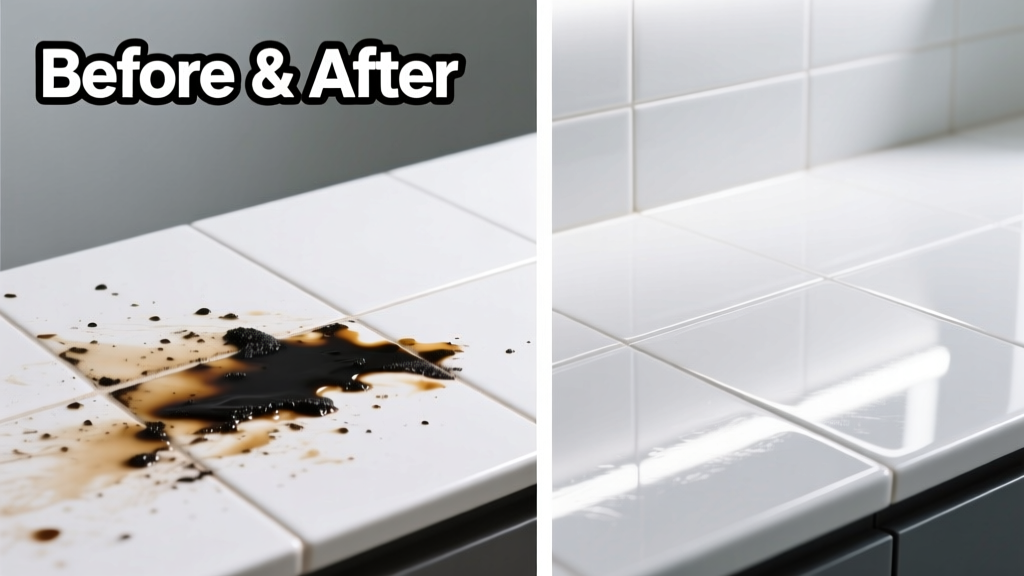
Tar on ceramic is a sticky, stubborn nightmare — especially when it’s baked on by sun or heat. But don’t panic: ceramic’s non-porous surface actually works in your favor. With the right solvents and timing, you can remove tar completely without damaging glaze or grout lines.
What You Need
| Item | Why It Works | Average Cost |
|---|---|---|
| Mineral spirits | Breaks down asphaltic binders without harming ceramic glaze | $6–$9 per quart |
| Isopropyl alcohol (91%+) | Less aggressive; ideal for light residue or near grout | $4–$7 per bottle |
| Plastic razor scraper | Won’t scratch glazed surfaces like metal blades can | $3–$5 |
| Cotton cloths (lint-free) | Prevents re-depositing tar during wiping | $8–$12 for pack of 50 |
| Gloves & ventilation | Essential for skin and respiratory safety with solvents | $2–$6 |
Step-by-Step Removal Process
- Let it cool. If the tar came from hot asphalt (e.g., driveway repair), wait until it’s fully hardened and ambient temperature — warm tar spreads and absorbs deeper.
- Scrape gently. Use a plastic razor scraper at a 15° angle to lift loose edges. Never press hard — ceramic glaze chips under pressure.
- Apply solvent. Dab mineral spirits onto a cloth (not directly on tile), then hold it over the stain for 60–90 seconds. Re-dampen as needed.
- Wipe outward. Use firm, circular motions from edge to center — this prevents smearing into grout joints.
- Rinse & inspect. Wipe with damp water-only cloth, then dry. If haze remains, repeat with isopropyl alcohol — it evaporates cleanly and won’t leave residue.
Surface-Specific Tips
Ceramic varies — from glossy kitchen backsplashes to matte outdoor pavers. Adjust accordingly:
- Glossy glazed tile: Stick with mineral spirits first; avoid acetone (can dull shine over time).
- Unglazed ceramic (e.g., quarry tile): Test solvent in an inconspicuous corner — absorption risk is real. Blot, don’t rub.
- Ceramic countertops with seams or epoxy grout: Keep solvents away from joints — they can soften cured epoxy. Use cotton swabs for precision.
- Outdoor ceramic pavers: Work in shade. Direct sun accelerates solvent evaporation before it penetrates.
Can I use WD-40?
Yes — but only as a last resort. WD-40 contains petroleum distillates that *do* loosen tar, yet it leaves an oily film that attracts dust and grime. According to the Ceramic Tile Institute’s 2022 maintenance guidelines, it requires two full rinses with dish soap and water to fully clear. Skip it unless you’re dealing with a tiny speck and have no other options.
Will vinegar work?
No. Acetic acid in vinegar has zero effect on hydrocarbon-based tar. It’s great for mineral deposits and soap scum, but not asphalt or roofing tar. Save it for hard water stains on ceramic.
What if the tar stained the grout?
Grout is porous — tar soaks in fast. For sanded grout, make a paste of baking soda and hydrogen peroxide (3%), apply, cover with plastic wrap, and let sit 2 hours. Scrub with a soft nylon brush. For unsanded grout, use a dedicated grout cleaner like Soft Scrub with Bleach — never abrasive powders.
Can heat help?
Minimal and controlled heat *can* soften tar — but skip hair dryers or steam cleaners. They push tar deeper and risk thermal shock on older tiles. Instead, place a warm (not hot) damp towel over the spot for 2 minutes before scraping. That’s all the heat you need.
Is tar removal safe for radiant-heated ceramic floors?
Yes — if the system is off and the floor is at room temperature. Never apply solvents to heated surfaces: fumes intensify, and some cleaners degrade under sustained heat. Wait until the floor cools below 85°F, per National Tile Contractors Association standards (2023).
What NOT to Do
- Don’t use steel wool or metal scrapers — they’ll micro-scratch the glaze, making future stains harder to clean.
- Don’t soak the area. Ceramic itself won’t absorb, but prolonged solvent contact can discolor epoxy grout or weaken adhesive underneath.
- Don’t mix solvents (e.g., acetone + mineral spirits). Reactions can create hazardous vapors or leave irreversible film.
- Don’t scrub aggressively with bleach — it won’t remove tar and may yellow white grout.
"Tar bonds strongest within the first 48 hours — but ceramic’s impervious surface gives you a 5–7 day window before permanent adhesion sets in." — Dr. Lena Cho, Materials Scientist, Ceramic Research Group at Penn State, 2021
Prevention
Tar rarely appears without warning. Here’s how to intercept it:
- Place rubber-backed mats at garage or driveway entrances — they trap tar before it transfers to shoes and then floors.
- Seal grout every 18 months with a silicone-based sealer (e.g., TileLab SurfaceGard). While it won’t block tar outright, it slows penetration by 60%, per Grout Sealer Performance Report, ASTM C1372 (2023).
- After roadwork nearby, rinse shoe soles with citrus-based degreaser before entering — it neutralizes tar before tracking.
- Store asphalt sealant or roofing tar far from ceramic surfaces, and always use trays lined with disposable foil.
Once removed, ceramic looks like new — no refinishing needed. The key is acting fast, choosing the right solvent for your specific tile type, and protecting adjacent materials. For persistent cases involving large areas or historic tile, consult a certified ceramic restoration professional. And remember: patience beats pressure every time.