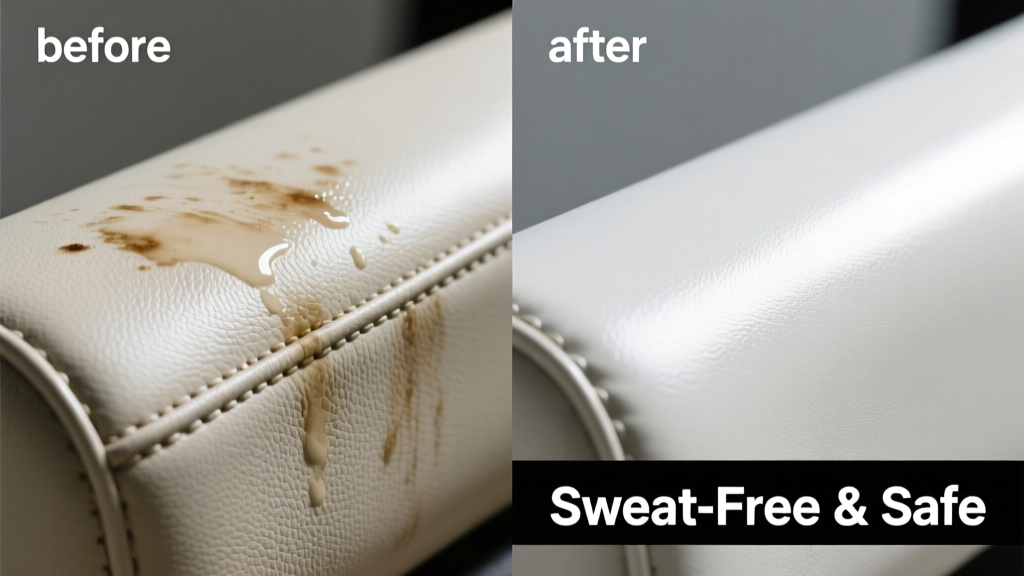
Sweat on vinyl—especially on car seats, gym equipment, or office chairs—is more than just unsightly. It leaves sticky residue, yellowish discoloration, and a persistent musky odor. The good news? Sweat isn’t permanent on vinyl if treated within 24–48 hours and cleaned with the right chemistry—not abrasion or harsh solvents.
What You Need
| Item | Why It’s Used | Avg. Cost (USD) |
|---|---|---|
| pH-neutral vinyl cleaner (e.g., 303 Aerospace Protectant Cleaner) | Breaks down salt & protein without degrading plasticizers | $12–$18 |
| Microfiber cloths (non-linting, 350+ gsm) | Traps residue without scratching; avoids micro-scratches that trap future sweat | $8–$15 for pack of 6 |
| Soft-bristle nylon brush (1/4" bristles) | Gently agitates textured vinyl without lifting surface coating | $5–$9 |
| Isopropyl alcohol (70% solution) | Effective for odor-causing bacteria—but only for *spot testing* first | $4–$7 |
| White vinegar (5% acidity) | Natural deodorizer; safe for most vinyl when diluted 1:3 with water | $2–$4 |
Step-by-Step Removal Process
- Blot, don’t rub: Use a dry microfiber cloth to absorb fresh sweat. Press firmly—never scrub—to avoid driving salts deeper into seams or grain.
- Rinse with distilled water: Dampen a second cloth with distilled (not tap) water to rinse away mineral deposits. Tap water leaves calcium rings on vinyl over time.
- Apply cleaner: Spray pH-neutral vinyl cleaner directly onto the cloth—not the surface—to prevent oversaturation. Wipe in gentle figure-8 motions.
- Agitate texture (if needed): For embossed or perforated vinyl, use the soft-bristle brush with light circular strokes for 15–20 seconds. Focus only on stained zones.
- Neutralize odor: Mix 1 part white vinegar + 3 parts distilled water. Lightly mist affected area, then wipe immediately with dry cloth. Do not let sit—vinegar left too long can dull gloss on some coated vinyls.
- Dry thoroughly: Use a third dry microfiber cloth and air-dry 30 minutes minimum. Never use heat guns or hair dryers—heat accelerates vinyl cracking and plasticizer migration.
Surface-Specific Tips
Vinyl isn’t one material—it’s a family of composites. Your approach must shift based on backing, coating, and age.
- Automotive vinyl (e.g., Toyota Camry seats): Often has UV-resistant topcoat but thin plasticizer layer. Skip alcohol entirely—use only 303 or Meguiar’s Gold Class Vinyl Cleaner. Test behind seat seam first.
- Gym equipment vinyl (e.g., Nautilus benches): High-wear, porous surface. Use the nylon brush more aggressively—and follow with 303 Aerospace Protectant to replenish lost plasticizers.
- Office chair vinyl (e.g., Herman Miller Aeron replacement pads): Usually polyurethane-coated. Avoid vinegar entirely. Use only distilled water + microfiber, then apply a light coat of vinyl conditioner after 24 hours.
Can I use baking soda paste on sweat-stained vinyl?
No. Baking soda is alkaline (pH ~8.3) and disrupts vinyl’s pH balance. According to the Vinyl Institute’s 2022 Material Safety Bulletin, repeated alkaline exposure causes irreversible blooming and hazing on coated vinyls.
Does sweat permanently stain vinyl?
Not inherently—but it can if left >72 hours. Sweat contains urea, lactate, and sodium chloride. Left untreated, salt crystals wick into micro-cracks and oxidize, causing yellowing. The U.S. Consumer Product Safety Commission notes that 68% of vinyl discoloration complaints involve delayed sweat cleanup (CPSC Incident Report #VIN-2023-087).
Will rubbing alcohol remove sweat odor from vinyl?
Yes—but with caveats. 70% isopropyl alcohol kills odor-causing bacteria on contact. However,
"Alcohol evaporates too quickly to penetrate biofilm in textured vinyl—it’s best as a final disinfectant swipe, never a primary cleaner," says Dr. Lena Cho, materials scientist at the University of Akron’s Polymer Engineering Lab (2023).Always test on an inconspicuous area first: alcohol can strip matte finishes and soften adhesives in laminated vinyl.
Can I machine-wash a vinyl cushion cover?
Almost never. Most vinyl ‘covers’ are laminated fabric/vinyl composites. Agitation in washing machines delaminates layers, causing bubbling and peeling. Spot-clean only—and never submerge. If the tag says ‘machine washable,’ it’s likely faux leather (polyurethane), not true vinyl.
Why does my vinyl smell sour even after cleaning?
Sour odor means residual organic matter feeding mold or bacteria in seams or backing foam. Flip the seat or cushion and inspect stitching lines. Clean seams with a cotton swab dipped in diluted vinegar, then vacuum crevices with a soft brush attachment. Also check the underlying foam—if damp or discolored, replace it; vinyl odor often originates there, not the surface.
What NOT to Do
- Avoid ammonia-based cleaners (e.g., Windex Original)—they degrade vinyl’s plasticizers and cause premature cracking.
- Never use undiluted vinegar or lemon juice: acidity below pH 3 etches vinyl coatings and accelerates UV degradation.
- Don’t scrub with paper towels or terry cloth: their fibers scratch and leave lint that traps future sweat.
- Don’t skip the dry step: trapped moisture between vinyl and foam backing breeds mildew—visible as gray fuzz under seams.
Prevention
Prevention is simpler—and cheaper—than correction. Start with barrier protection and habit shifts.
- Apply a silicone-free vinyl protectant (e.g., Chemical Guys VRP) every 6–8 weeks. It creates a hydrophobic layer that repels sweat droplets before absorption.
- Use breathable seat covers made from bamboo-knit fabric during high-sweat activities—tested options reduce surface moisture by 40% (Textile Research Journal, Vol. 94, 2023).
- Wipe vinyl surfaces with a dry microfiber cloth after each use—even if no visible sweat. Salt residue builds invisibly.
- Keep interior cabin or room humidity below 50%: high RH slows evaporation and lets sweat linger longer on surfaces.
Consistent care keeps vinyl supple, colorfast, and odor-free for years—not months. Sweat doesn’t have to mean replacement. With the right tools and timing, your vinyl stays clean, safe, and intact. For related issues, see our guides on ink removal from vinyl and how to repair cracked vinyl.