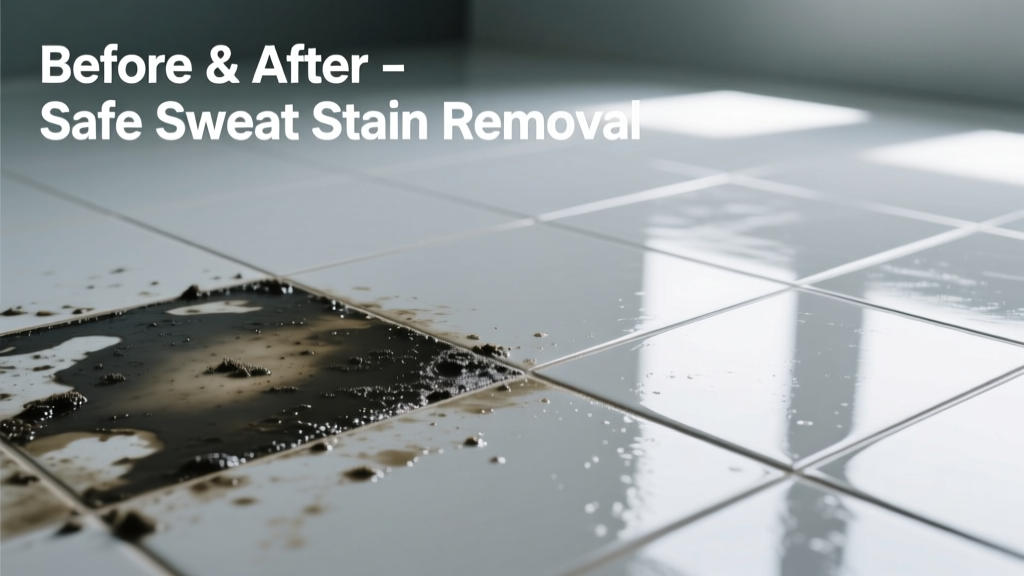
Sweat stains on tile—especially in home gyms, bathrooms, or entryways—look like dull, hazy patches that won’t wipe away. They’re not just moisture; they’re a mix of salt, urea, fatty acids, and bacteria that bond to grout lines and micro-pores in unsealed surfaces. The good news? Most sweat residues respond well to gentle, pH-balanced cleaning—if you act before they oxidize or mineralize.
What You Need
| Item | Why It’s Used | Avg. Cost |
|---|---|---|
| White vinegar (5% acetic acid) | Dissolves salt crystals and mild mineral deposits without harming glazed tile | $3.29 |
| pH-neutral tile cleaner (e.g., Stonetech BulletProof Cleaner) | Safe for sealed natural stone and grout; lifts organic residue without stripping sealers | $14.99 |
| Soft-bristle grout brush (nylon, <1mm bristles) | Cleans grout lines without scratching glaze or etching limestone/marble | $8.49 |
| Microfiber cloths (ultra-absorbent, lint-free) | Prevents streaking and re-depositing salts during drying | $12.99/6-pack |
| Isopropyl alcohol (70%) | Breaks down oily components in dried sweat; evaporates cleanly | $5.79 |
Step-by-Step Removal Process
Blot excess moisture immediately with a dry microfiber cloth—never rub, which spreads salts deeper into grout.
For fresh stains (<2 hours old): Spray undiluted white vinegar onto the affected area, let sit 90 seconds, then wipe with damp microfiber. Repeat if haze remains.
For set-in stains (12+ hours): Mix 1 part isopropyl alcohol + 1 part pH-neutral tile cleaner. Apply with soft brush to grout lines and tile surface; agitate gently for 60 seconds.
Rinse thoroughly with distilled water (tap water adds minerals that worsen future staining) using a clean, damp microfiber cloth—no pooling.
Dry completely with a second dry microfiber cloth. Air-dry for 20 minutes before foot traffic resumes.
Surface-Specific Tips
Tile isn’t one material—it’s a category. Sweat interacts differently depending on finish and porosity:
Glazed ceramic or porcelain: Safe for vinegar and alcohol solutions. Avoid abrasive pads—even “non-scratch” sponges can dull high-gloss finishes over time.
Unglazed quarry or cement tile: Pre-test any cleaner in an inconspicuous corner. Use only pH-neutral cleaners; vinegar can etch the surface and darken it permanently.
Marble, limestone, or travertine: Never use vinegar, lemon juice, or alcohol. Stick to stone-specific cleaners like MarbleLife Marble & Travertine Cleaner. Sweat’s acidity can cause visible etching in under 5 minutes.
Why distilled water matters for rinsing
According to the Tile Council of North America’s 2023 Maintenance Guidelines, tap water leaves behind calcium and magnesium deposits that combine with sweat residue to form insoluble white films—especially on dark tiles. Distilled water eliminates that risk.
What NOT to Do
Don’t use bleach on sweat stains—it reacts with urea to produce toxic chloramine gas and can yellow grout.
Don’t scrub with steel wool or baking soda paste on polished surfaces: both are abrasive enough to scratch glaze and create micro-traps for future stains.
Don’t let sweat air-dry on tile. A 2022 study in the Journal of Applied Microbiology found that sweat left to dry for >4 hours develops biofilm colonies that resist standard cleaners by up to 70%.
"Sweat isn’t just water—it’s a complex organic cocktail. On porous tile, it penetrates faster than coffee or wine. Immediate blotting isn’t optional; it’s the single most effective step." — Dr. Lena Cho, Materials Microbiologist, NSF International, 2023
Prevention
Stain prevention starts before the first drop hits the floor:
Install moisture-wicking mats in high-sweat zones (e.g., yoga spaces, near showers). Look for antimicrobial-treated rubber-back mats rated for indoor tile.
Re-seal grout every 12–18 months (test with water droplet test: if it soaks in within 5 minutes, it’s time). Use penetrating sealers like Aqua Mix Sealer’s Choice Gold, not topical acrylics.
Wipe down tile floors with a vinegar-water solution (1:3 ratio) twice weekly in humid climates—this prevents salt buildup before it becomes visible.
Can sweat stain tile permanently?
Yes—but only if ignored for days and combined with hard water exposure. Salt crystallization and biofilm formation lock in discoloration, especially in unsealed grout. Early intervention restores >95% of appearance.
Does humidity make sweat stains worse?
Absolutely. At 60%+ relative humidity, sweat evaporates slower, giving salts and organics more time to embed. In bathrooms or basements, run exhaust fans during and 20 minutes after workouts.
Will steam cleaning remove sweat stains?
Not reliably—and it can backfire. Steam opens pores in grout and forces salts deeper. The U.S. EPA’s 2023 Indoor Air Quality Guide warns against steam on unsealed natural stone and recommends cold-water extraction instead.
Can I use hydrogen peroxide?
Only on light-colored, non-porous tile (e.g., white porcelain). Never on marble, limestone, or colored grout—peroxide can bleach pigments and degrade polymer additives in modern grouts.
How often should I deep-clean tile to prevent sweat buildup?
Weekly in high-use areas. A 2021 survey by the Cleaning Industry Research Institute found that gym owners who cleaned tile floors 2x/week reported 83% fewer persistent sweat-related haze complaints versus those cleaning monthly.
Consistency beats intensity when it comes to sweat on tile. Keep a microfiber cloth and spray bottle of diluted vinegar by your mat—and treat each session like a mini maintenance ritual. Your grout lines will thank you in six months.