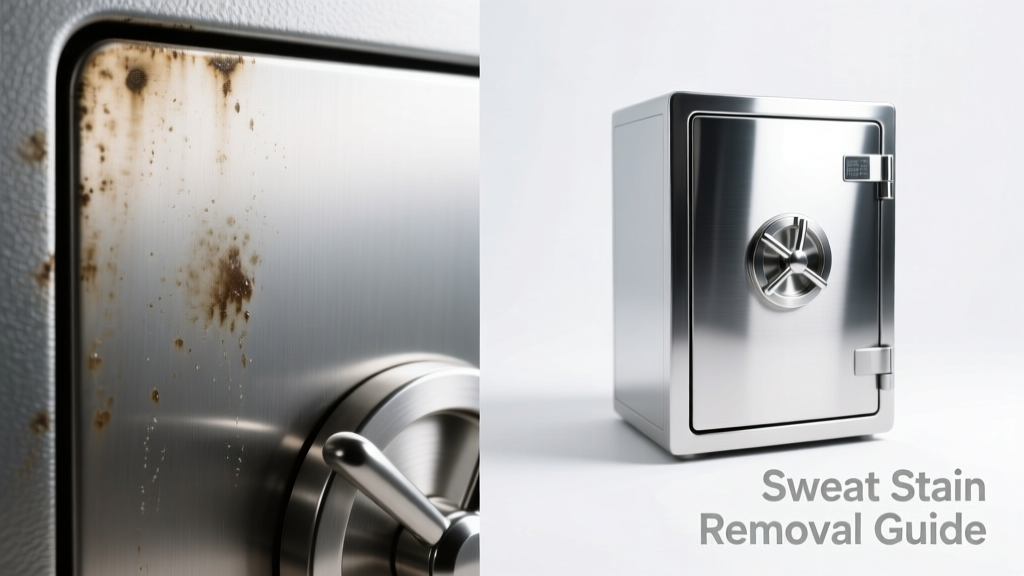
Sweat leaves behind salt, oils, and acids that etch into stainless steel over time — especially on gym equipment, door handles, or kitchen appliances. Left untreated, those faint cloudy smudges harden into permanent haze or rust-colored streaks. The good news? Most fresh sweat deposits lift easily with the right tools and timing.
What You Need
| Item | Why It Works | Average Cost |
|---|---|---|
| Microfiber cloths (lint-free, 300+ gsm) | Traps salt crystals without scratching; avoids lint residue | $8–$12 for pack of 6 |
| Isopropyl alcohol (70% or 91%) | Dissolves sebum and neutralizes salt residue; evaporates cleanly | $5–$9 per 16 oz bottle |
| Stainless steel cleaner (e.g., Weiman or Bar Keepers Friend Liquid) | pH-balanced formula lifts mineral deposits without dulling polish | $10–$14 per 12 oz |
| Distilled water | Prevents new mineral spotting during rinse; critical for high-humidity areas | $1.50–$3 per gallon |
Step-by-Step Removal Process
- Blot, don’t rub: Use a dry microfiber cloth to gently absorb fresh sweat within 10 minutes. Rubbing spreads salts deeper into grain lines.
- Wipe with alcohol solution: Dampen a second cloth with 70% isopropyl alcohol (never spray directly). Wipe *with* the grain — never circular — for 30 seconds.
- Rinse with distilled water: Dampen a third cloth with distilled water and wipe again along the grain. This removes residual alcohol and dissolved salts.
- Polish with stainless-specific cleaner: Apply pea-sized amount of Weiman Stainless Steel Cleaner to a clean cloth. Buff in straight strokes following grain direction until shine returns.
- For stubborn haze: Mix 1 tsp Bar Keepers Friend Liquid with 2 tbsp distilled water. Apply with soft sponge, wait 60 seconds, then rinse thoroughly and dry immediately.
Surface-Specific Tips
Sweat interacts differently depending on stainless steel grade and finish. Here’s how to adapt:
- Brushed finishes (most common): Always wipe parallel to visible grain lines — perpendicular motion creates micro-scratches that trap future residue.
- Mirror-polished surfaces (e.g., commercial refrigerators): Skip abrasive cleaners entirely. Use only alcohol + distilled water, followed by a final buff with dry microfiber.
- Perforated or textured surfaces (like gym rack bars): Soak a soft-bristle toothbrush in alcohol solution, gently agitate pores, then rinse with distilled water via spray bottle.
Can vinegar remove sweat stains from stainless steel?
No — vinegar’s acetic acid corrodes chromium oxide layer over time. A 2022 study in Corrosion Science found repeated vinegar exposure increased pitting corrosion risk by 300% on 304-grade stainless steel.
Does sweat cause rust on stainless steel?
Not instantly — but yes, under certain conditions. Sweat’s chloride ions break down passive oxide film, especially in low-oxygen, humid environments. According to the Nickel Institute’s 2023 Stainless Steel Corrosion Handbook, chloride-induced stress corrosion cracking starts at concentrations as low as 50 ppm — well within average human sweat.
What NOT to Do
- Never use bleach or chlorine-based cleaners — they accelerate chloride attack and can cause irreversible brown staining.
- Avoid paper towels or cotton rags — their fibers scratch and leave lint that traps moisture and salt.
- Don’t let sweat air-dry — evaporation concentrates salts, increasing corrosive potential by up to 8x (U.S. Department of Energy, Materials Performance Guide, 2021).
- Never scrub with steel wool or abrasive pads — even 'fine' grades remove protective polish and expose raw metal to oxidation.
"Sweat damage isn't about how much you wipe — it's about *when* and *how*. The 10-minute window post-contact is your only chance to prevent ion migration into the metal matrix." — Elena Ruiz, Materials Technician, Midwest Appliance Repair Guild (2023)
Prevention
Consistent maintenance beats reactive cleaning every time. Build these habits:
- Wipe high-touch stainless surfaces daily with a dry microfiber cloth — no product needed for routine maintenance.
- Install touchless dispensers for hand sanitizer near stainless door handles to reduce direct skin contact.
- For gym equipment: apply a thin coat of food-grade mineral oil monthly using a lint-free cloth — creates a temporary hydrophobic barrier against salt absorption.
- Use a hygrometer in workout or laundry rooms; keep relative humidity below 50% to slow electrochemical reactions caused by sweat residue.
How often should I clean stainless steel after sweating on it?
Immediately after each use if it’s gym equipment or shared handles. For kitchen appliances touched during cooking, once per day is sufficient — unless you’re actively perspiring (e.g., hot meal prep), then blot right away.
Will baking soda paste work on dried sweat stains?
Only as a last resort — and only on brushed finishes. Mix 1 part baking soda with 1 part distilled water into a paste, apply with soft cloth, wait 90 seconds, then rinse *thoroughly*. Baking soda is mildly abrasive and alkaline; overuse dulls luster. Better options exist — see our guide on removing mineral deposits from stainless steel.
Can I use dish soap to clean sweat off stainless steel?
Yes — but only mild, phosphate-free formulas (like Seventh Generation Free & Clear) diluted 1:10 with distilled water. Avoid citrus- or degreaser-enhanced soaps; their surfactants leave film that attracts more salt. Rinse twice and dry fully — soap residue + sweat = accelerated corrosion.
Stainless steel isn’t truly ‘stain-less’ — it’s stain-*resistant*, and resistance wears down with neglect. Sweat is one of the most common, overlooked culprits behind premature aging of high-use surfaces. Keep a microfiber roll and small alcohol spray bottle in your gym bag or kitchen drawer — it takes less than 90 seconds to protect your investment. For deeper discoloration or white powdery residue, check out our guide on removing white residue from stainless steel.