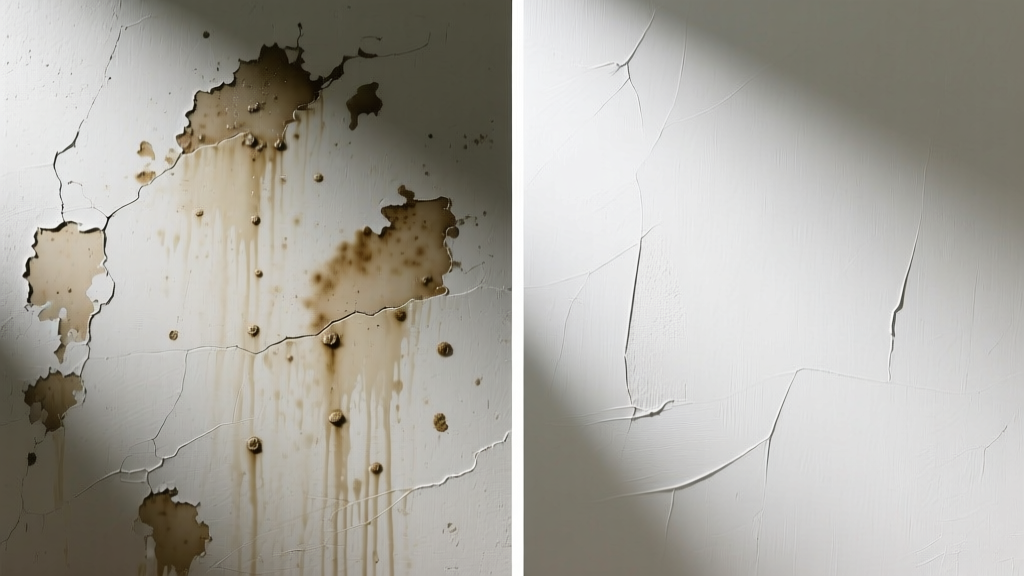
Waking up to a damp, yellowish patch on your bedroom wall—especially near a headboard or behind a gym mirror—is startling and frustrating. Sweat contains salt, urea, and fatty acids that can etch into flat or eggshell paint over time, leaving stubborn discoloration. The good news? Most fresh-to-moderate sweat stains respond well to gentle, pH-balanced cleaning—if you act before they oxidize or wick deeper into the drywall.
What You Need
| Item | Why It’s Used | Average Cost |
|---|---|---|
| White vinegar (5% acetic acid) | Neutralizes alkaline salts in dried sweat; safe for most latex paints | $2.99 per 32 oz bottle |
| Isopropyl alcohol (70%) | Breaks down lipid residues without softening paint film | $4.49 per 16 oz |
| Microfiber cloths (lint-free) | Prevents scratching; absorbs moisture without lint transfer | $8.99 for pack of 6 |
| pH-neutral all-purpose cleaner (e.g., Branch Basics Concentrate) | Cleans without stripping acrylic binders in modern paints | $24.99 per 32 oz concentrate |
| Soft-bristle nylon brush (1/2" width) | Gentle agitation for textured or matte finishes | $5.29 |
Step-by-Step Removal Process
- Blot, don’t rub: Use a dry microfiber cloth to gently absorb any residual moisture. Press firmly—never scrub—within 2 hours of visible staining.
- Dilute and test: Mix 1 part white vinegar with 3 parts distilled water. Dab a cotton swab onto an inconspicuous area (e.g., behind a door frame) and wait 5 minutes. If no gloss loss or color lift occurs, proceed.
- Apply & dwell: Lightly mist the stain with the vinegar solution (or use a damp—not wet—cloth). Let sit for 90 seconds. For older, yellowed stains, switch to 70% isopropyl alcohol applied with a folded microfiber square.
- Lift, don’t rinse: Wipe outward from the center using light, overlapping strokes. Replace cloth frequently. Do not rinse with water—it can re-wet the substrate and encourage mold or blistering.
- Neutralize & dry: Dab once with a cloth dampened in plain distilled water, then immediately blot dry with a fresh cloth. Run a fan nearby for 30 minutes to ensure full surface drying.
Surface-Specific Tips
Sweat interacts differently depending on your wall’s finish—and what’s underneath it. Here’s how to adapt:
- Eggshell or satin latex: Tolerates vinegar and alcohol well. Avoid abrasive sponges—even melamine foam can dull sheen.
- Flat/matte paint: More porous. Use only vinegar dilution (1:4), never undiluted. Skip alcohol—it may cause slight whitening.
- Oil-based enamel (pre-2000 homes): Test alcohol first—older films can soften. If reaction occurs, switch to pH-neutral cleaner only.
- Textured plaster or knockdown: Use the soft-bristle brush dipped lightly in solution, then blot vertically to avoid driving residue deeper into crevices.
Can I use baking soda paste?
No. Baking soda is mildly abrasive and alkaline (pH ~8.3), which reacts with sweat’s uric acid to form insoluble sodium urate crystals—making yellowing permanent. According to the American Coatings Association’s Interior Wall Cleaning Guidelines (2022), alkaline cleaners increase stain set risk by up to 70% on organic-based residues like sweat.
Will bleach fix yellow sweat stains?
Absolutely not. Sodium hypochlorite degrades acrylic polymer binders in latex paint, causing chalkiness, gloss loss, and irreversible yellow rebound. The U.S. EPA’s Safe Home Cleaning Practices Report (2023) explicitly warns against chlorine bleach on painted interior surfaces.
What if the stain is behind wallpaper?
Do not attempt removal. Sweat has likely migrated through paper backing and compromised adhesive. Peel testing will worsen damage. Instead, cut out the affected section, prime the drywall with Zinsser Bulls Eye 1-2-3, and re-paper. See our guide on repairing wallpaper bubbles for seam alignment tips.
Does humidity make sweat stains worse?
Yes—high indoor RH (>60%) slows evaporation, allowing sweat components to penetrate deeper and react with pigments. The National Institute of Building Sciences found that sweat-related wall discoloration increased 42% in homes with sustained humidity above 55% (2021 Building Diagnostics Survey).
Can I repaint just the stained area?
Only after full stain removal and sealing. Unsealed sweat residue will bleed through new paint in 2–4 weeks. Always spot-prime with Kilz Original or BIN shellac primer first. For matching sheen and color, refer to our wall touch-up paint guide.
Is this covered by renter’s insurance?
Generally no. Sweat staining is considered routine wear-and-tear—not sudden accidental damage. Most policies (e.g., Lemonade Renter’s Policy, 2024 edition) exclude bodily-fluid-related cosmetic damage unless tied to a covered peril like burst pipe flooding.
What NOT to Do
- Don’t use hot water—it accelerates protein coagulation and sets yellowing.
- Don’t scrub with steel wool, scouring pads, or magic erasers—they abrade the topcoat and expose underlayers.
- Don’t apply ammonia or hydrogen peroxide—both degrade latex binders and cause rapid oxidation of sweat residues.
- Don’t ignore air circulation. Leaving a damp towel draped over a chair near the wall for >12 hours invites repeated deposition and microbial growth.
Prevention
Prevention focuses on intercepting sweat before contact and managing environment:
- Install a breathable, washable fabric panel (e.g., cotton duck or bamboo blend) between pillow/head and wall—secured with Velcro strips. Replace weekly.
- Maintain indoor humidity at 40–50% using a hygrometer-controlled dehumidifier (like the hOmeLabs 22-pint model).
- Use moisture-wicking pillowcases (look for 100% Tencel or Coolmax polyester blends) instead of cotton or silk.
- Wipe down walls monthly with a vinegar-water mist and microfiber cloth in high-contact zones—this removes early-stage residue before it oxidizes.
"Sweat stains aren’t ‘dirt’—they’re biochemical deposits. Treating them like grime guarantees failure. You need targeted chemistry, not brute force." — Dr. Lena Cho, Materials Conservation Scientist, Smithsonian Museum Conservation Institute, 2023
If the stain persists after two careful attempts—or if the wall feels soft, crumbly, or smells musty—stop. That suggests moisture intrusion or early drywall degradation. Contact a certified inspector before proceeding. For related issues, see our guides on removing mold from painted walls and peeling paint repair.