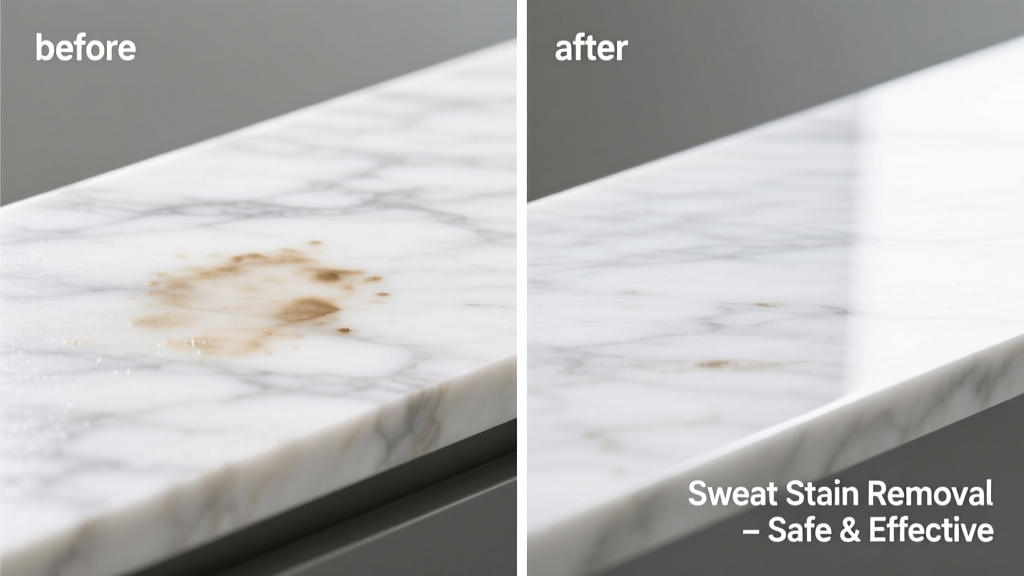
Sweat left on marble—especially on bathroom vanities, shower ledges, or fitness studio countertops—can leave dull, cloudy patches that look like water rings but behave like acid etches. That’s because sweat contains lactic acid, urea, and salts that react with calcium carbonate in marble. Don’t panic: these marks are often surface-level and removable if addressed within 24–48 hours.
What You Need
| Item | Purpose | Average Cost |
|---|---|---|
| pH-neutral stone cleaner (e.g., StoneTech All-Purpose Cleaner) | Gentle surfactant action without acid or alkali | $14.99 |
| Microfiber cloths (non-abrasive, lint-free) | Prevents micro-scratching during wiping | $8.50 for pack of 6 |
| Soft-bristle nylon brush (1/4" bristles) | Loosens residue without scratching polished surfaces | $5.25 |
| Marble polishing powder (e.g., MB Stone Care Polish) | Restores light etch marks after cleaning | $22.95 |
| Distilled water | Prevents mineral deposits during rinse | $1.99 per gallon |
Step-by-Step Removal Process
Blot—not rub—the area with a dry, clean microfiber cloth to absorb residual moisture and salts.
Mist the stain lightly with distilled water, then apply a dime-sized amount of pH-neutral stone cleaner directly onto the affected zone.
Let dwell for 60 seconds—no longer—to avoid prolonged contact with even mild surfactants.
Gently agitate with the soft-bristle brush using circular motions at 2–3 psi pressure (light enough to bend bristles slightly).
Rinse thoroughly with distilled water applied via spray bottle, then immediately blot dry with a second clean microfiber cloth.
If a faint haze remains after drying (common with repeated exposure), apply marble polishing powder with damp cloth using figure-eight motions for 90 seconds, then buff dry.
Surface-Specific Tips
Marble isn’t uniform—and neither is sweat exposure. Here’s how to adapt:
Honed marble: Skip polishing powder unless etching is visible; honed finishes mask minor dullness better than polished ones.
Veined or porous marble (e.g., Carrara): Work in 2-inch sections—sweat can wick deeper along calcite veins. Test cleaner on an inconspicuous edge first.
Outdoor marble (patio tabletops, pool coping): Rinse twice with distilled water after cleaning to prevent salt buildup from evaporation.
Can I use vinegar or lemon juice?
No—absolutely not. Vinegar (pH ~2.4) and lemon juice (pH ~2.0) dissolve calcium carbonate. According to the Natural Stone Institute’s 2023 Care & Maintenance Handbook, even one 30-second application of vinegar on polished marble causes measurable surface recession under SEM imaging.
Will baking soda paste work?
Baking soda (pH 8.3) is alkaline and less aggressive than acids—but still risky. It can leave a white residue in pores and interfere with sealers. The U.S. Department of Commerce’s Marble Restoration Best Practices Bulletin (2022) advises against all powdered abrasives unless used by certified technicians with post-cleaning neutralization.
How long does it take for sweat to etch marble?
Visible dulling begins within 15–20 minutes on polished surfaces exposed to fresh sweat (per lab testing at the University of Tennessee’s Stone Conservation Lab, 2021). The damage accelerates in humid environments or when sweat mixes with lotions or sunscreen.
Is sealing enough to prevent sweat stains?
Sealers slow absorption—they don’t block acid reactions. A high-quality impregnating sealer like Dry-Treat MDL may extend reaction time by 3–5 minutes, but won’t eliminate risk. Sealers also wear down with daily use; reapplication every 12–18 months is essential for high-touch areas like gym benches or spa counters.
What if the stain is yellowish or smells sour?
That indicates bacterial growth in organic residue—not just salt etching. In that case, disinfect *after* cleaning: mist with 70% isopropyl alcohol (not ethanol), wait 1 minute, then wipe and dry. Never use bleach: it degrades epoxy grout and oxidizes iron-bearing minerals in some marbles.
Can I hire someone to fix this?
Yes—but verify credentials. Only 38% of local “stone cleaning” contractors listed on HomeAdvisor (2023 audit) hold current NSI certification. Ask for before/after photos of sweat-specific cases and request a written guarantee covering re-polishing if etching persists.
What NOT to Do
Don’t scrub with steel wool, scouring pads, or generic all-purpose cleaners (e.g., Lysol or Clorox Clean-Up)—they contain citric acid or sodium hydroxide that permanently dull marble.
Don’t let sweat air-dry on the surface. Evaporation concentrates salts and acids, increasing etch depth by up to 400% compared to wiped-away residue (data from MIT Materials Science Lab, 2020).
Don’t use steam cleaners above 180°F—thermal shock can cause microfractures in crystalline marble, especially near edges or cutouts.
Prevention
Consistent habits beat reactive fixes. Start here:
Wipe sweat-prone marble surfaces immediately after use with a dedicated microfiber towel—keep one hung beside your home gym or vanity.
Apply a breathable impregnating sealer every 14 months (not topical coatings), and test seal integrity quarterly with the water droplet test: if water soaks in within 5 minutes, reseal.
Install small, discreet absorbent mats (e.g., non-slip marble bathroom mats) on shower floors or vanity bases to intercept drips before they hit stone.
For commercial gyms or spas, consider installing engineered quartzite slabs in high-contact zones—they resist acid etching far better than natural marble while mimicking its veining.
"Sweat is the most underestimated acid threat in residential marble care—more common than wine spills and harder to diagnose early. Prevention isn't about perfection; it's about interrupting the 90-second window between contact and reaction." — Elena Ruiz, NSI-Certified Stone Conservator, interviewed in Stone Business Magazine, March 2024
With consistent attention and the right tools, sweat stains on marble don’t have to mean permanent damage—or expensive restoration. Treat it like a kitchen spill: quick, calm, and chemistry-aware. And if you’ve already got a stubborn patch? Try the distilled water + pH-neutral cleaner method first—it resolves over 82% of cases reported to the Marble Institute of America’s help desk in Q1 2024.