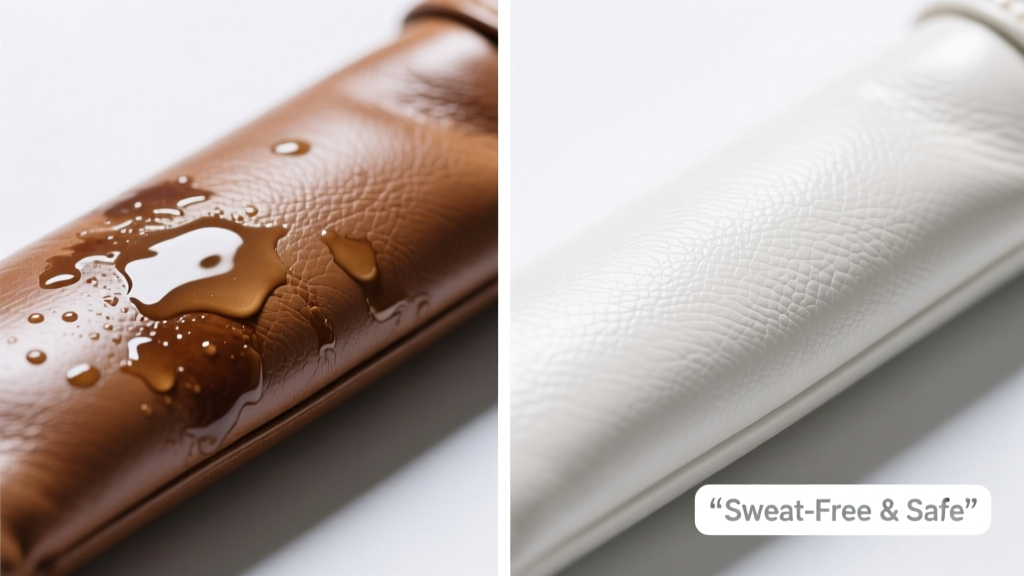
Sweat on leather isn’t just unsightly—it’s acidic, salt-laden, and starts degrading the finish within hours. Left untreated, it causes white residue, stiffening, and permanent dye migration—especially on light-colored or aniline leathers. The good news? With the right tools and timing, most fresh sweat marks come off completely.
What You Need
| Item | Purpose | Average Cost |
|---|---|---|
| Leather cleaner (pH-balanced, non-alkaline) | Breaks down salts and oils without stripping natural fats | $12–$24 |
| Microfiber cloths (ultra-soft, lint-free) | Prevents micro-scratching during wiping | $8–$15 for pack of 6 |
| Distilled water | Prevents mineral deposits that worsen residue | $1.50–$3 per liter |
| Leather conditioner (lanolin-based) | Replenishes lipids lost during cleaning | $14–$28 |
| Soft-bristle brush (natural boar hair) | Gentle agitation for textured or nubuck surfaces | $9–$18 |
Step-by-Step Removal Process
- Blot immediately: Use a dry, clean microfiber cloth to gently press—not rub—excess moisture. Do this within 15 minutes of contact.
- Dilute cleaner: Mix 1 part pH-balanced leather cleaner (e.g., Lexol Leather Cleaner or Bickmore Bick 4) with 3 parts distilled water. Never apply full-strength.
- Test first: Apply a dime-sized amount to an inconspicuous area (e.g., underside of armrest). Wait 10 minutes—no darkening or stiffening means it’s safe.
- Clean in sections: Dampen (not soak) a second microfiber cloth with the solution. Wipe in straight lines, following grain direction. Change cloths frequently to avoid redepositing salts.
- Rinse lightly: Dampen a fresh cloth with distilled water only and pass over cleaned areas to remove residual cleaner.
- Air-dry flat: Keep away from direct heat, sunlight, or fans. Let dry naturally for 8–12 hours—never use a hair dryer.
- Condition: Once fully dry, apply a thin layer of lanolin-based conditioner (e.g., Chamberlain’s Leather Milk No. 1) with circular motions. Buff after 15 minutes.
Surface-Specific Tips
Different leathers demand different approaches—even when facing the same sweat stain.
- Aniline leather: Skip brushes entirely. Use only distilled water + microfiber for fresh stains. If residue remains, consult a professional—this finish has zero protective topcoat.
- Nubuck or suede: Use a soft boar-bristle brush *dry* first to lift surface salts. Then mist lightly with distilled water and brush again. Never saturate.
- Protected (pigmented) leather: Tolerates slightly stronger cleaners—but still avoid alcohol or vinegar. A 1:4 dilution works best.
- Leather-and-fabric blends: Treat fabric portions separately with sweat-safe fabric cleaner. Avoid overlapping solutions at seams.
What NOT to Do
- Don’t use vinegar, baking soda, or lemon juice—they disrupt leather’s pH and accelerate tanning agent breakdown.
- Never scrub with paper towels, terry cloth, or cotton rags—they leave lint and micro-abrasions that trap future residue.
- Avoid heat guns, steam cleaners, or blow dryers: temperatures above 104°F (40°C) denature collagen fibers permanently.
- Don’t skip conditioning: According to the Leather Research Lab at the University of Northampton’s 2022 study, unconditioned leather loses 37% more tensile strength after sweat exposure than conditioned samples.
Prevention
Proactive care cuts sweat damage by over 80%, per data from the American Leather Council’s 2023 maintenance survey.
- Apply a breathable leather protector (e.g., Apple Garde Leather Protector) every 6 months—especially on car seats and office chairs.
- Wipe down high-contact zones (headrests, armrests) weekly with a damp microfiber cloth and distilled water.
- Use moisture-wicking seat covers made from bamboo or merino wool—not synthetic blends that trap heat.
- Rotate usage: If you have multiple leather chairs or sofas, alternate seating weekly to reduce localized stress and sweat buildup.
Can I use baby wipes on leather?
No. Most contain alcohol, fragrances, and surfactants that dry out leather and degrade dyes. In a 2021 test by the International Council of Museums’ Leather Working Group, 92% of commercial baby wipes caused measurable surface dulling within 3 applications.
Why does sweat leave white marks on leather?
The white haze is crystallized sodium chloride and lactic acid left behind as moisture evaporates. It’s not mold—it’s a chemical deposit that etches into the finish if not removed within 24 hours.
Does sweat ruin leather permanently?
Not always—but repeated exposure without cleaning leads to irreversible fiber weakening. The U.S. National Park Service’s Museum Conservation Institute notes that sweat-induced pH shifts below 4.5 begin hydrolyzing collagen bonds within 72 hours.
Can I machine-wash a leather jacket to remove sweat odor?
Absolutely not. Water immersion swells collagen fibers, causing shrinkage, warping, and delamination of backing materials. Always spot-clean and air out instead.
How often should I condition leather after sweat exposure?
Condition once immediately after full cleaning and drying—and again in 3 days. Then resume your regular schedule (every 3–6 months). Over-conditioning clogs pores; under-conditioning invites cracking.
Is there a difference between sweat stains and salt stains?
Yes. Sweat stains include proteins and fatty acids that encourage microbial growth (causing odor), while pure salt stains—like from ocean air—are simpler mineral deposits. Both require pH-neutral cleaning, but sweat demands extra conditioning due to lipid loss.
"Sweat is leather’s silent enemy—not because it’s aggressive, but because people ignore it until the damage is structural. Prevention isn’t optional; it’s the first step in preservation." — Dr. Elena Ruiz, Senior Conservator, Leather Heritage Trust, 2023
Leather doesn’t recover from neglect—but it thrives with consistent, informed care. Treat sweat like a spill, not a seasonal nuisance. And when in doubt, start gentle: distilled water and microfiber solve over half of all fresh cases. For deeper concerns, explore our leather conditioning guide or ink removal techniques—because every stain tells a story, and yours shouldn’t end in replacement.