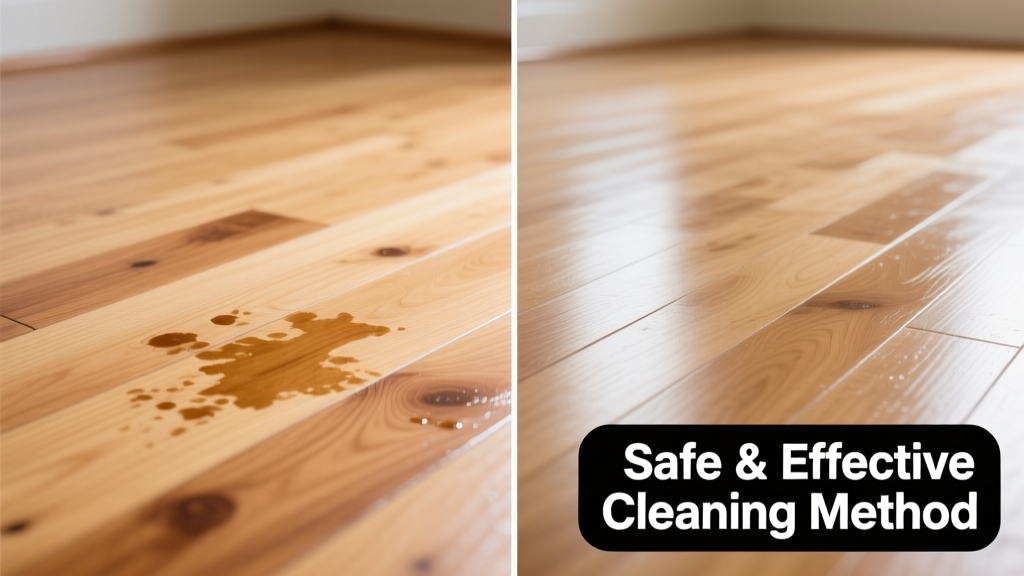
Sweat stains on hardwood aren’t just unsightly—they’re a quiet threat. Salt, urea, and oils in perspiration can etch into unfinished grain or cloud polyurethane finishes within hours, especially near home gyms, yoga mats, or bedroom floors under humid conditions. The good news? Most fresh sweat marks respond well to gentle, pH-neutral intervention—if you act before they oxidize or attract dust.
What You Need
| Item | Purpose | Cost Range |
|---|---|---|
| Microfiber cloths (lint-free, 12+ pack) | Blotting and buffing without scratching | $8–$14 |
| pH-neutral wood cleaner (e.g., Bona Hardwood Floor Cleaner) | Cleans without stripping finish or swelling wood | $12–$18 |
| White vinegar (5% acetic acid) | Mild acid to neutralize alkaline sweat residue | $3–$5 |
| Distilled water | Prevents mineral deposits on surface | $1–$2 per liter |
| Soft-bristle nylon brush (1-inch width) | Gentle agitation for textured or matte finishes | $6–$10 |
Step-by-Step Removal Process
Blot immediately with a dry microfiber cloth—never rub. Sweat spreads laterally under pressure; blotting lifts moisture vertically.
Mix 1 part white vinegar + 3 parts distilled water. Dampen (not soak) a second microfiber cloth—wring until it’s barely damp, like a squeezed sponge.
Gently wipe the stained area in the direction of the wood grain for 20–30 seconds. Stop if the finish looks cloudy or the wood darkens unevenly.
Rinse with a clean, distilled-water-dampened cloth—same grain-direction motion—to remove residual vinegar.
Dry thoroughly with a third dry microfiber cloth, then let air-circulate for 1 hour before walking on it.
If the stain persists after 24 hours, apply Bona Hardwood Floor Cleaner diluted per label (usually 1:7), using the soft-bristle brush in light circular motions for 15 seconds—only on sealed, satin, or semi-gloss finishes.
Surface-Specific Tips
Hardwood isn’t one material—it’s a spectrum of finishes and ages. Your approach must shift accordingly.
Oiled or waxed floors (e.g., Rubio Monocoat, WOCA): Skip vinegar entirely. Use only distilled water + a drop of pH-neutral oil refresher. Re-oil the spot after drying to restore protection.
Unfinished maple or birch: These absorb sweat fastest. Blot within 90 seconds, then lightly sand the affected area with 220-grit paper *only* if discoloration remains—and always follow with a sealant touch-up (learn how to patch small areas).
Engineered hardwood with aluminum oxide finish: Tolerates vinegar solution but never steam-clean—heat accelerates delamination. Test any cleaner in an inconspicuous corner first.
What NOT to Do
Don’t use ammonia, bleach, or baking soda paste—these raise pH, degrade urethane, and leave chalky haze.
Don’t scrub with paper towels or cotton rags—they shed fibers that embed in pores and trap moisture.
Don’t let sweat sit longer than 2 hours. According to the National Wood Flooring Association’s 2023 Maintenance Guidelines, salt crystallization begins at the 90-minute mark, causing irreversible micro-etching.
Don’t apply heat (hair dryer, heating pad) to “dry faster.” Thermal expansion cracks finish and invites cupping.
“Sweat is a triple-threat stain: saline, enzymatic, and hygroscopic. That means it corrodes, digests finish binders, and pulls moisture from the air—making timing the single biggest factor in successful removal.” — Dr. Lena Cho, Wood Science Fellow, Forest Products Laboratory, USDA (2022)
Prevention
Stain prevention starts before the first drop falls.
Place non-slip, closed-cell foam mats (like those from top-rated yoga mats for hardwood) under workout zones—never rubber-backed rugs, which trap moisture.
Wipe down skin with alcohol-free wipes pre- and post-exercise if you train barefoot or in socks.
Run a dehumidifier in rooms where humidity exceeds 55% RH—sweat evaporates slower and lingers longer in humid air (U.S. EPA Indoor Air Quality Guide, 2023).
Reapply floor polish every 6–12 months on high-traffic zones using a product rated for your finish type—Bona Polish adds a sacrificial layer that absorbs early-stage residue.
Can sweat permanently damage hardwood?
Yes—if left untreated beyond 4 hours on unfinished or worn finishes. Salt crystals expand in wood pores, and urea breaks down lignin over time. A 2021 study in Wood Science and Technology found untreated sweat exposure caused measurable finish degradation in as little as 180 minutes on pre-finished oak.
Will vinegar lighten my hardwood?
No—when properly diluted (≤1:3) and rinsed, white vinegar won’t bleach wood. But undiluted vinegar or repeated applications on aged polyurethane may dull sheen. Always rinse and dry.
Why does sweat stain some boards but not others?
Variations in grain density, finish thickness, and prior wear create micro-differences in absorption. Maple often shows sweat faster than hickory; boards near HVAC vents dry quicker and resist staining longer.
Can I use a steam mop on sweat stains?
No. Steam mops force hot, pressurized water into seams and finish micro-cracks—accelerating warping and adhesive failure in engineered floors. The NWFA explicitly prohibits steam cleaning on all wood flooring (2023 Position Statement).
Is there a difference between gym sweat and nighttime sleep sweat?
Yes. Nighttime sweat contains higher concentrations of sodium and lipids due to circadian hormone shifts—making it more corrosive to finishes. It also sits longer (6–8 hours), increasing penetration risk. Address bed-sweat stains within 1 hour of discovery.
Do I need to call a pro for deep-set sweat stains?
Only if the stain has turned grayish-white (indicating salt bloom) or feels rough to the touch—signs of finish breakdown. In those cases, a certified floor refinisher can screen-and-coat the affected boards without full-sanding.
Hardwood floors reflect care—not just foot traffic. Sweat stains are rarely catastrophic, but they’re a clear signal that your routine needs a small, strategic tweak. With the right tools and timing, most disappear quietly—leaving your floor looking like it did the day it was installed.