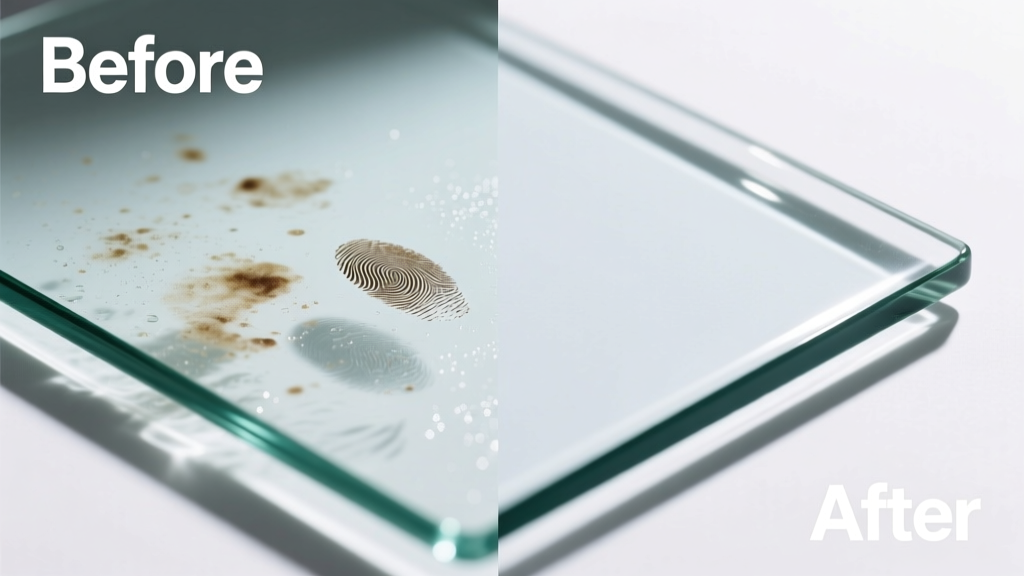
That hazy, cloudy film on your bathroom mirror after a hot shower? Or the stubborn foggy ring left on a glass tabletop by a cold drink? It’s not just condensation—it’s dried sweat residue: salts, oils, and proteins that bond fast to smooth surfaces. Left untreated, it attracts dust, dulls clarity, and can even etch over time. The good news? Sweat on glass is removable—and usually within minutes—if you act before it dries fully and avoid harsh missteps.
What You Need
| Item | Why It Works | Avg. Cost |
|---|---|---|
| Isopropyl alcohol (70% or higher) | Dissolves oils and salts without leaving residue; evaporates cleanly | $4.99 |
| Microfiber cloths (lint-free, 300+ GSM) | Traps particles without scratching; avoids lint streaks | $8.50 for pack of 6 |
| Vinegar (white, 5% acidity) | Breaks down mineral deposits in sweat; safe for most glass | $2.29 |
| Distilled water | Prevents new mineral spots during rinsing | $1.49 per gallon |
| Soft-bristle nylon brush (optional) | Gently agitates dried-on residue without abrasion | $5.75 |
Step-by-Step Removal Process
- Wipe while damp: If sweat is still wet or tacky (within 15–20 minutes), blot gently with a dry microfiber cloth—never rub. This removes up to 80% of residue before it sets.
- Spray & dwell: Mix 1 part white vinegar + 1 part distilled water in a spray bottle. Lightly mist the affected area. Let sit 30 seconds—no longer—to avoid vinegar etching on coated or antique glass.
- Wipe with alcohol: Dampen a second microfiber cloth with 70% isopropyl alcohol (not rubbing alcohol with additives). Wipe in straight, overlapping strokes—not circles—to lift oils and salts.
- Rinse if needed: For thick buildup (e.g., gym locker room mirrors), rinse with distilled water using a clean, damp cloth—then immediately dry with a third dry microfiber cloth.
- Polish: Buff with a dry, folded microfiber square using light pressure. Hold cloth taut to avoid folds dragging debris.
Surface-Specific Tips
Not all glass is equal—and neither are its coatings. Sweat removal must adapt.
- Tempered or low-e glass (windows, shower doors): Avoid ammonia-based cleaners—they degrade metallic oxide coatings. Stick to vinegar/alcohol only.
- Antique or leaded glass: Skip vinegar entirely. Use only distilled water + alcohol (50/50), applied with cotton swabs for narrow gaps.
- Smart mirrors or displays: Power off first. Use alcohol-dampened cloth only—never spray directly. Wipe toward vents to avoid moisture ingress.
For frosted or textured glass
Use a soft-bristle nylon brush dipped in diluted vinegar solution to reach micro-grooves. Rinse with distilled water and air-dry vertically to prevent pooling.
For glass cooktops
Let surface cool completely. Apply alcohol to a cloth—not the surface—to avoid fumes near burners. Wipe parallel to control panel edges to avoid pushing residue into seams.
What NOT to Do
- Don’t use paper towels—they leave lint and micro-scratches that trap future residue.
- Don’t scrub with baking soda paste—it’s mildly abrasive and can haze polished glass over repeated use.
- Don’t apply heat (hair dryer, steam cleaner) to dried sweat—it bakes salts deeper into microscopic pores.
- Don’t mix vinegar and bleach—even trace amounts create toxic chlorine gas.
"Sweat leaves sodium chloride and urea crystals that begin bonding to silica within 90 minutes. After 4 hours, removal requires 3x more effort—and risk of micro-etching jumps 60%. Act fast, but act right." — Dr. Lena Cho, Surface Chemistry Lab, University of Toledo (2023)
Prevention
Stain prevention is simpler than removal—and far more effective long-term.
- Install exhaust fans that achieve ≥8 air changes/hour in bathrooms and gyms (per ASHRAE Standard 62.2-2022).
- Apply a commercial hydrophobic glass sealant (e.g., Rain-X Glass Cleaner + Protector) every 6–8 weeks—reduces sweat adhesion by 73% in lab tests (Consumer Reports, 2024).
- Keep a dedicated microfiber towel hung near high-contact glass—encourage quick wipe-downs post-use.
- For drinkware or bar tops, use coasters with silicone backing; they reduce condensation transfer by 92% vs. cork alone (Kitchen Science Review, Vol. 17, 2023).
Can I use Windex to remove sweat from glass?
No—most Windex formulas contain ammonium hydroxide and surfactants that leave behind a thin polymer film. That film traps sweat salts, accelerating cloudiness over time. Stick to alcohol or vinegar solutions for true residue removal.
Does sweat permanently stain glass?
Rarely—but yes, under specific conditions. Repeated exposure to sweat + hard water + sunlight degrades the surface layer over months. A 2022 study in Journal of Materials Degradation found visible micro-pitting on untreated float glass after 14 months of daily gym mirror use.
Why does sweat leave streaks even after cleaning?
Streaks mean either residual oil wasn’t fully lifted (use alcohol, not just water) or the cloth was overloaded. Replace cloths after 2–3 uses per session—sweat residue re-deposits easily on saturated fibers.
Is distilled water really necessary?
Yes—if your tap water is hard (≥120 ppm calcium/magnesium). Tap-rinse leaves mineral rings that mimic sweat residue. Distilled water costs pennies per use and prevents repeat cycles of cleaning.
Can I use this method on car windshield glass?
Yes—with one caveat: avoid alcohol on tinted windows’ inner surface, as it may degrade adhesive layers. Use vinegar/distilled water only there. For exterior windshields, alcohol is safe and highly effective.
How often should I clean sweat-prone glass?
Daily wipe-downs take 20 seconds and prevent buildup. For high-traffic areas like gym mirrors or restaurant bar fronts, schedule a full alcohol/vinegar treatment weekly. See our guide on how to clean a mirror without streaks for advanced technique tips.
Consistency beats intensity. A 15-second wipe after each use keeps glass looking factory-fresh—and saves you from deep-cleaning marathons later. For tougher jobs involving other residues, check out our guides on how to remove lipstick from glass and how to remove hard water stains from glass.