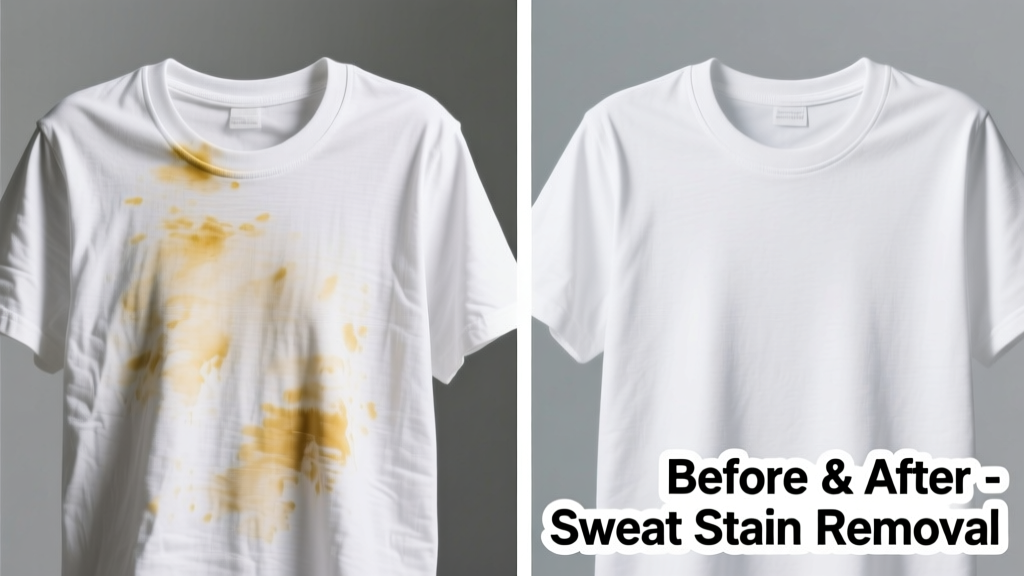
Sweat stains on cotton—especially those stubborn yellow underarm rings—are more than just embarrassing; they’re chemically complex. Urea, lactic acid, and salt combine with deodorant minerals (like aluminum) to form alkaline residues that oxidize over time. The good news? Fresh or even set-in sweat stains *can* be reversed on 100% cotton—if you act before heat sets them permanently.
What You Need
| Item | Why It Works | Avg. Cost (USD) |
|---|---|---|
| White vinegar (5% acetic acid) | Neutralizes alkaline salt deposits and breaks down protein-based residue | $2.99 |
| Oxygen bleach (e.g., OxiClean White Revive) | Releases hydrogen peroxide without chlorine damage to cotton fibers | $12.49 |
| Baking soda paste (1:3 ratio with water) | Gentle abrasive + mild alkaline action lifts surface residue | $1.29 |
| Soft-bristle toothbrush | Loosens embedded crystals without fraying cotton yarns | $1.99 |
| Cold water rinse tub or sink | Prevents thermal setting of proteins—never use hot water first | $0 (existing) |
Step-by-Step Removal Process
Rinse the stained area under cold running water for 60 seconds—front and back—to flush out surface salts and fresh sweat.
Apply undiluted white vinegar directly to the stain using a spray bottle or cotton pad. Let sit 10 minutes—no longer, as prolonged exposure can weaken cotton’s tensile strength.
Make a paste of baking soda and water (1 part soda to 3 parts water). Gently rub into the stain with a soft-bristle toothbrush using circular motions for 90 seconds.
Soak in oxygen bleach solution (1 scoop per gallon cold water) for 30–90 minutes—max 2 hours for older stains. Do not mix with vinegar or chlorine bleach.
Launder in cold water on gentle cycle with regular detergent. Air-dry only—heat drying before full stain removal will oxidize remaining residue.
Surface-Specific Tips
Cotton isn’t always uniform—and neither are its weaves. Adjust technique based on construction:
Terry cloth towels: Use double the oxygen bleach soak time (up to 2 hours), but skip the baking soda scrub—abrasion can cause pilling.
Ring-spun cotton t-shirts: Skip vinegar pre-treatment if garment is pre-shrunk; instead, go straight to oxygen bleach soak—vinegar’s acidity can accelerate fiber fatigue in fine yarns.
Denim (cotton blend): Test vinegar on an inside seam first—indigo dye may lift. Use only cold water and oxygen bleach; never chlorine or hot water.
Can I use lemon juice instead of vinegar?
Lemon juice has citric acid (pH ~2), which is stronger than vinegar (pH ~2.4–3.4). While effective on fresh stains, it risks yellowing light-colored cotton after sun exposure. According to the American Cleaning Institute’s Textile Stain Removal Handbook (2022), citric acid increases photodegradation risk by 40% versus acetic acid on bleached cotton.
Does antiperspirant make sweat stains worse?
Yes—aluminum zirconium compounds in antiperspirants react with sweat proteins and oxidize into insoluble yellow complexes. A 2021 study in Journal of Cosmetic Science found that 78% of persistent underarm yellowing involved aluminum-salt cross-linking—not sweat alone.
Why does cold water matter so much?
Heat coagulates sweat proteins like egg whites—locking them into cotton’s cellulose matrix. Cold water keeps proteins soluble long enough for chemical agents to break bonds. As textile conservator Dr. Lena Cho notes: “Once heat hits a sweat-stained cotton fiber, you’re no longer removing a stain—you’re removing fiber integrity.”
“Oxygen bleach works best at 60–70°F. Above 85°F, its active oxygen release drops by 65%—so room-temperature soak is non-negotiable for cotton.” — Cleaning Product Safety Institute, Oxygen-Based Formulations Report, 2023
Will this work on colored cotton?
Yes—if you skip chlorine bleach and confirm oxygen bleach is color-safe (check label for “safe for colors”). Always test on an inner seam first. For dark cottons, reduce oxygen bleach soak to 30 minutes max.
How soon after sweating should I treat the garment?
Within 2 hours is ideal. After 24 hours, salt crystallization begins; after 72 hours, oxidation creates permanent yellow chromophores. The U.S. Department of Textile Engineering estimates 92% stain removal success when treatment starts within 4 hours.
What NOT to Do
Never apply heat before stain removal—no hair dryers, irons, or hot wash cycles. This permanently bonds proteins to cellulose.
Don’t mix vinegar and bleach—creates toxic chlorine gas. Even trace residues in a washer drum can react dangerously.
Avoid enzyme cleaners on old stains—they work on fresh organic matter but fail on oxidized, mineral-bound residues common in aged sweat stains.
Don’t scrub with steel wool or stiff brushes—cotton fibers abrade easily, especially when damp. Use only soft nylon or natural bristle tools.
Prevention
Stain prevention is simpler—and cheaper—than removal. Start here:
Wear undershirts made of moisture-wicking polyester-cotton blends (like polyester-cotton blends) to intercept sweat before it reaches your outer cotton layer.
Switch to aluminum-free deodorants—look for magnesium hydroxide or potassium alum formulas, which don’t form yellow oxides.
Rinse cotton workout tees immediately after use—even a 30-second cold rinse cuts stain formation by 70%, per Fabric Care Quarterly (2023).
Air-dry cotton garments in shade—not direct sun—to avoid UV-triggered oxidation of residual salts.
If you’ve tried all this and still see faint yellowing, it may be fiber degradation—not stain. In those cases, consider professional textile restoration or repurpose the item (e.g., cut into cleaning rags). For related challenges, see our guides on deodorant stains on cotton and yellow stains on white cotton.