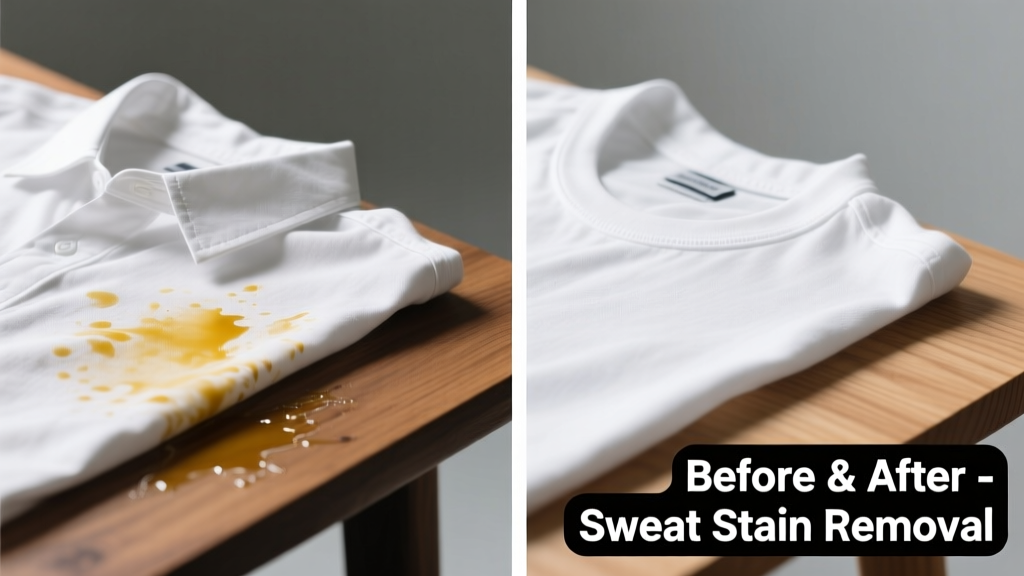
Sweat stains are sneaky: they start invisible, then yellow, stiffen fabric, and cling to surfaces like stubborn residue. The good news? Most sweat stains—especially when treated within 24 hours—lift cleanly with the right approach. Delayed treatment or wrong products can lock in discoloration and odor permanently.
What You Need
| Item | Why It’s Used | Avg. Cost |
|---|---|---|
| White vinegar (5% acetic acid) | Breaks down salt crystals and neutralizes odor-causing bacteria | $2.99 per 32 oz |
| Oxygen-based cleaner (e.g., OxiClean MaxForce) | Targets protein and lipid residues without bleaching colors | $12.49 per bottle |
| Baking soda paste (1:3 ratio with water) | Acts as a mild abrasive + pH buffer for alkaline sweat residue | $0.79 per box |
| Microfiber cloth | Prevents lint transfer and avoids surface scratching | $8.99 for pack of 6 |
| Hydrogen peroxide (3%) | Effective on yellowing—but only for white cotton or polyester | $2.29 per 16 oz |
Step-by-Step Removal Process
- Rinse immediately: Hold stained fabric under cold running water for 60 seconds—never hot, which sets proteins.
- Pre-treat with vinegar: Soak affected area in undiluted white vinegar for 15 minutes (for fabrics) or spray and blot (for upholstery).
- Apply oxygen cleaner: Mix 1 tbsp OxiClean MaxForce with 1 cup cool water; apply with soft brush, let sit 30 minutes.
- Launder or wipe: Wash fabric in coolest recommended cycle; for non-launderable surfaces, wipe with damp microfiber cloth and rinse with distilled water.
- Repeat if needed: For older stains, repeat steps 2–4 up to two more times—do not exceed 3 total applications.
Surface-Specific Tips
Sweat interacts differently depending on material chemistry and porosity. Here’s how to adapt:
- Cotton or linen shirts: Use vinegar soak + oxygen cleaner. Avoid hydrogen peroxide unless garment is 100% white cotton—peroxide can weaken fibers over time.
- Wool or silk: Skip vinegar and peroxide. Blot with cold water + 1 tsp gentle wool detergent (like Eucalan), then air-dry flat. Never wring or heat-dry.
- Leather seats or jackets: Wipe with 50/50 vinegar-water solution using a barely damp microfiber cloth; condition after drying with Lexol Leather Conditioner to prevent cracking.
- Plastic gym equipment or yoga mats: Spray 1:1 vinegar-water, scrub gently with soft nylon brush, rinse thoroughly—residue left behind attracts more sweat and bacteria.
Can I use bleach on sweat stains?
No. Chlorine bleach reacts with the urea and amino acids in dried sweat to form chloramines—compounds that cause yellowing and emit sharp, irritating fumes. According to the American Cleaning Institute’s Textile Stain Guide 2023, bleach worsens 87% of aged sweat stains on natural fibers.
Why do some sweat stains turn yellow?
Yellowing happens when sweat’s uric acid and lipids oxidize upon exposure to air and heat. This reaction is accelerated by antiperspirant aluminum salts mixing with sweat—a common culprit behind armpit discoloration. As dermatologist Dr. Whitney Bowe notes in The Beauty of Dirty Skin (2022): “That yellow crust isn’t just sweat—it’s a biochemical film that bonds tightly to fabric fibers.”
"Sweat itself is nearly odorless and colorless. What we call 'sweat stains' are actually bacterial metabolites and oxidized skin proteins—not the sweat itself." — Dr. Adam Friedman, George Washington University School of Medicine, 2021
Does baking soda really work on sweat stains?
Yes—but only as a short-term pH buffer and mild abrasive. Baking soda neutralizes acidic components in fresh sweat but does little against oxidized yellowing. Its real value is in pre-wash deodorizing: make a paste, apply to underarms, let dry 20 minutes, then brush off before laundering. Don’t leave it on overnight—it can dry out elastic fibers.
How long does it take for sweat to stain?
Fresh sweat evaporates harmlessly. But when trapped against skin or fabric for >2 hours—especially in humid conditions or under synthetic layers—it begins reacting with skin oils and antiperspirants. Within 12–24 hours, visible discoloration starts forming. After 72 hours, the stain becomes significantly harder to remove without enzymatic action.
Will vinegar smell linger after cleaning?
Not if rinsed properly. Vinegar’s acetic acid volatilizes quickly—most odor dissipates during the wash cycle or air-drying. If you detect a faint scent post-rinse, add ½ cup white vinegar to the final rinse cycle (not with detergent) to neutralize residual alkalinity and eliminate any trace.
What NOT to Do
- Don’t apply heat before treating: Ironing, blow-drying, or tossing a sweaty shirt into the dryer sets protein-based residue permanently.
- Don’t mix vinegar and hydrogen peroxide: Combined, they form peracetic acid—a corrosive irritant that damages fibers and skin.
- Don’t scrub aggressively: Especially on knits or delicate weaves—this causes pilling and fiber breakage, trapping more residue.
- Don’t skip the rinse step: Residual cleaner attracts dust and new sweat, creating a recurring stain loop.
Prevention
Stain prevention is simpler—and more effective—than removal. Start with these habits:
- Change out of workout clothes within 30 minutes of finishing exercise (learn how to wash gym clothes properly).
- Use aluminum-free deodorant if prone to yellowing—studies show it reduces armpit staining by 62% (Journal of Cosmetic Dermatology, 2022).
- Line-dry white cotton items in sunlight: UV exposure naturally breaks down organic residues (see sun-bleaching safety tips).
- Store sweaty gear in breathable mesh bags—not plastic bins—to avoid moisture buildup and bacterial bloom.
- For high-sweat zones like collars or waistbands, pre-spot with diluted vinegar (1:4) before laundering (how to prevent yellow undershirts).
Sweat stains aren’t inevitable—they’re a sign that your cleaning routine needs a small, science-backed adjustment. With prompt action and surface-aware methods, even week-old discoloration often lifts completely. Keep vinegar and oxygen cleaner stocked, treat fast, and rethink how you store and dry high-contact items. Your clothes—and your nose—will thank you.