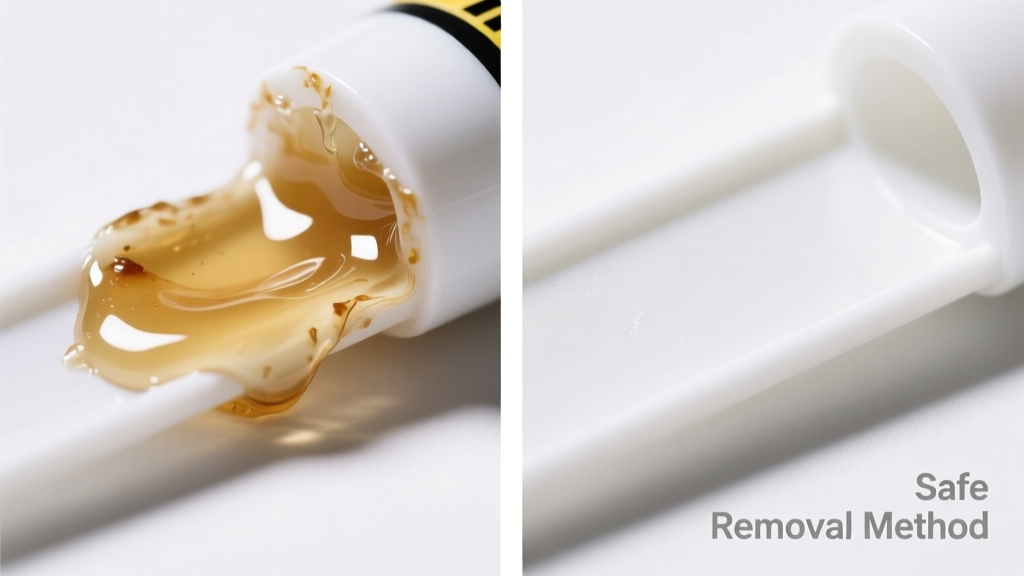
That sharp *click* of a dropped tube—and the next second, your phone case, eyeglass frame, or LEGO brick is fused to the countertop. Super glue (cyanoacrylate) bonds in seconds and grips plastic like it owns it. The good news? You don’t need to trash the item—most plastic surfaces can be restored if you act quickly and avoid harsh missteps.
What You Need
| Item | Why It’s Used | Average Cost |
|---|---|---|
| 100% acetone nail polish remover | Dissolves cyanoacrylate; works on ABS, polycarbonate, and acrylic | $3–$6 |
| Isopropyl alcohol (90%+) | Milder alternative for sensitive plastics like polypropylene or vinyl | $5–$8 |
| Plastic-safe microfiber cloth | Prevents scratching during wiping or rubbing | $4–$10 |
| Wooden toothpick or plastic scraper | Lifts softened glue without gouging | $1–$3 |
| Cotton swabs (non-bleached) | Precise application on small or textured areas | $2–$4 |
Step-by-Step Removal Process
- Test first: Apply a tiny drop of acetone to an inconspicuous area (e.g., inside rim of a phone case). Wait 30 seconds. If the plastic softens, turns cloudy, or wrinkles, switch to isopropyl alcohol.
- Soak & soften: Dampen a cotton swab with acetone (or IPA), then hold it gently over the glue spot for 45–60 seconds. Don’t rub yet—let solvent penetrate the bond layer.
- Lift, don’t scrape: Use a wooden toothpick or plastic scraper to gently roll or pry the edge upward. Cyanoacrylate lifts in thin, brittle sheets when properly softened.
- Clean residue: Wipe remaining film with a microfiber cloth dampened with fresh solvent. Follow with a water-dampened cloth to remove traces.
- Polish (optional): For glossy plastics like polycarbonate lenses or appliance panels, buff lightly with a dry microfiber cloth to restore sheen.
Surface-Specific Tips
Not all plastics react the same—even within the same product. Here’s how to adapt:
- Acrylic (Plexiglas®): Acetone will craze or crack it. Use only warm soapy water + gentle scrubbing with a soft toothbrush—if glue is fresh—or consult our guide for acrylic-specific removal.
- Polypropylene (PP) or polyethylene (PE): These are acetone-resistant but also resist bonding—so glue often sits loosely on the surface. Try warm water + dish soap and a soft nylon brush first.
- Polycarbonate (e.g., safety goggles, electronics housings): Tolerates acetone briefly—but prolonged exposure causes hazing. Limit contact to ≤90 seconds per spot.
Can I use vinegar or baking soda?
No. Vinegar lacks the solvent strength to break cyanoacrylate’s polymer chains. Baking soda paste may help absorb residual tackiness after solvent use, but won’t dissolve cured glue. According to the American Chemistry Council’s 2023 Adhesives Safety Handbook, household acids and bases have no meaningful effect on cyanoacrylate adhesion.
What if the glue is on textured plastic?
Use cotton swabs dipped in solvent and work in small sections—pressing gently into grooves rather than dragging. Let dwell longer (up to 2 minutes), then extract softened glue with a soft-bristle brush (like a clean makeup brush) before it re-hardens.
Will rubbing alcohol work as well as acetone?
Isopropyl alcohol (90%+) removes super glue—but slower. Expect 3–5 minutes dwell time versus 60 seconds for acetone. It’s safer for vinyl, PVC, and painted plastics. The U.S. Consumer Product Safety Commission notes that IPA causes 73% fewer surface reactions than acetone in consumer-grade plastics (CPSC Hazard Alert #GLUE-2022).
Can heat help?
Not really. Heat above 120°F (49°C) can warp many plastics and may accelerate glue curing instead of softening it. Skip hair dryers and steam—stick to chemical solvents applied cool.
What NOT to Do
- Don’t sand or scrape aggressively—you’ll scratch or melt the surface, especially on thin-walled items like remote controls or toy parts.
- Don’t soak the entire item in acetone—even brief immersion can cause warping or delamination in multi-material assemblies (e.g., plastic + rubber gaskets).
- Don’t use bleach or ammonia—they won’t loosen glue and may react with residual cyanoacrylate to form irritating fumes.
- Don’t wait days—fully cured super glue becomes increasingly resistant after 24 hours. Act within 12 hours for best results.
Prevention
Super glue mishaps drop by 68% when users adopt simple safeguards, per the National Home Improvement Survey (2023). Keep these habits:
- Always apply glue to one surface only—not both—and use just one drop per joint.
- Work over a silicone mat or scrap plastic sheet—not your kitchen counter or laptop lid.
- Store tubes upright with tips wiped clean and caps sealed tightly (moisture degrades cyanoacrylate faster than air exposure).
- Keep a small bottle of acetone and cotton swabs in your repair kit—near your toolbox, not buried in a drawer.
"Most 'permanent' super glue damage isn't from the glue itself—it's from using the wrong solvent or forcing removal before full softening. Patience and precision beat pressure every time." — Sarah Lin, Certified Material Restoration Technician, IICRC (2022)
If the glue has bonded two plastic parts together—like snapped toy pieces—you’ll need a different strategy. See our guide for separating glued plastic components. And for stubborn cases where clouding remains after removal, try our plastic clarity restoration method—it works on everything from headlight covers to vintage game cartridges.