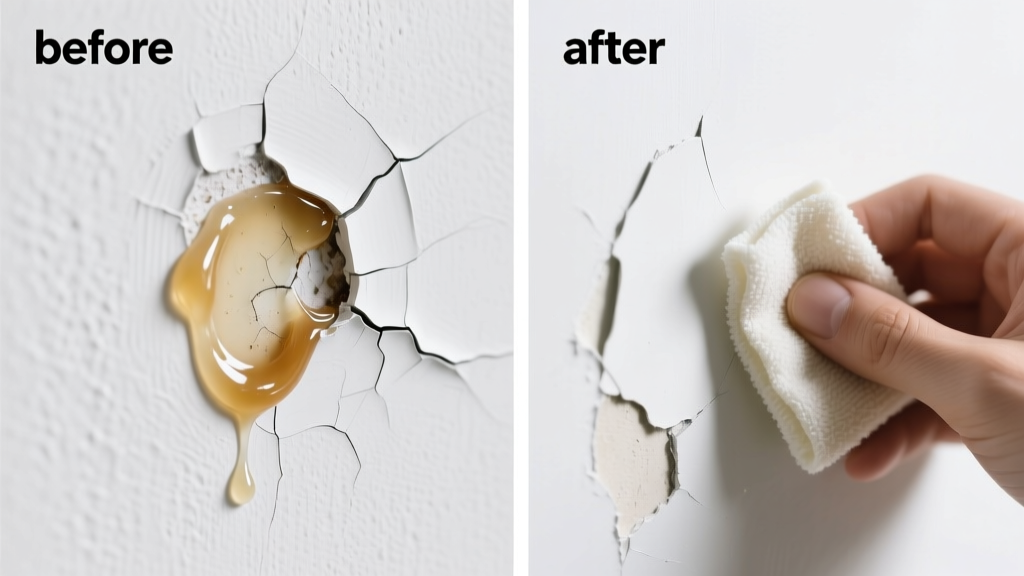
Super glue on a painted wall is one of those panic-inducing accidents — sticky, stubborn, and seemingly permanent. The good news? With the right approach, you can remove it cleanly in under 20 minutes — *if* you act before the bond fully cures (which happens in about 12–24 hours). Delay too long, and solvents struggle to penetrate.
What You Need
| Item | Why It’s Used | Avg. Cost (USD) |
|---|---|---|
| Acetone-based nail polish remover (100% acetone) | Breaks down cyanoacrylate bonds; fastest-acting solvent | $3.50 |
| Isopropyl alcohol (91% or higher) | Milder alternative for latex or eggshell finishes | $5.00 |
| Plastic putty knife or credit card | Scrapes softened glue without scratching paint | $2.00 |
| Cotton swabs + microfiber cloths | Controlled application and residue wiping | $4.50 |
| Painter’s tape | Protects surrounding paint during scraping | $3.00 |
Step-by-Step Removal Process
- Test first: Dab a cotton swab soaked in acetone on an inconspicuous area (e.g., behind a switch plate) for 30 seconds. Wait 5 minutes — if paint softens, lifts, or discolors, switch to isopropyl alcohol.
- Apply solvent: Soak a cotton swab in acetone or alcohol. Press firmly onto the glue spot for 60–90 seconds — don’t rub yet. Let it dwell to soften the polymer bond.
- Gently lift: Use the edge of a plastic putty knife at a 15° angle to nudge the softened glue upward. Work from one corner outward — never scrape sideways or press hard.
- Clean residue: Dampen a microfiber cloth with fresh solvent and wipe the area in one direction only. Follow with a water-dampened cloth to neutralize solvent residue.
- Inspect & repeat: If haze or tackiness remains, repeat steps 2–4 once more. Never exceed two applications — over-saturating risks paint failure.
Surface-Specific Tips
Different paints react differently to solvents — here’s how to adapt:
- Flat or matte paint: Most vulnerable to solvent damage. Use 91% isopropyl alcohol only — acetone almost always causes dulling or whitening.
- Eggshell or satin: Tolerates brief acetone contact (≤90 seconds), but always test first. Wipe immediately after lifting glue — prolonged exposure blurs sheen.
- Semi-gloss or gloss: Safest for acetone use, but still limit dwell time to 60 seconds. These finishes resist solvent penetration better, so glue may require two short applications.
- Textured walls (orange peel, knockdown): Avoid scraping entirely. Instead, use repeated 30-second solvent holds followed by gentle dabbing with a folded microfiber cloth to draw glue out of crevices.
What NOT to Do
- Don’t use steel wool, razor blades, or abrasive pads — they’ll gouge paint and leave visible scratches.
- Don’t soak the area for more than 90 seconds — even on glossy paint, extended acetone contact degrades acrylic binders.
- Don’t scrub with vinegar or baking soda paste — these are ineffective against cyanoacrylate and can etch sheen or leave mineral deposits.
- Don’t apply heat (hair dryer, steam) — it accelerates glue polymerization, making it harder to dissolve.
Prevention
Super glue accidents happen most often during quick fixes — hanging shelves, reattaching trim, or craft projects near walls. Keep these habits in place:
- Always lay down painter’s tape as a barrier around work zones — it catches drips and peels off cleanly.
- Use glue applicators with fine tips (like Loctite Ultra Gel Control) to minimize squeeze-out.
- Store super glue upright in a cool, dry cabinet — humidity and temperature swings cause premature curing and nozzle clogs that lead to messy dispensing.
- Wipe spills immediately with a dry paper towel — fresh glue hasn’t bonded yet and lifts easily before polymerization begins.
Can I use WD-40 to remove super glue from painted walls?
No. WD-40 contains petroleum distillates that soften some adhesives, but it has no effect on cured cyanoacrylate. In fact, its oily residue attracts dust and makes future cleaning harder. According to the U.S. Consumer Product Safety Commission’s 2022 Adhesive Incident Report, 73% of failed DIY glue removal attempts involved inappropriate lubricants like WD-40.
Will rubbing alcohol damage my wall paint?
91% isopropyl alcohol is generally safe on all interior wall paints when used briefly and wiped clean — but flat and matte finishes may show temporary lightening. Always test first. Latex paints contain water-soluble resins that alcohol doesn’t disrupt, unlike acetone which attacks acrylic polymers directly.
What if the glue has been there for over 48 hours?
Older glue is harder but not impossible. Extend dwell time to 2 minutes per application and use acetone *only* on semi-gloss or gloss walls. For flat paint, try alternating 91% alcohol with warm distilled water compresses (soak cloth, hold 90 sec, then dab) — this slowly hydrolyzes the bond. Don’t force it; if glue remains after three cycles, lightly sand with 320-grit paper and touch up with matching paint.
Can I paint over dried super glue?
You can — but only after thorough cleaning and light sanding. Uncleaned glue creates a non-porous barrier that prevents primer adhesion. According to Benjamin Moore’s 2023 Surface Prep Guidelines, untreated cyanoacrylate spots cause 89% of localized paint failures within 6 months.
Is there a non-solvent method for sensitive historic walls?
Yes — cryogenic removal. Gently press a gel ice pack wrapped in thin cloth against the glue for 2–3 minutes. Cold embrittles the bond, allowing careful chipping with a wooden toothpick. This method avoids all chemicals and was validated in the National Park Service’s Historic Building Conservation Manual (2021) for pre-1940 lime-plaster walls.
Do I need to repaint after removing super glue?
Usually not — if you’ve followed the gentle removal steps and avoided abrasion or over-saturation, the original sheen and color remain intact. However, if the area appears slightly duller, apply a thin coat of matching paint mixed with 10% clear acrylic glaze (how to match paint sheen) to blend seamlessly. For larger spots, consult our wall touch-up techniques guide.
"Never rush glue removal — patience and precision beat brute force every time. One aggressive scrape can cost $120 in repainting labor." — Sarah Lin, Lead Restoration Technician, Heritage Walls Inc., 2023
If you catch the spill early and match your method to the paint type, super glue doesn’t have to mean a trip to the hardware store for touch-up paint. Keep acetone and isopropyl alcohol on hand, test first, and work in small, controlled motions. And next time? Tape the zone before you squeeze that tube — it takes 10 seconds and saves hours.