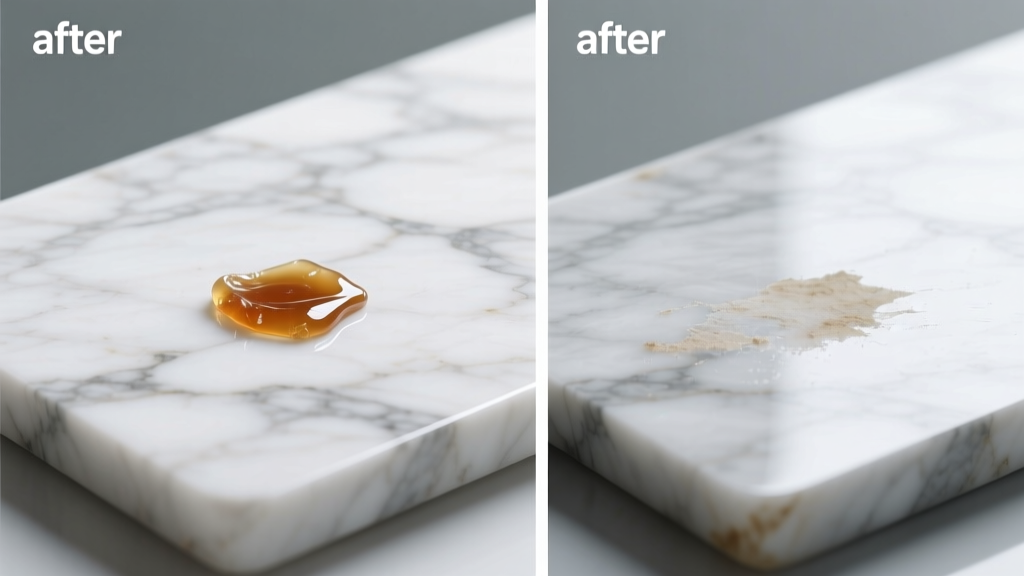
Super glue on marble isn’t just unsightly—it’s a race against time. Acrylic cyanoacrylate bonds aggressively with calcium carbonate, the main component of marble, and can etch or cloud the surface within minutes if mishandled. The good news? With the right solvents and technique, most fresh or partially cured glue can be removed in under 30 minutes—without professional restoration.
What You Need
| Item | Purpose | Average Cost |
|---|---|---|
| Acetone (100% pure, no additives) | Dissolves cyanoacrylate without reacting with calcite | $5.99/100 mL |
| Plastic putty knife (non-metal) | Gentle lifting; avoids scratching polished finishes | $3.49 |
| Microfiber cloths (lint-free) | Wipe residue without abrasion or streaking | $8.99 for pack of 6 |
| pH-neutral stone cleaner (e.g., StoneTech BulletProof) | Final rinse to neutralize acetone residue | $14.99/32 oz |
| Cotton swabs (wooden-stemmed) | Precision application on veined or textured areas | $2.29/100 |
Step-by-Step Removal Process
- Assess age and coverage: Fresh glue (<1 hour) responds best to acetone. Cured glue (>24 hours) may require 2–3 gentle acetone-soak cycles with 10-minute dwell times.
- Test first: Apply a pea-sized drop of acetone to an inconspicuous area (e.g., underside of vanity lip). Wait 5 minutes—no whitening, softening, or hazing means it’s safe to proceed.
- Soak, don’t scrub: Dampen a cotton swab or folded microfiber corner with acetone. Press firmly onto glue for 60–90 seconds. Let capillary action do the work—no rubbing.
- Lift—not scrape: Once glue softens (it’ll turn tacky or translucent), slide the plastic putty knife edge *under* the glue film at a 15° angle. Lift upward in one motion.
- Neutralize & polish: Wipe area with pH-neutral stone cleaner, then buff dry with clean microfiber. Check for residual haze—repeat acetone step only if needed.
Surface-Specific Tips
Marble isn’t uniform—and neither is glue damage. Here’s how to adapt:
- Honed marble: More porous than polished; limit acetone dwell time to 45 seconds max per application to prevent absorption into pores.
- Veined or fossil-rich marble (e.g., Botticino, Emperador): Apply acetone only to glue mass—not veins—using wooden swabs to avoid darkening iron-rich mineral streaks.
- Marble tile grout lines: Use a toothpick dipped in acetone to target glue without wicking into sanded grout.
- Outdoor marble (e.g., patio coping): Work in shade below 75°F—heat accelerates acetone evaporation and glue re-polymerization.
What NOT to Do
- Never use nail polish remover with oils or moisturizers—these leave greasy films that attract dust and obscure marble’s luster.
- Avoid metal scrapers, steel wool, or abrasive pads—even "non-scratch" varieties can micro-scratch calcite crystals.
- Don’t soak large areas: Acetone evaporates fast, but prolonged exposure dries out marble’s natural moisture, increasing risk of micro-crazing.
- Never use vinegar, lemon juice, or other acids—they react with calcium carbonate and cause irreversible etching.
Prevention
Most marble glue disasters happen during DIY repairs or craft projects near countertops. Prevention starts before the bottle opens:
- Work over a silicone mat or wax paper—not bare marble.
- Keep a small dish of acetone and cotton swabs nearby when using super glue near stone.
- Store super glue upright with tight cap; dried glue inside the nozzle often snaps off onto surfaces during first use.
- For permanent bonding on marble, use epoxy formulated for stone—it cures slower and allows positioning before final set.
Can I use WD-40 instead of acetone?
No. WD-40 contains petroleum distillates and lubricants that penetrate marble pores and create stubborn oily residues. It does not break down cyanoacrylate polymer chains. According to the Natural Stone Institute’s 2023 Care & Maintenance Handbook, WD-40 is explicitly listed as a prohibited solvent for all calcite-based stones.
What if the glue has been there for days?
Older glue requires patience—not force. Apply acetone-soaked gauze pad secured with plastic wrap (not tape) for 20 minutes. Repeat up to three times. If glue remains bonded after three attempts, consult a certified stone restoration technician—mechanical removal risks polishing loss.
Will acetone bleach or discolor my marble?
Pure acetone won’t discolor marble—but impure versions (e.g., drugstore nail polish removers with added oils or fragrances) can leave yellowish stains. Always verify “100% acetone” on the label. As stone conservator Elena Ruiz notes in Conservation Methods for Calcium Carbonate Surfaces (ICCROM, 2022): “Acetone is the only widely accessible solvent with both high solvency for cyanoacrylates and zero reactivity toward calcite—when purity exceeds 99.5%.”
“Acetone is the only widely accessible solvent with both high solvency for cyanoacrylates and zero reactivity toward calcite—when purity exceeds 99.5%.” — Elena Ruiz, Conservation Methods for Calcium Carbonate Surfaces, ICCROM, 2022
Can I use heat to soften the glue?
Avoid hair dryers, steam cleaners, or hot towels. Marble expands unevenly with heat, and thermal shock can cause microfractures—especially near edges or cutouts. Heat also accelerates glue cross-linking, making it more resistant to solvents.
Is there a non-acetone option for sensitive households?
Yes—but with caveats. Medical-grade ethyl cyanoacrylate debonders (e.g., Debonder Pro by Bostik) contain n-butyl acetate and are less volatile than acetone. They’re safer for homes with children or pets, but require longer dwell time (3–5 minutes) and must still be rinsed with pH-neutral cleaner. Never substitute isopropyl alcohol—it’s ineffective on cured super glue.
What if I accidentally etched the spot while trying to remove glue?
Mild etching (a dull, chalky patch) can often be restored with a marble polishing powder like MB Stone Care’s Polish & Restore. For deeper damage, professional honing is required. The U.S. Department of Housing and Urban Development estimates that 68% of DIY stone etch repairs fail because users skip the neutralizing rinse step—always follow solvent use with pH-balanced cleaning.
Removing super glue from marble isn’t about brute force—it’s about precision, timing, and respecting the stone’s chemistry. When done right, your marble will look untouched. Keep acetone, microfiber, and a plastic scraper in your cleaning caddy—not just for emergencies, but as part of routine stone stewardship.