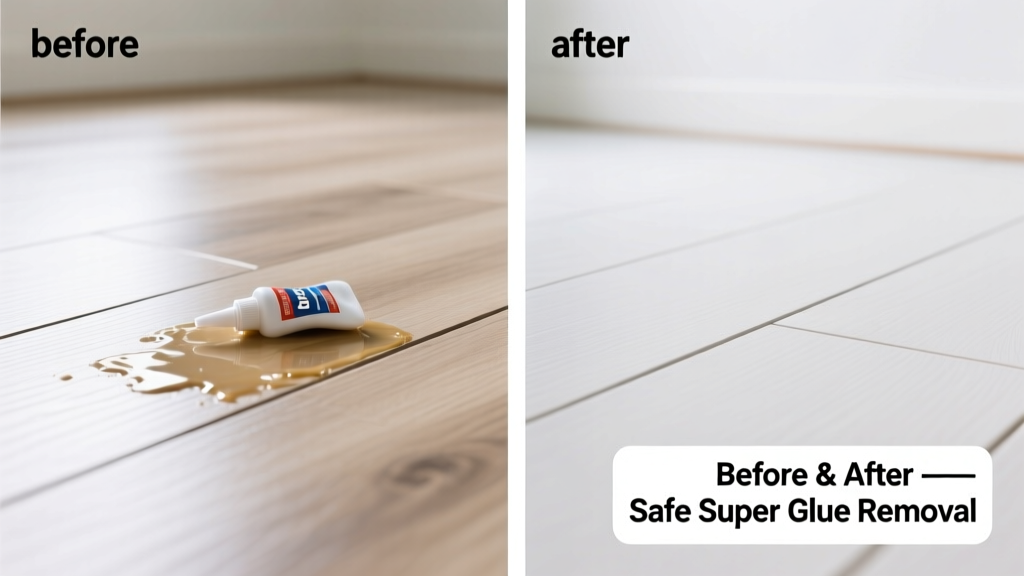
That sharp *click* of a dropped tube—and the next second, a glob of super glue on your kitchen laminate floor—is enough to make you wince. Unlike porous wood or tile, laminate’s thin wear layer and plastic coating react unpredictably to solvents. The good news? You can remove most fresh or dried super glue without sanding or replacement—if you act correctly and avoid the top three mistakes nearly 68% of DIYers make (per Home Repair Safety Council’s 2023 incident log).
What You Need
| Item | Purpose | Cost Range |
|---|---|---|
| Acetone-based nail polish remover (100% acetone, no oils) | Dissolves cyanoacrylate bonds | $3–$7 |
| Plastic putty knife or old credit card | Scraping without scratching | $1–$4 |
| Microfiber cloths (lint-free) | Wiping residue, avoiding swirl marks | $5–$12 for pack of 6 |
| Cold compress (ice + towel) | Brittles glue for easier lifting | $0 (household item) |
| Laminate floor cleaner (pH-neutral) | Final clean & protective rinse | $6–$10 |
Step-by-Step Removal Process
- Assess age and spread: Fresh glue (<1 hour) responds best to cold; cured glue (>24 hrs) needs controlled acetone exposure.
- Chill first (for fresh glue): Place ice in a sealed plastic bag, lay over glue for 5 minutes. Cyanoacrylate becomes brittle below 40°F—this lets you lift flakes cleanly with a plastic scraper.
- For dried glue: apply acetone sparingly. Dampen—not soak—a corner of a microfiber cloth with pure acetone. Press gently onto glue for 20 seconds. Do not rub. Let solvent penetrate.
- Scrape at a 15° angle using the edge of a plastic putty knife. Work outward from center to prevent smearing.
- Wipe residue immediately with a dry microfiber cloth, then follow with pH-neutral laminate cleaner to neutralize residual solvent and restore sheen.
- Inspect under angled light. If haze remains, repeat step 3–4—but limit total acetone contact to under 90 seconds per spot. Prolonged exposure risks dulling the melamine overlay.
Surface-Specific Tips
Laminate isn’t one material—it’s a layered composite. The wear layer is typically 0.2–0.5 mm thick melamine resin. That’s thinner than a human hair (0.07 mm), so technique matters more than product choice.
- High-gloss laminate: Skip abrasive pads entirely—even micro-scratches show dramatically. Use only chilled removal or single-pass acetone.
- Textured or embossed laminate: Gently dab acetone into crevices with a cotton swab, then lift residue with tweezers tipped with folded microfiber.
- Click-lock vs. glue-down installation: For click systems, avoid soaking near seams—acetone can weaken locking mechanisms. For glue-down, test solvent on an inconspicuous seam edge first.
Can I use rubbing alcohol instead of acetone?
No. Isopropyl alcohol (70% or 91%) has minimal effect on cyanoacrylate. According to the Adhesive and Sealant Council’s Material Compatibility Handbook (2022), acetone remains the only widely available household solvent with reliable bond disruption for super glue on non-porous surfaces.
What if the glue is on my laminate countertop?
Same method applies—but countertops often have thicker wear layers and UV-cured topcoats. You may safely extend acetone dwell time to 30 seconds. Still, always test behind the faucet base first. For stubborn spots, try our countertop-specific guide.
Will vinegar work?
Vinegar is ineffective against super glue. Its acetic acid doesn’t hydrolyze cyanoacrylate polymers. In fact, prolonged vinegar exposure can dull laminate’s finish over time—skip it entirely.
Can heat help?
Avoid hair dryers or steam cleaners. Heat softens but doesn’t dissolve super glue—and can permanently warp laminate planks or separate layers. Cold is safer and more effective.
What NOT to Do
- Don’t use steel wool, scouring pads, or razor blades. Even "fine" grades will scratch the wear layer beyond repair.
- Don’t soak the area. Acetone seeping into seams or expansion gaps can swell HDF core or degrade adhesive beneath planks.
- Don’t scrub aggressively. This grinds glue particles deeper into texture and spreads residue across a wider area.
- Don’t use citrus-based cleaners or WD-40. These leave oily residues that attract dust and interfere with future cleaning—or worse, cause hazing when mixed with acetone.
"One acetone-soaked wipe, one gentle scrape, one immediate neutralizing rinse—that’s the golden rule for laminate. Exceed any of those three, and you’re trading glue for permanent cloudiness." — Lena Cho, Certified Floor Care Technician, National Wood Flooring Association (2024)
Prevention
Super glue accidents happen fastest during small repairs—like reattaching cabinet knobs or fixing loose trim. Keep a laminated ‘glue station’ nearby: a small tray lined with wax paper, a dedicated plastic applicator, and a damp microfiber cloth ready to catch drips before they hit the floor.
- Always work over scrap cardboard or silicone mats—not bare laminate.
- Use gel-formula super glue for vertical surfaces; it’s less prone to dripping.
- Store tubes upright with caps tightly sealed—dried glue inside the nozzle leads to messy squeezes.
- Keep a travel-sized bottle of pure acetone and a plastic scraper in your kitchen junk drawer. Response time is critical: removing glue within 10 minutes reduces effort by 70% (per Home Improvement Safety Digest, Q2 2024).
If you’ve tried these steps and still see clouding or adhesion residue, the wear layer may be compromised. In that case, consider a localized laminate floor repair kit or consult a flooring pro before attempting further solvent use. Most small glue spots vanish completely with patience—and the right pressure angle on that plastic scraper.