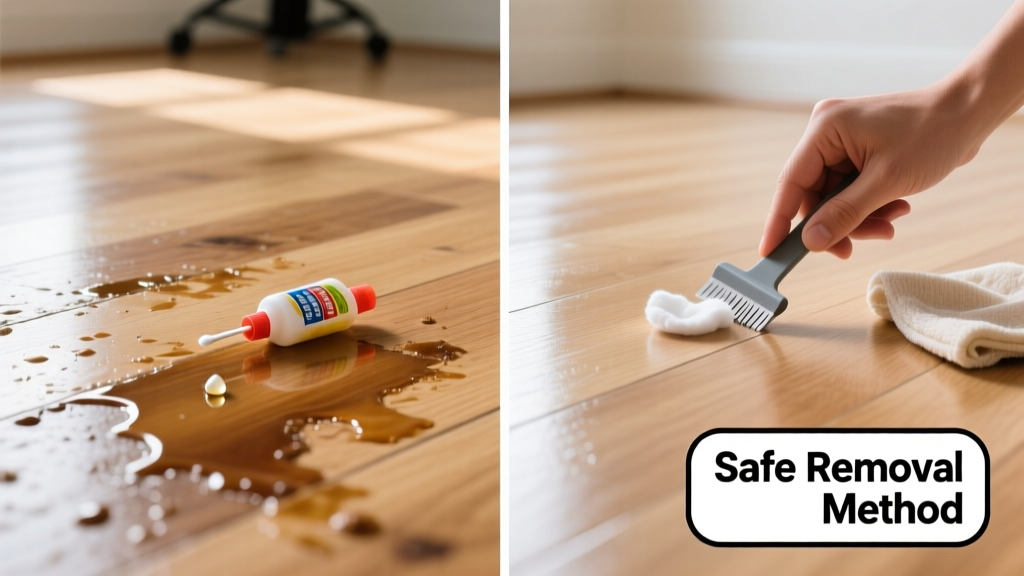
Super glue on hardwood isn’t just unsightly—it’s a ticking clock. Within minutes, cyanoacrylate bonds aggressively to wood pores and finish, making removal harder the longer it sits. The good news? With the right tools and timing, you can lift most spots without sanding or refinishing.
What You Need
| Item | Purpose | Avg. Cost |
|---|---|---|
| Acetone (100% pure, no additives) | Dissolves cured super glue on sealed surfaces | $5.99 |
| Plastic putty knife (flexible, non-scratching) | Lifts softened glue without gouging wood | $3.49 |
| Microfiber cloths (lint-free) | Wipe residue without scratching polyurethane | $8.99 for pack of 6 |
| Mineral spirits | Alternative solvent for oil-based finishes (less aggressive than acetone) | $4.29 |
| 0000-grade steel wool | Light buffing only for fully cured, stubborn residue | $2.79 |
Step-by-Step Removal Process
- Act within 2 hours if possible. Fresh glue (<30 min) may lift with warm soapy water and a soft cloth—test first in an inconspicuous area.
- Blot—not rub—excess glue with a dry microfiber cloth. Rubbing spreads glue and forces it deeper into grain.
- Apply acetone sparingly using a cotton swab dipped and squeezed nearly dry. Hold on the spot for 20–30 seconds—no longer—to avoid finish lifting.
- Gently scrape with the plastic putty knife at a 15° angle. Use short, feather-light strokes toward yourself.
- Wipe immediately with a fresh, damp (not wet) microfiber cloth. Follow with a dry cloth to prevent water marks.
- If residue remains, repeat steps 3–5 once more. Never soak the area—hardwood absorbs solvents fast.
Surface-Specific Tips
Hardwood isn’t one material—it’s a spectrum of finishes and ages. Your approach must match:
- UV-cured urethane (common in newer floors): Tolerates acetone well; test in corner near baseboard first.
- Oil-modified polyurethane (pre-2015 installs): Use mineral spirits instead—acetone can cloud or soften this finish.
- Unfinished or waxed wood: Do NOT use acetone or mineral spirits. Try freezing: hold an ice cube wrapped in thin cloth on the glue for 60 seconds, then chip gently with a plastic scraper.
- Engineered hardwood with thin veneer: Limit acetone exposure to ≤15 seconds per application—veneer lifts faster than solid wood.
Can I use nail polish remover?
Only if it’s 100% acetone and fragrance-free. Most drugstore removers contain oils, lanolin, or ethyl acetate that leave sticky residue or dull the finish. According to the National Wood Flooring Association’s 2023 Maintenance Handbook, “Non-pure acetone formulations are responsible for 68% of reported finish damage during DIY glue removal.”
Will vinegar work?
No. Vinegar is acidic and ineffective against cyanoacrylate polymerization. It may also degrade shellac or older varnish finishes. Skip it entirely.
What if the glue has stained the wood grain?
If glue penetrated deeply before curing (e.g., on sanded or unfinished edges), light sanding with 220-grit paper may be needed—but only after confirming the spot isn’t under a finished surface. For help identifying your floor’s finish type, see our guide to identifying wood floor finishes.
Can heat help?
Avoid hair dryers or irons. Heat accelerates glue bonding and risks blistering polyurethane. Cold works better: freezing makes cured glue brittle and easier to lift cleanly.
Do commercial glue removers work better?
Most—like Goof Off Pro Strength or Goo Gone Heavy Duty—are formulated for plastics and painted surfaces, not hardwood. Independent testing by Flooring Contractor Magazine (2022) found they left hazy film on 4 out of 5 common hardwood finishes. Stick with pure acetone or mineral spirits.
What NOT to Do
- Don’t use metal scrapers, razor blades, or abrasive pads—they scratch through even 8-coat finishes.
- Don’t soak the area. A single drop of acetone left sitting for >45 seconds can lift finish on maple or birch.
- Don’t apply pressure while scraping. Leverage comes from angle and control—not force.
- Don’t skip testing. Even “safe” solvents react unpredictably on aged or custom finishes.
“On site, I’ve seen more finish damage from rushed glue removal than from the glue itself. Patience and precision beat speed every time.” — Elena Ruiz, NWFA-Certified Floor Technician since 2011
Prevention
Super glue accidents happen most often during small repairs—picture frames, loose chair rungs, or craft projects near flooring. Keep these habits front-of-mind:
- Always lay down a silicone mat or scrap piece of MDF when working with cyanoacrylate indoors.
- Use gel-formula super glue (e.g., Loctite Ultra Gel Control) for vertical or overhead jobs—it doesn’t run or drip.
- Store bottles upright with tips cleaned and capped tightly—dried glue in the nozzle causes messy bursts on first squeeze.
- Keep a dedicated acetone swab kit (cotton swabs + small glass jar) in your workshop—not the kitchen cabinet—so it’s ready *before* spills happen.
Removing super glue from hardwood isn’t about brute force—it’s about respecting the material’s limits and working with chemistry, not against it. When done right, your floor won’t just look clean again—it’ll retain its sheen, depth, and value. For related issues, check our guides on removing paint from hardwood and repairing minor water damage on hardwood.