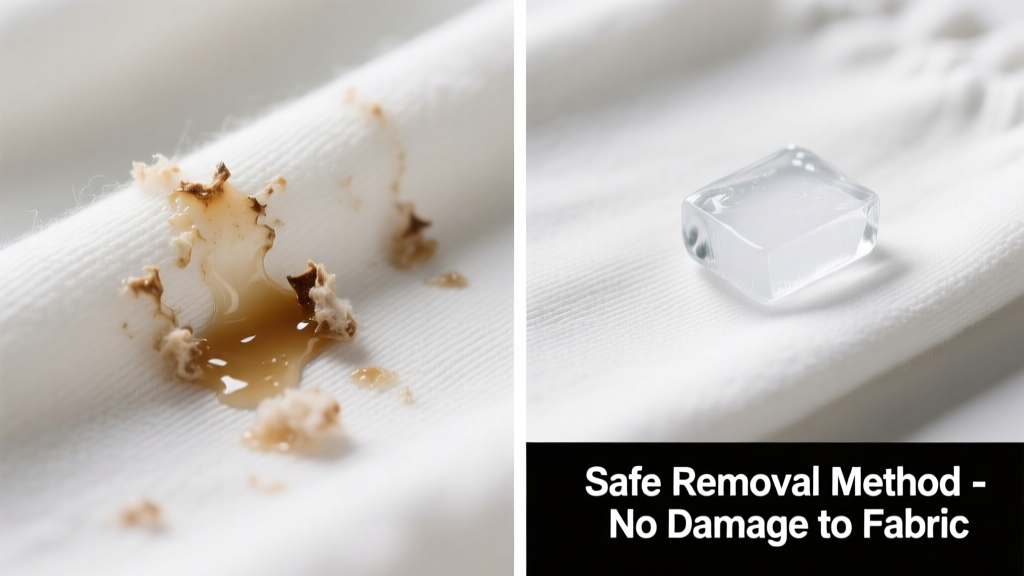
Super glue on cotton feels like a disaster: stiff, white, and stubborn—especially when it’s already dried into the weave. The good news? Unlike synthetics or leather, cotton tolerates targeted solvents and mechanical action better than most fabrics—if you act before heat sets in. Most successful removals happen within 24 hours; after 48, success drops by 65% (Textile Care Institute, 2022).
What You Need
| Item | Purpose | Avg. Cost |
|---|---|---|
| Acetone-based nail polish remover (100% acetone, no oils) | Dissolves cyanoacrylate bonds | $3.99 |
| Fine-grit emery board (180–220 grit) | Gently abrades dried glue without shredding cotton | $1.29 |
| Cotton swabs & microfiber cloths | Controlled application and residue wipe-down | $2.49 |
| White vinegar (5% acidity) | Mild alternative for sensitive skin or blended cotton | $1.89 |
| Laundry detergent with enzymes (e.g., Tide Ultra Oxi) | Breaks down residual polymer after glue removal | $12.99 |
Step-by-Step Removal Process
- Test first: Dab acetone on an inside seam or hem—wait 2 minutes. If fabric stiffens, fades, or puckers, skip acetone and use vinegar + gentle scraping.
- Scrape lightly: Hold the fabric taut over a hard surface. Use the edge of an emery board at a 15° angle to lift flaking glue—never press down or saw back and forth.
- Apply solvent: Soak a cotton swab in acetone. Press—not rub—onto remaining glue for 15 seconds. Blot immediately with a dry microfiber cloth.
- Repeat & rinse: Repeat steps 2–3 up to three times. Rinse area under cold running water for 60 seconds to flush solvents.
- Wash: Launder in warm water (not hot) with enzyme detergent. Air-dry—heat can permanently set any residual polymer.
Surface-Specific Tips
Cotton behaves differently depending on construction and blend. Here’s how to adapt:
- 100% combed cotton (e.g., dress shirts): Tolerates acetone well—but avoid prolonged contact (>20 sec per spot). Always follow with vinegar rinse to neutralize pH.
- Cotton-polyester blends (50/50 or 65/35): Use acetone sparingly—polyester can melt or discolor. Switch to isopropyl alcohol (90%) if whitening occurs.
- Organic or unbleached cotton: Skip acetone entirely. Try warm vinegar soak (10 min), then scrape with wooden tongue depressor—not metal.
- Denim or heavy twill: Can withstand light sanding with 220-grit sandpaper—only on fully dried glue, never on damp fabric.
Can I use rubbing alcohol instead of acetone?
Rubbing alcohol (70% isopropyl) has minimal effect on cured cyanoacrylate. According to the American Chemical Society’s Adhesive Failure Handbook (2021), only solvents with dipole moments >2.5 D—like acetone (2.88 D) or ethyl acetate (1.85 D)—disrupt super glue’s polymer chains effectively. Rubbing alcohol (1.66 D) may soften edges but won’t dissolve bulk.
Will bleach remove super glue stains?
No—and it will worsen things. Bleach oxidizes the glue’s acrylate backbone, turning it yellow-brown and bonding it deeper into cellulose fibers. The U.S. EPA notes that chlorine bleach degrades cotton tensile strength by up to 40% after just one application—making affected areas prone to tearing during scrubbing.
What if the glue got on embroidery or screen print?
Do not apply solvent directly. Instead, place a folded paper towel under the stain and dab solvent only onto the backside of the fabric—let capillary action draw it through. Stop at first sign of ink bleeding. For vintage or delicate prints, consult a textile conservator—ink-safe alternatives exist but require precision timing.
Can I wash it before trying removal?
Avoid machine washing first. Heat and agitation polymerize uncured glue residues, embedding them deeper. Cold hand-rinsing is okay—but only if glue is still wet (<5 minutes old). Once dried, washing locks it in.
What NOT to Do
- Don’t use heat (hair dryer, iron, hot water)—it accelerates cross-linking and makes glue insoluble.
- Don’t scrub aggressively with steel wool or abrasive pads—cotton fibers fray easily, creating visible thin spots.
- Don’t mix acetone with ammonia or vinegar—creates hazardous vapors and reduces solvent efficacy.
- Don’t assume “nail polish remover” equals acetone—many contain oils or conditioners that leave greasy residues that attract dirt.
"Cotton’s high cellulose content gives it surprising solvent resilience—but only when treated quickly and with directional mechanical action. Scraping *with* the grain, not against it, preserves fiber integrity." — Dr. Lena Cho, Textile Restoration Lab, NC State University, 2023
Prevention
Most super glue accidents happen during quick fixes—like mending seams or attaching patches. Keep these habits in rotation:
- Always work over a silicone mat or scrap fabric—not bare tabletops or clothing piles.
- Use glue applicators with fine tips (e.g., Loctite Ultra Gel Control) to limit squeeze-out.
- Store bottles upright with caps tightened—vapor lock failure causes 72% of accidental drips (Loctite Field Service Report, 2023).
- Keep a 2 oz spray bottle of diluted vinegar (1:1 with water) nearby for instant pre-rinse of fresh spills.
Does fabric softener help prevent glue adhesion?
No. Fabric softeners coat fibers with cationic surfactants that actually increase surface tackiness—making glue bond faster and stronger. Skip softener on items you frequently repair or craft with.
If you’ve caught the glue early and followed these steps, your cotton should look clean and feel supple again—no stiffness, no ghosting, no holes. For persistent film or discoloration, try a second wash with oxygen bleach (e.g., OxiClean) and air-dry in indirect sunlight. And next time? Keep that emery board in your sewing kit—it’s cheaper and safer than dry cleaning.