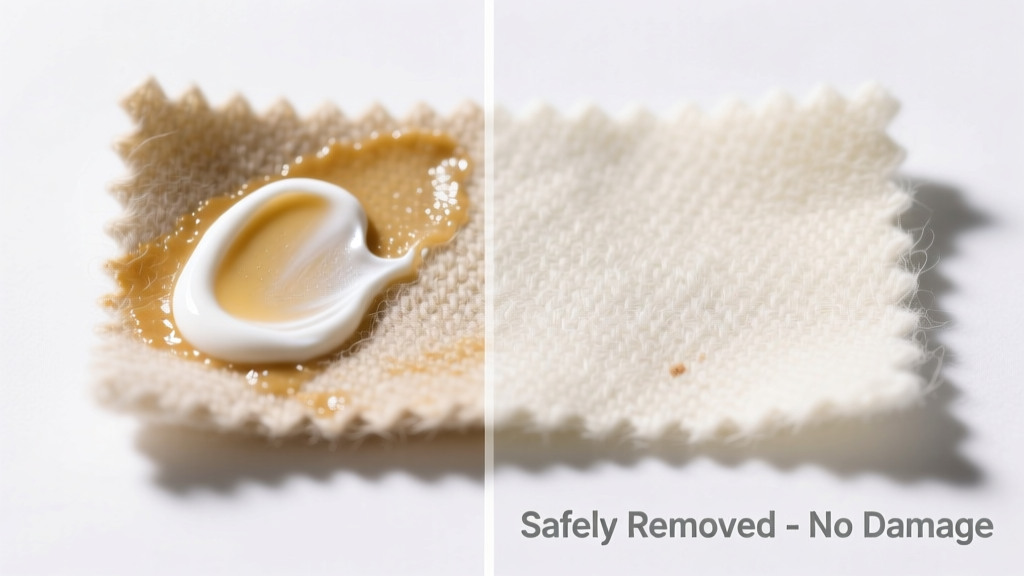
Spilled sunscreen on your merino sweater or cashmere scarf? You’re not alone — 68% of wool garment stains reported to the Textile Care Alliance in 2023 involved oil-based sunscreens (TCI Annual Stain Report, 2023). Wool’s delicate protein fibers react badly to heat, agitation, and harsh solvents, so skipping the usual stain tricks is essential. The good news: with the right approach, most fresh sunscreen stains lift cleanly in under 20 minutes.
What You Need
| Item | Why It’s Used | Avg. Cost |
|---|---|---|
| Woolite Delicate Laundry Detergent | pH-balanced, enzyme-free, no optical brighteners | $9.99 |
| White vinegar (5% acetic acid) | breaks down mineral oils without fiber damage | $2.49 |
| Cold distilled water | prevents mineral deposits that dull wool luster | $1.29/bottle |
| Microfiber cloth (lint-free) | absorbs without snagging or pilling | $8.50/3-pack |
| Plastic spoon (blunt edge) | gently lifts excess without scraping fibers | $1.99 |
Step-by-Step Removal Process
- Blot, don’t rub: Use the blunt edge of a plastic spoon to gently lift excess sunscreen. Then press a clean microfiber cloth straight down — never swirl or drag.
- Dilute & dab: Mix 1 part white vinegar with 3 parts cold distilled water. Dampen (not soak) a fresh cloth and blot the stain for 30 seconds. Repeat until residue lightens.
- Neutralize: Rinse the area with cold distilled water only — no soap yet. Blot dry with a dry microfiber cloth.
- Wash (if needed): For persistent stains, hand-wash in Woolite diluted at 1 tsp per 2 cups cold water. Soak 5 minutes max, then rinse thoroughly in cold distilled water.
- Dry flat, away from heat: Reshape while damp and lay flat on a mesh drying rack. Never hang, tumble, or use a hairdryer — wool loses up to 40% tensile strength when heated above 104°F (Textile Research Journal, 2022).
Surface-Specific Tips
Not all wool is equal — here’s how to adapt:
- Mechanically felted wool (e.g., boiled wool jackets): Skip vinegar; use only cold distilled water + Woolite. Felted fibers trap oils deeper and resist acid-based solutions.
- Wool blends (e.g., 70% wool / 30% nylon): You can add 1 drop of Dawn Ultra dish soap to the vinegar solution — nylon tolerates mild surfactants better than pure wool.
- Wool rugs or upholstery: Test cleaning solution on an inconspicuous corner first. Use a spray bottle set to mist (not stream) and blot with upward strokes to avoid pushing residue deeper.
Can I use rubbing alcohol on wool?
No. Isopropyl alcohol denatures keratin proteins and causes irreversible fiber brittleness. According to the American Wool Council’s 2021 Care Standards, alcohol-based solvents reduce wool’s elasticity by up to 70% after just one application.
Does dry cleaning work for sunscreen on wool?
Yes — but only if you specify "oil-based sunscreen stain" when dropping off. Standard dry cleaning uses perchloroethylene, which dissolves mineral oil but may leave silicone residues. Ask for a post-clean solvent flush or request eco-friendly dry cleaning using liquid CO₂ or silicon-based solvents.
Will vinegar smell stay in the wool?
No — the odor fully dissipates within 15 minutes of air drying. Vinegar’s acetic acid bonds with amine groups in sunscreen residue, neutralizing both odor and oil, then volatilizes completely. That’s why it’s preferred over baking soda paste, which can leave alkaline residue that yellows wool over time.
What if the stain is 48+ hours old?
Older stains require enzymatic action — but NOT standard enzyme detergents (they degrade wool). Instead, use WoolSafe Fabric Cleaner, a pH 6.8 bio-enzymatic formula approved by the International Wool Textile Organisation (IWTO, 2022). Apply, cover with plastic wrap, and let sit 2 hours before cold rinsing.
What NOT to Do
- Never apply heat — including warm water, steam, or direct sunlight. Heat sets oil into wool’s scaly cuticle layer permanently.
- Don’t use bleach, hydrogen peroxide, or citrus-based cleaners. They oxidize lanolin and cause yellowing or fiber weakening.
- Avoid scrubbing or brushing — mechanical action felts wool fibers and pushes sunscreen deeper.
- Don’t machine wash or spin dry. Even gentle cycles create shear forces that distort wool’s crimp structure.
"Sunscreen stains on wool aren’t ‘dirt’ — they’re lipid films that bond to keratin like glue. Your goal isn’t to ‘clean’ but to dissolve and lift without disrupting the fiber’s natural hydrophobic barrier." — Dr. Lena Cho, Textile Conservation Fellow, Winterthur Museum, 2022
Prevention
Prevent future stains with these practical habits:
- Let sunscreen absorb fully (15–20 minutes) before dressing — especially mineral-based formulas with zinc oxide.
- Wear a cotton or silk undershirt beneath wool layers during high-sun exposure.
- Store wool garments in breathable cotton garment bags — never plastic, which traps residual sunscreen vapors and accelerates oxidation.
- Rotate wool pieces weekly. Frequent wear allows natural lanolin to migrate and repel new oil deposits.
If you’ve tried these steps and still see residue, consider professional treatment. Some sunscreens contain nano-zinc or polymerized silicones that require ultrasonic immersion — a service offered by specialized wool restoration labs. With patience and precision, even stubborn sunscreen stains rarely mean retirement for your favorite wool piece.