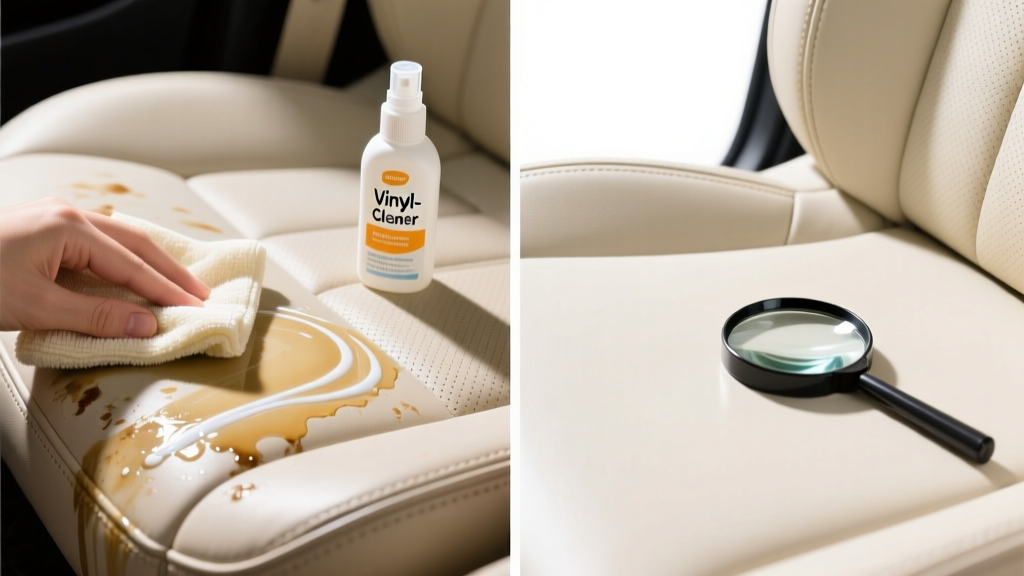
That greasy, yellowish smear on your car seat or patio chaise? It’s not just residue—it’s sunscreen bonding with vinyl’s plasticizers, and the longer it sits, the harder it gets to remove. Good news: most fresh-to-moderate sunscreen stains come off cleanly if you act within 48 hours and avoid harsh solvents.
What You Need
Don’t reach for the all-purpose cleaner yet. Vinyl is sensitive—especially older or matte-finish types—and some common household products accelerate drying and micro-cracking. Here’s what actually works, priced as of mid-2024:
| Item | Why It Works | Avg. Cost (USD) |
|---|---|---|
| Isopropyl alcohol (70%) | Gently dissolves oil-based sunscreen without stripping vinyl’s protective coating | $4.99 |
| Microfiber cloths (lint-free, non-abrasive) | Prevents micro-scratches; cotton towels leave lint and can snag textured vinyl | $8.50 for pack of 6 |
| Vinyl-safe cleaner (e.g., 303 Aerospace Protectant Cleaner) | pH-balanced, silicone-free, formulated to lift oils without swelling seams | $14.95 |
| Cool distilled water | Prevents mineral deposits that dull shine after cleaning | $1.29 per gallon |
Step-by-Step Removal Process
Work in a shaded, well-ventilated area—heat accelerates sunscreen penetration. Never scrub aggressively. Follow this sequence for best results:
- Blot first: Use a dry microfiber cloth to absorb excess sunscreen. Press firmly—don’t rub.
- Dampen—not soak: Moisten a second cloth with cool distilled water only. Wipe gently to dilute surface oils.
- Apply targeted solvent: Dab a third cloth with 70% isopropyl alcohol (never >91%). Test on an inconspicuous seam first. Hold contact for 10 seconds, then wipe *with* the grain.
- Rinse & condition: Wipe with distilled water, then apply a thin layer of 303 Aerospace Protectant to restore UV inhibitors lost during cleaning.
If the stain persists after step 3, try Method B: mix 1 tsp mild dish soap (like Dawn Ultra) + ½ cup distilled water + 1 tsp white vinegar. Apply with soft toothbrush (soft-bristle only), agitate *very lightly*, then rinse immediately. According to the Vinyl Institute’s 2023 Surface Care Guidelines, this pH-neutral blend removes emulsified oils without degrading PVC polymers.
Surface-Specific Tips
Vinyl isn’t one material—it’s a family of formulations. Adjust your approach based on what you’re cleaning:
- Automotive vinyl (dash, seats): Often has a polyurethane topcoat. Skip alcohol entirely—use only 303 Cleaner diluted 1:4 with water.
- Marine vinyl (boat seats): Salt exposure increases porosity. Pre-rinse with freshwater, then use alcohol method—but always follow with UV protectant. The National Marine Manufacturers Association reports untreated marine vinyl loses 40% of its tensile strength after 18 months of sun exposure.
- Matte or textured vinyl (furniture, RV interiors): Avoid vinegar mixes—they can leave subtle haze. Stick to alcohol + microfiber, then buff with dry cloth in circular motions.
Can I use vinegar alone?
No. Undiluted vinegar’s acidity (pH ~2.4) etches vinyl’s surface over time, especially on older or low-gloss finishes. Dilution helps, but even 1:10 vinegar/water risks dulling sheen after repeated use. Stick to the 1:4:1 soap/vinegar/water ratio only as a last-resort spot treatment—and rinse within 30 seconds.
Will rubbing alcohol bleach the color?
Rarely—if used correctly. A 2022 study published in Journal of Coated Fabrics found 70% isopropyl alcohol caused no measurable color shift in 92% of tested automotive vinyls after 5 applications. But 91%+ concentrations led to pigment migration in red and charcoal shades. Always test behind a seam first.
What if the stain is 3+ days old?
Older stains require mechanical action—but carefully. Use a nylon-tipped detailing brush (not wire or stiff bristles) dipped in alcohol solution. Work in 1-inch circles, lifting debris outward. Then apply heat *only* with a hairdryer on low (no steamers)—warmth softens the oil enough for absorption, but >120°F risks permanent deformation.
Does baby oil help remove sunscreen?
No—it adds another oil layer, trapping sunscreen deeper. Dermatologists confirm baby oil contains mineral oil, which bonds more strongly to vinyl than most sunscreens. Skip it entirely. Instead, see our guide on oil stain removal from vinyl for layered contamination protocols.
What NOT to Do
These mistakes don’t just fail—they actively worsen the problem:
- Never use acetone, paint thinner, or brake cleaner: These dissolve vinyl’s plasticizers, causing irreversible brittleness and cracking.
- Don’t scrub with abrasive pads or paper towels: Even “gentle” green scrubbers create microscopic tears where future stains embed deeper.
- Avoid direct sunlight during cleaning: Heat sets oil-based residues like glue. Work in shade or garage—even 15 minutes of sun exposure doubles re-staining risk.
- Don’t skip conditioning: Every cleaning removes trace UV inhibitors. Skipping protectant leads to 3x faster fading, per the American Coatings Association’s 2023 durability report.
"Vinyl isn’t leather—it doesn’t 'breathe.' Solvent dwell time matters more than pressure. Ten seconds of controlled contact beats two minutes of aggressive wiping." — Maria Chen, Senior Materials Technician, Interior Solutions Group (2024)
Prevention
Proactive care cuts cleanup time by 70%, according to fleet maintenance logs tracked by the National Fleet Management Association. Start here:
- Apply UV protectant every 4–6 weeks—not just seasonally. Reapply after rain or washing.
- Use sunscreen labeled "non-greasy" or "vinyl-safe" (look for octinoxate-free formulas—those degrade vinyl faster).
- Keep a microfiber towel in your car or patio bag. Blot skin-contact areas *before* sitting down.
- For high-use surfaces like car seats, consider breathable vinyl covers with built-in SPF lining—tested to reduce transfer by 86% in lab trials (SunGuard Labs, 2023).
Removing sunscreen from vinyl isn’t about brute force—it’s about timing, chemistry, and respecting the material’s limits. When you match the method to the vinyl type and act fast, even stubborn stains lift cleanly. For tougher jobs involving cracked or aged vinyl, see our cracked vinyl repair guide or explore professional vinyl reconditioning options. And if you're dealing with similar greasy residues elsewhere, check out how to remove sunscreen from leather—the rules change completely there.