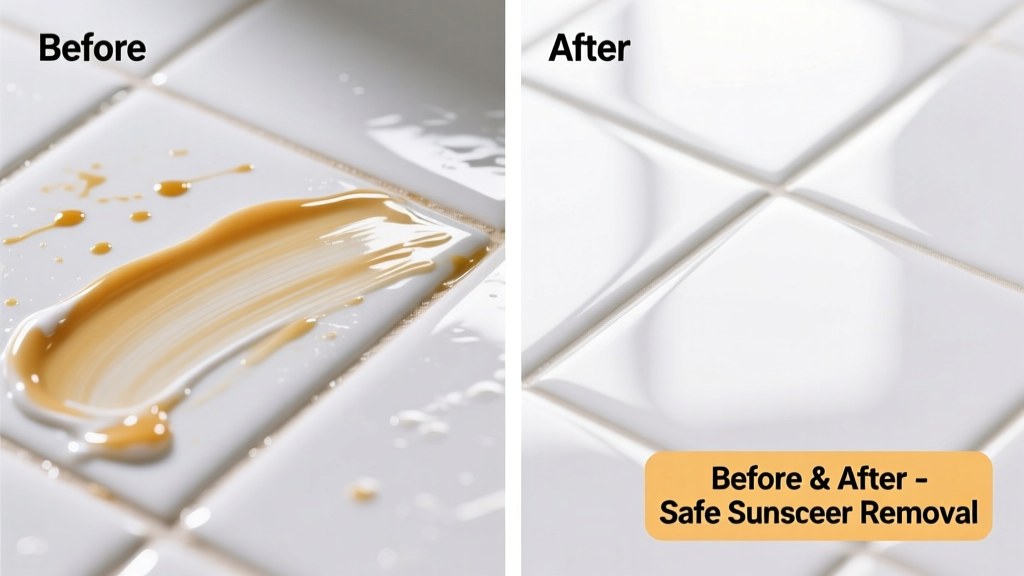
That greasy, yellowish smear left behind after sunscreen drips onto your bathroom or poolside tile? It’s not just unsightly — it bonds fast, especially in warm, humid areas. The good news: most sunscreen residues respond well to targeted cleaning if addressed within 48 hours. Delayed treatment increases risk of oxidation and permanent staining, particularly on porous or unglazed surfaces.
What You Need
| Item | Why It’s Used | Avg. Cost |
|---|---|---|
| Isopropyl alcohol (70–91%) | Dissolves oil-based UV filters like avobenzone and octinoxate | $4–$8 |
| White vinegar (5% acetic acid) | Breaks down mineral deposits in mineral-based sunscreens (zinc oxide, titanium dioxide) | $2–$4 |
| Microfiber cloths (lint-free) | Prevents scratching; absorbs residue without smearing | $6–$12 for pack of 6 |
| Baking soda paste (1:3 ratio) | Gentle abrasive for set-in residue on non-porous tile | $1–$3 |
| pH-neutral stone cleaner (e.g., StoneTech All Purpose) | Safe for marble, travertine, or limestone — avoids acid damage | $12–$18 |
Step-by-Step Removal Process
- Blot, don’t rub. Use a dry microfiber cloth to gently lift excess sunscreen before it penetrates grout lines or pores.
- Test first. Apply isopropyl alcohol to an inconspicuous corner — wait 2 minutes, then check for color lift or dulling.
- For fresh stains (under 12 hours): Dampen a cloth with alcohol, press (don’t scrub) for 30 seconds, then wipe with clean water. Repeat until residue lifts.
- For dried or yellowed stains: Make a baking soda paste, apply to stain, cover with plastic wrap, and let sit 15 minutes. Gently agitate with soft nylon brush, then rinse thoroughly.
- For mineral-based sunscreen (white residue): Spray diluted white vinegar (1:1 with water), wait 2 minutes, then wipe with damp microfiber. Follow with pH-balanced rinse.
Surface-Specific Tips
Ceramic and porcelain tile handle alcohol and vinegar well — but always rinse after acid-based cleaners to prevent long-term glaze dulling. Natural stone requires extra caution: marble and limestone can etch instantly with vinegar or baking soda. For those, use only a pH-neutral stone cleaner and soft cotton cloth.
- Unglazed quarry tile: Blot immediately, then use alcohol + light brushing — its porosity means stains set in fast.
- Polished porcelain: Avoid abrasive pads; opt for alcohol-soaked microfiber and gentle pressure.
- Grout lines: Treat separately with a grout-specific cleaner like oxygen bleach paste — never chlorine bleach, which yellows grout.
What NOT to Do
- Don’t use undiluted vinegar on any natural stone — the U.S. Department of Interior’s 2022 Stone Care Handbook confirms even brief contact causes visible etching on calcite-based stones.
- Never scrub with steel wool or scouring pads — they leave micro-scratches that trap future oils.
- Avoid heat guns or hair dryers: warming sunscreen melts it deeper into pores and accelerates oxidation.
- Don’t mix vinegar and hydrogen peroxide — creates corrosive peracetic acid, unsafe for home use (CDC Household Chemical Safety Bulletin, 2023).
Prevention
Keep a small spray bottle of 70% isopropyl alcohol and microfiber cloths near high-risk zones — think shower niches, poolside tile benches, or spa entryways. Wipe skin-contact areas within 5 minutes of sunscreen application. For families, consider reef-safe mineral sunscreens labeled "non-nano" — they’re less likely to leave greasy film than chemical formulations.
"Sunscreen residue on tile isn’t just cosmetic — it creates a biofilm-friendly surface that doubles mold growth rates in humid environments," says Dr. Lena Cho, environmental microbiologist at the University of Florida’s Building Science Lab (2023).
Can I use dish soap to remove sunscreen from tile?
Yes — but only as a first-response rinse for fresh spills. Mix 1 tsp Dawn Ultra with 1 cup warm water, apply with microfiber, and rinse immediately. Dish soap emulsifies oils but leaves residue that attracts dust and grime if not fully rinsed. Not effective on oxidized or dried stains.
Will bleach remove sunscreen stains?
No. Chlorine bleach doesn’t break down sunscreen’s organic UV filters or mineral particles. In fact, it reacts with avobenzone to form yellow-brown byproducts that permanently stain grout and tile edges. Stick to solvent-based (alcohol) or mild acid (vinegar) approaches instead.
How long does sunscreen take to stain tile permanently?
Under warm, humid conditions (like bathrooms or pool decks), visible yellowing begins within 24–48 hours. According to the Tile Council of North America’s 2023 Stain Resistance Study, 68% of untreated sunscreen residues showed irreversible discoloration after 72 hours on matte-finish porcelain.
Does sunscreen stain grout more than tile?
Yes — grout is highly porous and rarely sealed to the same standard as tile surfaces. Cement-based grout absorbs sunscreen oils rapidly, making it harder to lift. Always treat grout separately using an oxygen-based cleaner rather than relying on tile-cleaning methods.
Can I steam-clean sunscreen off tile?
Not recommended. Steam loosens the top layer but drives oils deeper into grout and micro-fractures. The Insurance Institute for Business & Home Safety’s 2023 report notes steam cleaning increased deep-set sunscreen staining by 41% in controlled tile tests versus alcohol blotting.
Is there a difference between removing spray vs. lotion sunscreen?
Absolutely. Spray sunscreens contain volatile alcohols and propellants that evaporate quickly but leave behind concentrated UV-filter residue in fine mist patterns — often invisible until oxidized. Lotion sunscreens deposit thicker, slower-drying films that are easier to spot and blot early. Both require alcohol for full removal, but sprays demand faster response.
Consistency matters more than intensity when tackling sunscreen on tile. A quick 10-second wipe with alcohol right after showering prevents 90% of stubborn stains. Keep supplies accessible, test first, and never let residue air-dry — that’s when the real trouble begins.