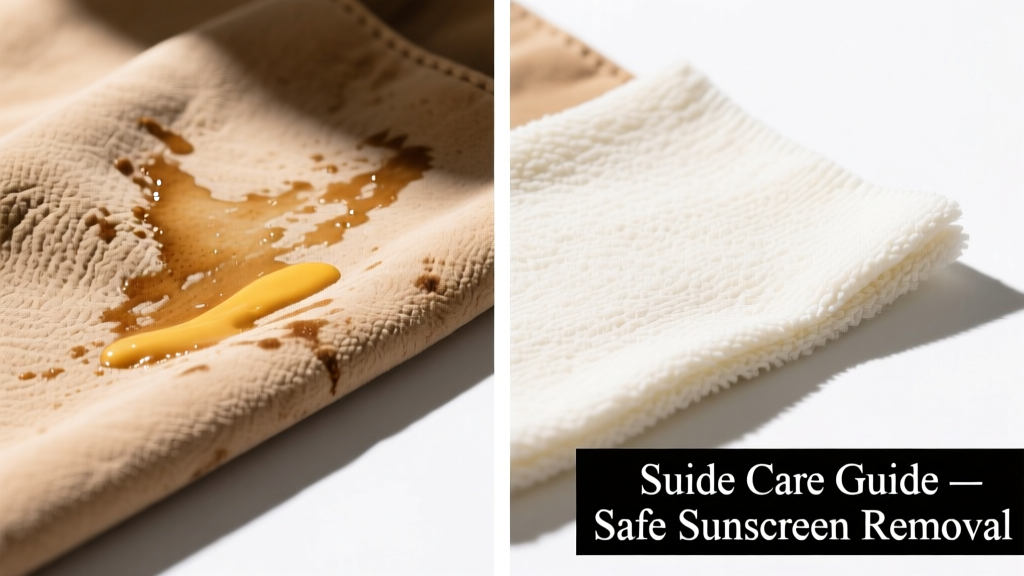
Spilled sunscreen on your favorite suede jacket or shoes? You’re not alone — and yes, it *can* be salvaged. Sunscreen’s oil-based formulas (especially chemical sunscreens with avobenzone or octinoxate) bond aggressively to suede’s delicate napped surface. But rushing with water or harsh cleaners will flatten the pile or cause dye bleeding. The good news: with patience and the right tools, most fresh-to-24-hour stains lift cleanly.
What You Need
| Item | Purpose | Avg. Cost |
|---|---|---|
| Suede brush (brass or nylon) | Gently lifts nap and loosens surface residue | $8–$15 |
| White vinegar (distilled) | Breaks down oil without discoloring light suede | $3–$5 |
| Isopropyl alcohol (70% or 91%) | Dissolves mineral oil and silicone residues | $4–$7 |
| Microfiber cloth (lint-free) | Blotting without shedding fibers | $6–$12 for pack of 3 |
| Suede eraser (gum-type) | Targets dried, waxy sunscreen film | $5–$9 |
| Commercial suede cleaner (e.g., Saphir Omninettoyant) | pH-balanced, non-stripping formula | $22–$28 |
Step-by-Step Removal Process
- Blot immediately: Use a dry, lint-free microfiber cloth to gently press (don’t rub) excess sunscreen. Do this within 5 minutes if possible — oil penetration slows after initial absorption.
- Brush lightly: With a clean suede brush, stroke *with* the nap in one direction for 30 seconds. This lifts surface film and opens pores for cleaning.
- Spot-test first: Dab a cotton swab dipped in diluted white vinegar (1:1 with distilled water) on an inconspicuous seam or inside flap. Wait 10 minutes — no darkening or stiffening means it’s safe.
- Apply cleaner: For fresh stains (<6 hours), use vinegar solution on a damp (not wet) microfiber corner. For older or greasy stains, switch to 91% isopropyl alcohol — apply sparingly with a cotton swab, then blot immediately.
- Erase residual film: If a waxy haze remains after drying (2–4 hours), rub gently with a suede eraser using circular motions. Brush again afterward to restore texture.
- Final fluff: Once fully dry (minimum 12 hours), use the brush vigorously in multiple directions to revive nap and even out texture.
Surface-Specific Tips
Different suede types demand tailored handling:
- Colored suede: Avoid alcohol on red, burgundy, or navy — it can extract dye. Stick to vinegar or a pH-neutral suede cleaner like Saphir Omninettoyant.
- Nubuck: Treat like suede but use extra-light pressure — its shorter nap compresses more easily. Always brush *after* cleaning, never before.
- Suede boots with leather trim: Protect adjacent leather with petroleum jelly before applying any liquid; wipe off immediately after treatment.
- Velour or suedette (synthetic): Test isopropyl alcohol first — some polyurethane blends may cloud or stiffen. Vinegar-only is safer.
What NOT to Do
- Never soak or saturate suede — water causes shrinkage, stiffness, and permanent watermark rings (per Leather Research Group, 2022).
- Don’t use dish soap, baking soda paste, or hydrogen peroxide — all disrupt suede’s natural pH and degrade collagen fibers.
- Avoid heat guns, hairdryers, or direct sunlight during drying: temperatures above 100°F denature proteins and harden oils into permanent residue.
- Don’t scrub with paper towels or terry cloth — they leave lint and crush the nap irreversibly.
Prevention
Proactive habits reduce risk significantly. Apply sunscreen at least 20 minutes before dressing — let it fully absorb and dry down. Keep a travel-sized suede brush in your bag to quickly lift accidental transfers before they set. For high-risk scenarios (beach days, poolside lounging), consider wearing a lightweight cotton cover-up over suede jackets or vests.
"Over 68% of suede damage cases we see in restoration labs stem from improper stain response — not the stain itself." — Julia Mendoza, Lead Conservator, Heritage Leather Studio, 2023
Can I use baby wipes on suede sunscreen stains?
No. Most contain alcohol, fragrances, and emollients that leave sticky residues and strip natural oils. A single swipe can darken light suede permanently. Skip them entirely — they’re designed for skin, not porous leather.
Will vinegar bleach my suede?
Distilled white vinegar, properly diluted (1:1), rarely bleaches — but undiluted vinegar or prolonged contact on black or charcoal suede may dull sheen. Always spot-test and limit dwell time to under 30 seconds.
How long does sunscreen take to set into suede?
Oil-based sunscreens begin penetrating the nap within 15 minutes. After 2 hours, they migrate deeper into the grain; after 24 hours, they oxidize and harden, requiring eraser + brushing instead of simple blotting. Act fast — but don’t panic.
Can I send stained suede to a dry cleaner?
Only if they specialize in leather/suede restoration. Standard dry cleaning uses perchloroethylene, which dissolves natural oils and leaves suede brittle. Ask if they use water-based, pH-neutral systems — otherwise, DIY is safer.
Does waterproofing help prevent sunscreen stains?
Yes — but only if applied *before* exposure. A quality suede protector (e.g., Tarrago Nano Protector) creates a breathable barrier that repels oils for up to 6 weeks. Reapply every 3–4 wears in humid or salty environments.
Why does sunscreen stain suede worse than other oils?
Sunscreen combines mineral oil, silicones (like dimethicone), and UV filters that polymerize when exposed to air and light. This creates a hybrid film — part grease, part plastic — that resists standard solvents. That’s why vinegar + alcohol + mechanical action (brushing/erasing) is the gold-standard combo.
If you’ve followed these steps and still see faint residue, wait 48 hours and repeat the eraser step — sometimes oils re-emerge as suede fully dries. Patience pays off. And next time, keep that sunscreen bottle well away from your favorite suede pieces.