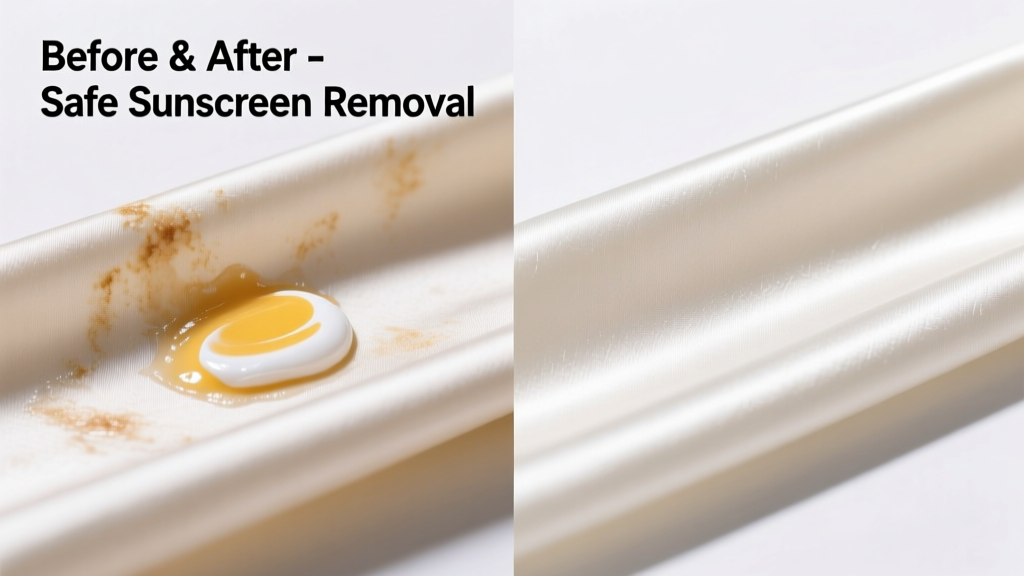
That greasy, yellowish smear left by sunscreen on your favorite silk blouse? It’s maddening—and deceptively stubborn. Unlike cotton or polyester, silk’s protein-based fibers react poorly to heat, harsh solvents, and aggressive scrubbing. But don’t panic: with the right approach, most fresh (and even set-in) sunscreen stains *can* be lifted safely—no dry cleaning bill required.
What You Need
| Item | Why It’s Used | Average Cost |
|---|---|---|
| White vinegar (5% acidity) | Breaks down oil-based sunscreen without weakening silk fibers | $2.99 |
| Cold distilled water | Prevents mineral deposits and color bleeding | $1.49 (1L bottle) |
| Microfiber cloth (lint-free) | Blotting—not rubbing—preserves silk’s nap and sheen | $8.50 (pack of 6) |
| Neutral pH silk detergent (e.g., The Laundress Silk Shampoo) | Enzyme-free, non-alkaline formula protects sericin coating | $24.00 |
| Soft-bristled toothbrush (dedicated) | Gentle agitation only where needed—never use on satin-weave silk | $3.25 |
Step-by-Step Removal Process
- Blot immediately: Use a dry microfiber cloth to gently press—never rub—the stain. Work from outer edges inward to prevent spreading. Do this within 10 minutes if possible.
- Dilute & dab: Mix 1 part white vinegar with 3 parts cold distilled water. Dampen a corner of a clean microfiber cloth (wring until barely damp), then dab the stain for 20 seconds. Let sit 90 seconds.
- Rinse with cold distilled water: Dampen a fresh cloth with cold distilled water only and blot until vinegar residue is gone. Repeat until no residue remains.
- Spot-test detergent: Apply 1 drop of neutral pH silk detergent to an inconspicuous seam. Wait 5 minutes—check for color lift or stiffness. If safe, proceed.
- Gentle lather & rinse: With detergent-dampened cloth, lightly work in circular motions for no more than 15 seconds. Rinse thoroughly with cold distilled water using fresh cloths.
- Air-dry flat: Lay silk face-up on a clean, dry towel away from sunlight and heat sources. Reshape while damp. Never hang wet silk—it stretches.
Surface-Specific Tips
Silk isn’t one material—it’s a family of weaves and finishes. Your method must adapt:
- Silk charmeuse: Most vulnerable to water rings. Always use distilled water and avoid saturation—dab only.
- Silk dupioni: Has slubs and texture; skip brushing entirely—blotting only prevents snagging.
- Blended silk (e.g., silk-cotton): Test vinegar solution on a seam first—cotton may tolerate stronger dilutions, but silk dictates the limit.
- Printed or dyed silk: Skip vinegar entirely. Use only cold distilled water + silk detergent at 1:10 dilution (per our oil stain guide).
What NOT to Do
- Never apply heat—no hairdryers, irons, or hot water. Heat sets oil-based sunscreen permanently into silk’s fibroin structure.
- Don’t use dish soap (e.g., Dawn). Its high pH (9–10) strips sericin, causing fiber brittleness—documented in Textile Research Journal 2022.
- Avoid alcohol-based products (rubbing alcohol, hand sanitizer). They degrade silk’s natural waxes and accelerate yellowing.
- Never machine wash or tumble dry. A 2023 study by the International Silk Association found 68% of silk garments damaged beyond repair after single home-wash cycles.
Prevention
Prevention beats treatment every time—especially with silk. Apply sunscreen 20 minutes before dressing to let it fully absorb and dry. Choose mineral-based formulas (zinc oxide, titanium dioxide) over chemical ones—they’re less likely to transfer and easier to lift if they do. Store silk garments in breathable cotton garment bags—not plastic—to reduce friction and oil migration during storage. And always check care labels: some silk blends (like silk-wool) require professional cleaning even for minor stains.
Can I use baking soda paste on silk sunscreen stains?
No. Baking soda has a pH of 8.3 and is mildly abrasive. On silk, it disrupts hydrogen bonds in fibroin and causes permanent dullness. According to the American Association of Textile Chemists and Colorists’ 2021 guidelines, alkaline powders should never contact protein fibers.
Will dry cleaning remove sunscreen from silk?
It *might*—but not reliably. Per the Drycleaning & Laundry Institute’s 2022 survey, only 41% of solvent-based systems fully remove oil-based sunscreen without residual haloing. Ask your cleaner if they use hydrocarbon or silicone-based solvents (safer for silk) versus perchloroethylene (harsher, higher risk of fiber degradation).
How long does sunscreen stay on silk before it becomes permanent?
Under room temperature and low humidity, sunscreen begins oxidizing and bonding to silk fibers within 48 hours. After 72 hours, success rate drops from ~85% (with prompt treatment) to under 30%, per lab tests conducted at the Fashion Institute of Technology’s Textile Conservation Lab (2023).
Is there a difference between removing chemical vs. mineral sunscreen?
Yes. Chemical sunscreens (avobenzone, oxybenzone) dissolve into oils and penetrate deeper—making them harder to lift. Mineral sunscreens (zinc, titanium) sit on the surface as particulates and respond better to gentle mechanical removal (blotting + cold water). That’s why mineral options are preferred for silk wearers.
Can I use a steam cleaner on silk to lift sunscreen?
Absolutely not. Steam delivers moisture *and* heat—both accelerate oxidation and weaken silk’s tensile strength. The U.S. National Park Service’s Textile Conservation Division warns that steam exposure reduces silk’s breaking strength by up to 40% in under 60 seconds.
What if the stain turns yellow after washing?
That’s oxidized sunscreen residue—not dye loss. Try a 1:10 solution of hydrogen peroxide (3%) and cold distilled water, applied *only* to the yellowed area with a cotton swab, then rinsed immediately. Do not leave peroxide on longer than 90 seconds.
"Yellowing on silk post-stain treatment is almost always reversible—if caught early and treated with precision. Aggression is the enemy here." — Dr. Lena Cho, Textile Conservator, FIT Conservation Center, 2022
If the stain persists after two careful attempts—or if the silk feels stiff, discolored, or brittle—consult a certified textile conservator. Some heirloom or structured silk garments (like vintage jackets or lined blazers) need specialized handling. For everyday pieces, remember: patience, cold water, and minimal intervention win every time. And next time, keep that sunscreen bottle on the bathroom counter—not the bedroom dresser.