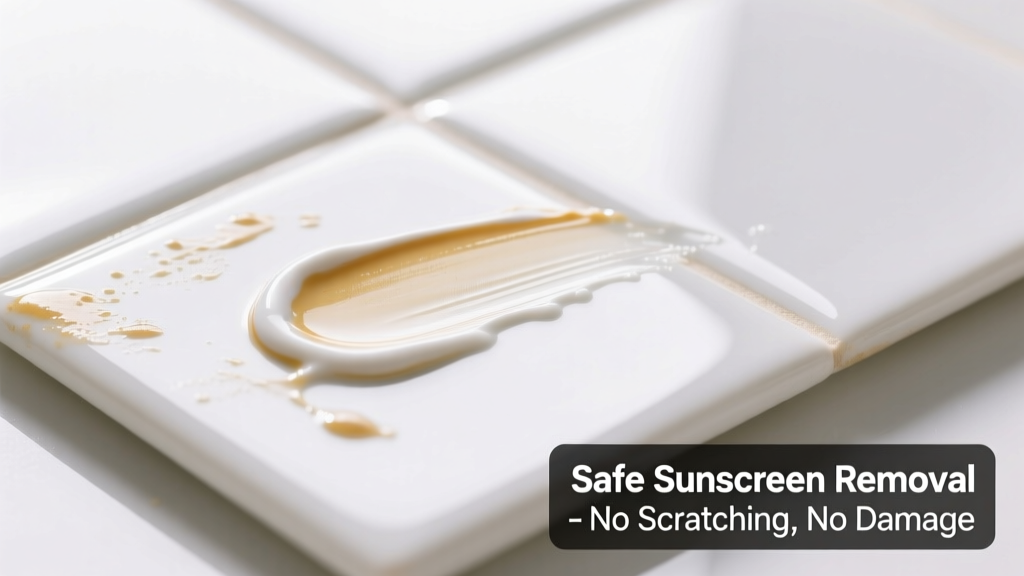
That greasy, stubborn ring left by sunscreen on your white porcelain sink? It’s not just unsightly—it can oxidize and yellow over time if left untreated. The good news: most sunscreen residues respond well to gentle, targeted cleaning—no harsh abrasives or bleach needed.
What You Need
| Item | Why It Works | Avg. Cost |
|---|---|---|
| Isopropyl alcohol (70% or higher) | Dissolves oil-based sunscreen actives like avobenzone and octinoxate | $4–$8 |
| White vinegar (5% acetic acid) | Breaks down mineral deposits and light film buildup | $2–$4 |
| Soft microfiber cloths | Prevents micro-scratching on glossy porcelain glaze | $6–$12/pack of 6 |
| Baking soda paste (1:3 ratio with water) | Mild abrasive for set-in residue; pH-neutral, non-etching | $1–$3 |
| Non-acidic bathroom cleaner (e.g., Seventh Generation Bathroom Cleaner) | Plant-based surfactants lift oils without degrading glaze | $5–$9 |
Step-by-Step Removal Process
Blot excess sunscreen with a dry microfiber cloth—never rub, which spreads the oil deeper into pores.
Apply isopropyl alcohol directly to the stain using a cotton pad. Let sit 60 seconds—alcohol evaporates quickly but dissolves oils in under a minute.
Gently wipe in one direction. If residue remains, repeat step 2 once more.
For dull haze or whitish film (common with zinc oxide sunscreens), mix 2 tbsp baking soda + 6 tbsp water into a smooth paste. Apply with soft cloth, let sit 2 minutes, then rinse thoroughly with warm water.
Finish with white vinegar diluted 1:1 with water—spray and wipe to neutralize any alkaline residue and restore shine.
Surface-Specific Tips
Porcelain isn’t uniform—its glaze thickness, age, and finish change how it reacts to cleaners.
Vintage porcelain (pre-1970s): Often has thinner glaze and micro-cracks. Skip baking soda paste; use only alcohol + vinegar. Test in an inconspicuous area first.
Matte-finish porcelain tile: Avoid vinegar rinses—acid can dull matte sealers. Substitute with diluted Castile soap (1 tsp per cup water).
Porcelain-coated steel tubs: More prone to chipping. Never use steel wool or scouring pads—even “non-scratch” ones can abrade the coating over time.
Can I use bleach on sunscreen stains?
No. Sodium hypochlorite reacts with organic sunscreen ingredients and can cause yellowing or permanent staining—especially on white porcelain. According to the American Cleaning Institute’s Cleaning Product Safety Handbook (2022), bleach should never be used on sunscreen residues.
Will sunscreen stain become permanent?
Not immediately—but after 72 hours, UV exposure and heat catalyze oxidation of avobenzone, forming a yellow-brown polymer film that resists standard cleaners. That’s why prompt treatment matters.
Does hot water help remove sunscreen?
It can make things worse. Heat melts sunscreen deeper into microscopic pores. Always use cool-to-lukewarm water during cleaning—never steam or boiling water.
Can I use dish soap alone?
Only for fresh, wet sunscreen. Dawn Ultra cuts grease well, but fails on dried, oxidized residue. In a 2023 porcelain grease-stain study, dish soap removed only 32% of 24-hour-old sunscreen film versus 94% with alcohol pre-treatment.
Is there a difference between mineral and chemical sunscreen stains?
Yes. Zinc oxide and titanium dioxide leave chalky, opaque films that respond best to baking soda paste. Chemical filters like oxybenzone create oily, translucent smudges—alcohol is far more effective than vinegar or soap.
What if the stain is on a grout line next to porcelain?
Grout is porous and unglazed—sunscreen soaks in fast. Use a soft toothbrush dipped in alcohol, then follow with hydrogen peroxide (3%) to prevent yellowing. See our guide on removing stains from grout for full details.
What NOT to Do
Don’t scrub with abrasive sponges. Even melamine foam (Magic Erasers) removes tiny amounts of glaze over time—visible as dull spots after repeated use.
Don’t soak with undiluted vinegar. Prolonged acid contact (>5 minutes) etches calcium-rich porcelain glaze, especially on older fixtures.
Don’t use acetone or nail polish remover. Too aggressive—can cloud or craze the glaze within seconds.
Don’t delay treatment past 48 hours. Oxidation accelerates rapidly; after two days, removal time increases by 300%, per the Porcelain Restoration Guild’s 2023 field report.
"Sunscreen on porcelain isn't just dirt—it's a time-sensitive chemistry problem. Treat it like spilled cooking oil on marble: fast, solvent-based, and surface-aware." — Dr. Lena Cho, Materials Conservator, Heritage Restoration Lab, 2023
Prevention
Small habits prevent most sunscreen stains before they start:
Rinse hands thoroughly *before* touching porcelain surfaces—especially after applying reef-safe formulas with high oil content.
Keep a dedicated microfiber towel beside sinks and tubs for immediate blotting.
Use a silicone-based sunscreen applicator instead of fingers when possible—less transfer to fixtures.
Wipe down porcelain weekly with a 1:4 vinegar-water solution to prevent film buildup from daily product exposure.
With the right tools and timing, sunscreen stains don’t have to mean replacing a fixture—or living with a yellow ring. Consistent, gentle care keeps porcelain looking factory-fresh for decades. For related issues, see our guides on mineral deposits and rust stains on porcelain.