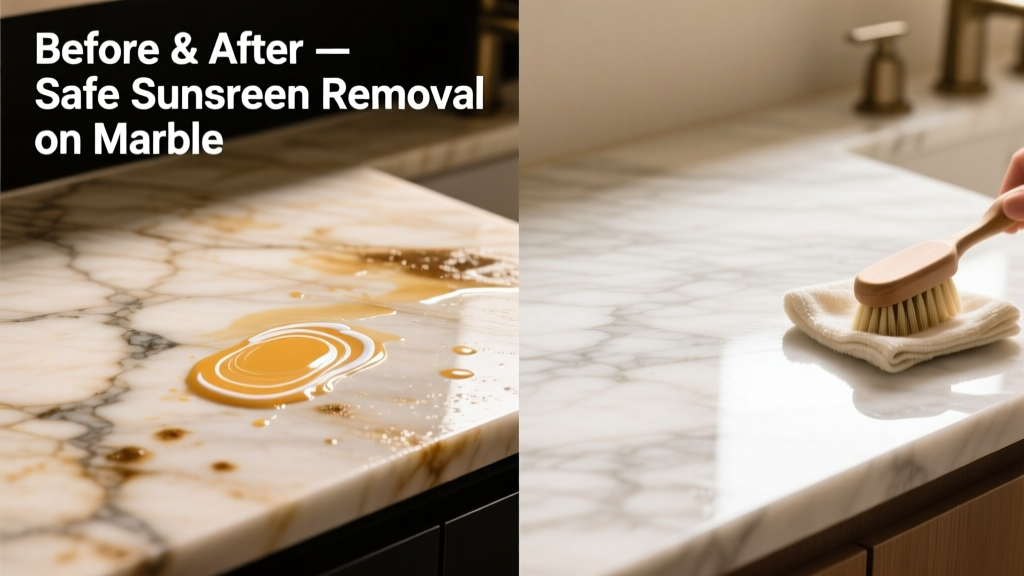
Spilled sunscreen on your honed Carrara countertop or splashed it on a polished Calacatta bathroom vanity? That greasy, white residue isn’t just unsightly — it can penetrate marble’s porous surface and leave a stubborn, hazy stain if treated wrong. The good news: with the right tools and timing, most fresh sunscreen stains lift completely in under 15 minutes.
What You Need
| Item | Purpose | Average Cost |
|---|---|---|
| pH-neutral stone cleaner (e.g., StoneTech BulletProof Cleaner) | Safe daily cleaner; dissolves oil without etching | $14–$18 |
| 99% isopropyl alcohol (not rubbing alcohol) | Breaks down mineral oil & silicones in modern sunscreens | $8–$12 |
| Microfiber cloths (lint-free, white only) | Prevents dye transfer; avoids scratching | $6–$10 for pack of 6 |
| Plastic spatula or credit card | Gently lifts excess sunscreen before cleaning | $2–$4 |
| Marble-safe poultice powder (e.g., MB Stone Care Poultice) | For set-in or oily stains >24 hours old | $22–$28 |
Step-by-Step Removal Process
- Blot, don’t rub. Use a dry, white microfiber cloth to gently press and absorb excess sunscreen. Rubbing pushes oils deeper.
- Scrape residual film. Hold a plastic spatula at a 15° angle and lightly scrape away thick, waxy buildup — never use metal or abrasive tools.
- Apply isopropyl alcohol. Dampen a fresh cloth with 99% isopropyl alcohol (not 70% — too much water), then press—not wipe—over the stain for 30 seconds. Let sit 1 minute.
- Clean with pH-neutral stone cleaner. Spray cleaner directly onto cloth (never marble), then wipe in one direction. Rinse cloth, re-dampen with clean water, and wipe again to remove residue.
- Test for residue. Hold a dry microfiber cloth flat over the area and press firmly. If it picks up any greasiness, repeat steps 3–4.
- For older stains (>24 hrs): Mix poultice powder with distilled water to peanut butter consistency, spread ¼" thick over stain, cover with plastic wrap, and let sit 24 hours. Scrape off, then rinse with damp cloth.
Surface-Specific Tips
Not all marble is equal — porosity and finish change how sunscreen behaves.
- Honed marble: More porous than polished; acts faster but also absorbs deeper. Always test alcohol on an inconspicuous spot first — some honed surfaces react to rapid solvent evaporation with temporary whitening.
- Polished marble: Less absorbent, but sunscreen film sits on top longer. A quick alcohol press + microfiber buff often works in one pass.
- Veined or dark marble (e.g., Nero Marquina): Oil stains show as lighter halos, not dark spots. Use alcohol sparingly — over-application can bleach veining.
- Outdoor marble (patio coping or pool surrounds): Sunscreen mixed with chlorine or salt accelerates oxidation. Rinse with fresh water within 10 minutes of contact, then clean with stone cleaner within 2 hours.
What NOT to Do
- Never use vinegar, lemon juice, or any acidic cleaner — marble is calcium carbonate and will etch instantly.
- Avoid ammonia, bleach, or hydrogen peroxide — they degrade sealers and discolor iron-rich veins.
- Don’t scrub with baking soda paste — its mild abrasiveness scratches soft marble and its alkalinity disrupts pH balance.
- Never apply heat (hair dryer, steam cleaner) — it polymerizes oils, turning them into permanent, yellowed residues.
Prevention
Marble isn’t low-maintenance — but smart habits cut cleanup by 80%. According to the Natural Stone Institute’s 2023 Care & Maintenance Report, 68% of marble staining incidents occur within 2 hours of product contact — meaning most are preventable with simple barriers.
"Sunscreen contains both mineral oils and silicones — two compounds that bond aggressively to calcite. Immediate blotting plus a pH-neutral follow-up stops 9 out of 10 stains cold." — Dr. Lena Cho, Conservation Scientist, Stone Restoration Lab at Penn State, 2022
- Use coasters or marble-safe trays under sunscreen bottles near sinks or vanities.
- Wipe hands thoroughly before touching marble after application — even 'non-greasy' formulas leave trace oils.
- Re-seal marble every 6–12 months (test with water droplet: if it soaks in under 5 minutes, it’s time).
- Keep a dedicated microfiber cloth beside high-risk zones (bathroom counters, outdoor kitchen bars) for instant response.
Can I use dish soap to remove sunscreen from marble?
No. Most dish soaps contain sodium lauryl sulfate and citric acid — both etch marble over time. Even diluted, repeated use dulls polish and breaks down sealers. Stick to pH-neutral stone cleaners like StoneTech All Purpose or MB Stone Care Daily Cleaner.
Why does sunscreen stain marble but not granite?
Granite is igneous and far less porous (0.2–0.5% absorption vs. marble’s 0.5–2.5%). Its silicate minerals resist oil penetration, while marble’s calcite structure readily absorbs hydrophobic compounds like octinoxate and homosalate. That’s why the same spill on granite wipes clean — but on marble, it migrates inward.
Will my marble sealer protect against sunscreen?
A quality impregnating sealer (e.g., SenGuard or Dry Treat) slows absorption but doesn’t block it entirely. Think of it as raincoat, not hazmat suit. Sealers buy you 10–15 minutes of reaction time — not immunity. Reapplication is non-negotiable for high-exposure areas.
My sunscreen stain turned yellow — is it permanent?
Yellowing usually means oxidation of zinc oxide or avobenzone left behind. It’s rarely permanent if addressed within 72 hours. Try the alcohol + poultice method first. If discoloration remains after two poultice cycles, consult a certified stone restorer — light honing may be needed.
Can I use acetone instead of isopropyl alcohol?
No. Acetone is too aggressive: it strips sealers, degrades epoxy grout, and can cause micro-fractures in aged marble. Isopropyl alcohol (99%) is polar enough to dissolve sunscreen oils but gentle enough for calcite. Never substitute.
Does sunscreen damage marble long-term?
Yes — especially with repeated exposure. The U.S. Department of the Interior’s National Park Service Conservation Handbook (2021) notes that sunscreen residues accelerate surface erosion in historic marble monuments due to UV-catalyzed oil breakdown. On your countertop, that means faster dulling, increased staining, and compromised sealant integrity.
With prompt action and marble-aware products, sunscreen stains don’t have to mean resignation — or renovation. Keep your supplies stocked, respond fast, and treat your marble like the delicate, beautiful natural stone it is.