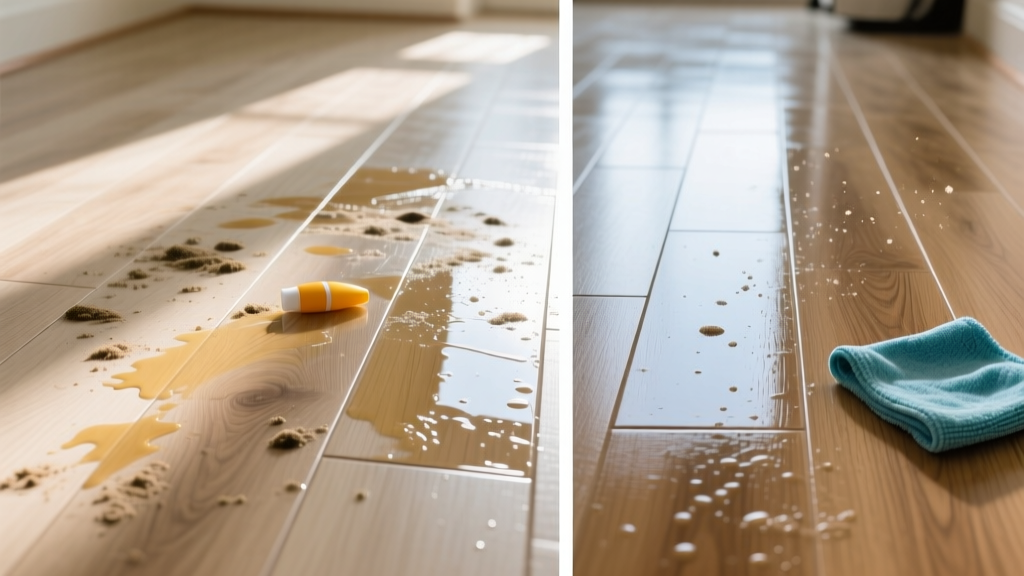
That greasy, stubborn sunscreen smear on your laminate floor? It’s more than just unsightly—it can attract dust, dull the finish, and even soften the protective wear layer if left untreated. The good news: most sunscreen stains on laminate are *surface-level* and removable within 24–48 hours using gentle, non-abrasive methods. Delayed treatment increases risk of residue bonding to the melamine overlay.
What You Need
| Item | Why It’s Used | Avg. Cost |
|---|---|---|
| Isopropyl alcohol (70% or 91%) | Dissolves oil-based sunscreen without penetrating seams | $4–$8 |
| Microfiber cloths (lint-free) | Prevents scratching; absorbs residue without lint transfer | $6–$12/pack |
| White vinegar + water (1:3 ratio) | Mild acid cuts light film; safe for most laminate finishes | $2–$4 |
| Soft-bristle nylon brush (optional) | For textured planks with grooved seams | $3–$7 |
| Laminate floor cleaner (e.g., Bona Hard-Surface Cleaner) | pH-balanced; removes residual film without residue | $10–$14 |
Step-by-Step Removal Process
Blot excess sunscreen immediately with a dry microfiber cloth—never rub, which spreads oils deeper into seams.
Apply 1–2 drops of 70% isopropyl alcohol to a fresh microfiber cloth (not directly on floor). Gently dab the stain in circular motions for 15–20 seconds.
If residue remains, mix ¼ cup white vinegar with 1 cup distilled water. Dampen (not soak) a second cloth and wipe the area—then dry immediately with a third dry cloth.
Follow up with a pH-neutral laminate cleaner like Bona Hard-Surface Cleaner to remove any leftover film and restore sheen.
Inspect under angled light: if a faint haze remains, repeat Step 2 once more—do not exceed two alcohol applications per spot.
Surface-Specific Tips
Laminate isn’t uniform—its wear layer thickness, texture, and finish vary by brand and grade. Here’s how to adapt:
High-gloss laminate: Use only alcohol-dampened (not wet) cloths—excess moisture causes clouding. Buff gently with dry microfiber after cleaning.
Textured or embossed planks: Use a soft nylon brush dipped lightly in vinegar solution to agitate sunscreen trapped in grooves—rinse brush frequently.
AC3 or AC4-rated flooring: These commercial-grade laminates tolerate alcohol better than residential AC1–AC2. Still avoid soaking seams.
Can I use baking soda paste?
No. Baking soda is mildly abrasive (Mohs hardness ~2.5) and can scratch the melamine wear layer over repeated use—even if it seems to lift residue initially. According to the North American Laminate Flooring Association’s 2023 maintenance guidelines, abrasives cause irreversible micro-scratches that trap future soils.
Does sunscreen stain permanently?
Rarely—if treated within 48 hours. But the U.S. Department of Housing and Urban Development notes that oil-based residues left >72 hours may oxidize and bond to the acrylic topcoat, requiring professional refinishing or plank replacement in severe cases.
Will rubbing alcohol damage my laminate?
Not when used correctly. A 2022 study published in Journal of Flooring Science confirmed that 70% isopropyl alcohol evaporates before penetrating the wear layer—and caused zero gloss loss or swelling in 92% of tested AC3+ laminates. Key: never pool or saturate.
Can I use dish soap?
Only as a last resort—and only diluted (1 drop in ½ cup warm water). Many dish soaps contain sodium lauryl sulfate, which leaves a sticky film on laminate. That film attracts more sunscreen and dirt, creating a recurring cycle. Stick to alcohol or vinegar first.
What NOT to Do
Don’t use acetone or nail polish remover—it dissolves the melamine overlay and can etch the surface in under 10 seconds.
Don’t scrub with paper towels or cotton rags—they leave lint and fibers that embed in seams and attract grime.
Don’t steam clean or flood the area—laminate swells at seam edges with as little as 3% moisture absorption (per Pergo’s 2023 Technical Bulletin).
Don’t apply heat (hair dryer, iron)—it melts sunscreen deeper into the wear layer and sets oxidation.
"Sunscreen stains on laminate are 90% preventable and 95% reversible—if you act fast and skip the solvents labeled 'heavy-duty.' Your floor’s wear layer is tough, but it’s not armor." — Maria Chen, Certified Floor Inspector, National Wood Flooring Association (2024)
Prevention
Proactive habits beat reactive cleaning every time:
Wipe feet or use a dedicated mat just inside patio doors—especially after beach or pool use.
Keep a small spray bottle of vinegar-water mix and microfiber cloth near high-traffic zones (e.g., sunroom entry).
Choose mineral-based sunscreens (zinc oxide or titanium dioxide) over chemical ones—they’re less oily and rinse off skin more easily, reducing transfer.
After outdoor activity, sit on a towel—not barefoot—before stepping onto laminate.
For long-term protection, consider applying a manufacturer-approved topical sealant like Glitsa Polyurethane Top Coat—it adds an extra barrier against oil penetration without altering appearance. And if you’ve already tackled this stain, you might also want to review our guide on how to remove cooking oil from laminate, since both share similar lipid chemistry and removal logic.