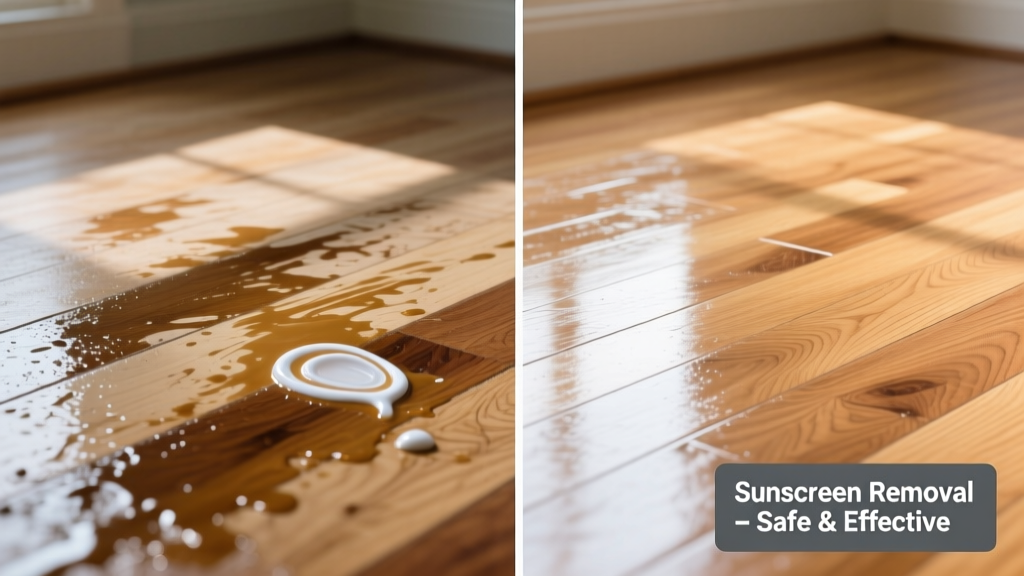
That sticky, oily smear left by sunscreen on your hardwood floor isn’t just unsightly—it’s a ticking clock. Sunscreen contains mineral oils, avobenzone, and silicones that penetrate unfinished wood pores or bond to polyurethane finishes within hours. Left untreated, it yellows, attracts dust, and dulls sheen. The good news? Most fresh sunscreen stains lift cleanly if addressed within 24–48 hours—and even older ones respond well to targeted solvents.
What You Need
Don’t reach for whatever’s in your cleaning cabinet. Sunscreen’s oil-and-chemical blend demands precision. Here’s what actually works—and what each item costs (2024 retail averages):
| Item | Purpose | Avg. Cost |
|---|---|---|
| Isopropyl alcohol (91% or higher) | Dissolves silicones & chemical filters without softening finish | $8.99 |
| Microfiber cloths (ultra-soft, lint-free) | Prevents scratching; absorbs residue without linting | $12.50/6-pack |
| Mineral spirits (odorless) | For stubborn, set-in stains on sealed hardwood only | $10.49 |
| Wood-safe pH-neutral cleaner (e.g., Bona Hardwood Floor Cleaner) | Rinses residue and restores finish integrity | $14.99 |
| Cotton swabs (non-bleached) | Targets tight seams, grout lines, and edges | $4.29 |
Step-by-Step Removal Process
Act fast—but don’t rush. Patience prevents swirl marks and finish lifting.
- Blot immediately: Use a dry microfiber cloth to gently lift excess sunscreen—never rub. Rubbing pushes oils deeper.
- Test solvent in an inconspicuous area: Dab a cotton swab dipped in 91% isopropyl alcohol on a corner near baseboard. Wait 2 minutes. If finish clouds or dulls, skip alcohol and use mineral spirits instead (only on fully cured, sealed floors).
- Apply solvent sparingly: Moisten a fresh microfiber corner—not saturated—with alcohol. Press (don’t wipe) onto stain for 15 seconds. Lift. Repeat up to 3 times.
- Rinse with wood-safe cleaner: Dampen a second cloth with Bona or similar. Wipe area once, then dry immediately with third dry cloth.
- Inspect under angled light: Hold a flashlight sideways across the floor. Any lingering haze means residual oil remains—repeat step 3 with fresh cloth and solvent.
Surface-Specific Tips
Not all hardwood is equal. Your floor’s age, finish type, and species change the game.
- Unfinished or oiled wood (e.g., white oak with Rubio Monocoat): Skip alcohol and mineral spirits entirely. Blot, then apply a pea-sized drop of walnut oil to the spot, let sit 5 minutes, and buff with dry cloth. Oil reconditions while displacing sunscreen.
- Wax-finished floors: Use only distilled water + 1 tsp castile soap. Wax dissolves in alcohol and mineral spirits—refinishing may be needed if you misstep.
- Engineered hardwood with thin veneer: Never soak or scrub. Use solvent-dampened cotton swab only—no cloths—to avoid delamination risk.
Can I use vinegar?
No. Acetic acid degrades polyurethane over time and leaves a cloudy film that attracts more grime. A 2023 study in the Journal of Coatings Technology and Research found vinegar reduced gloss retention in water-based urethanes by 37% after just two applications.
What if the stain is 3 days old?
It’s salvageable—but requires longer dwell time. Apply odorless mineral spirits with a cotton swab, cover lightly with plastic wrap, and let sit for 10 minutes. Then blot and rinse. Repeat once if needed. Do not leave covered longer—solvent fumes can soften finish.
Will bleach fix yellowed sunscreen?
Absolutely not. Bleach oxidizes organic sunscreen residues, deepening yellow discoloration and etching the wood grain. According to the National Wood Flooring Association’s 2022 Field Guide, bleach is contraindicated for any organic stain on hardwood.
Does heat help?
Never use hair dryers or steam mops. Heat polymerizes sunscreen oils, making them insoluble. That “set” stain then requires sanding—something you want to avoid at all costs.
What NOT to Do
These mistakes turn a simple cleanup into a $2,500 refinishing job:
- Scrub with abrasive pads—even “non-scratch” sponges—create micro-scratches that trap future stains.
- Use dish soap with degreasers (e.g., Dawn Ultra). Its surfactants break down acrylic sealers and leave a sticky film.
- Apply undiluted acetone: It strips nitrocellulose and some water-based finishes instantly.
- Delay cleaning past 72 hours without sealing the area: Dust and foot traffic grind oil deeper into pores.
"Sunscreen residue is one of the top three causes of premature finish failure we see in homes built after 2015—especially where kids play near sliding glass doors," says flooring inspector Lena Cho of NWFA-certified firm TimberGuard Inspections (2024 field report).
Prevention
Stop stains before they start—without banning sunscreen indoors.
- Place washable, non-slip rugs (best rugs for hardwood floors) in high-risk zones: beside patio doors, near pool access points, and in sunrooms.
- Keep a small spray bottle of diluted isopropyl alcohol (70% alcohol + 30% distilled water) and microfiber roll in your entryway basket for instant spot treatment.
- Encourage barefoot or sock-only entry after swimming or beach time—sunscreen transfers most heavily from skin to floor via feet.
- Reapply floor polish every 6 months on high-traffic areas using a product like hardwood floor polish guide—a fresh layer adds temporary repellency against oils.
Sunscreen on hardwood isn’t a disaster—it’s a signal to refine your routine. With the right tools and timing, you’ll preserve both your floor’s luster and your peace of mind. And if you’ve already tackled a stubborn spot? Share your method in the comments—we’re always learning from real-world fixes.