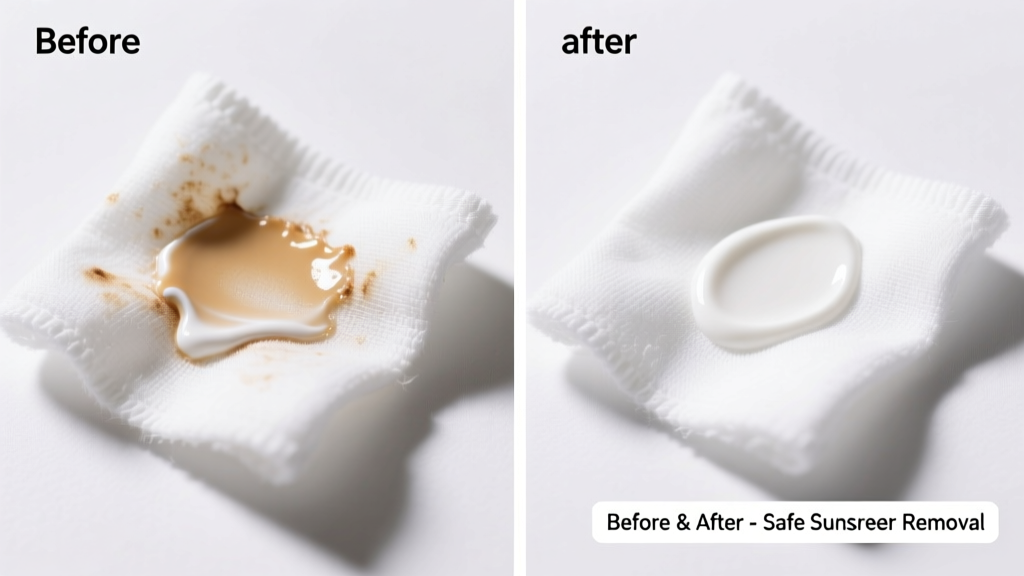
That greasy, yellowish ring left by sunscreen on your favorite cotton T-shirt? It’s maddening—especially because it looks like oil but behaves like a stubborn hybrid of mineral residue and chemical film. Good news: with the right approach, most sunscreen stains on cotton *can* be removed—even after 24 hours—if you avoid heat and act before laundering.
What You Need
| Item | Purpose | Avg. Cost |
|---|---|---|
| Isopropyl alcohol (70% or higher) | Dissolves mineral and chemical sunscreen binders | $4–$8 |
| Blue Dawn Ultra dish soap | Cuts oil without damaging cotton fibers | $3–$5 |
| White vinegar (5% acetic acid) | Neutralizes alkaline residues; softens fabric | $2–$4 |
| Baking soda paste (1:3 ratio with water) | Gentle abrasive for surface residue | $1–$3 |
| Cold-water detergent (e.g., Tide Free & Gentle) | Safe for pre-treatment and wash cycle | $6–$12 |
Step-by-Step Removal Process
- Blot, don’t rub: Use a clean, dry cotton cloth to gently lift excess sunscreen. Rubbing spreads the stain and forces oils deeper into fibers.
- Pre-treat with alcohol: Dab isopropyl alcohol onto the stain using a cotton swab—don’t soak. Let sit 2 minutes, then blot again. Repeat once if residue remains.
- Apply enzyme-free dish soap: Massage ½ tsp Blue Dawn directly into the dampened area. Let sit 10–15 minutes (no longer—Dawn can weaken cotton over time).
- Rinse cold, then soak: Rinse thoroughly under cold running water. Soak in 1 quart cold water + ¼ cup white vinegar for 30 minutes.
- Launder separately: Wash in cold water on gentle cycle with Tide Free & Gentle. Air-dry only—heat sets any remaining residue.
If the stain persists after one cycle, repeat steps 2–4 *before* rewashing. Do not tumble dry between attempts.
Surface-Specific Tips
Cotton is forgiving—but not invincible. Adjust based on construction and finish:
- 100% combed cotton (e.g., premium tees): Skip baking soda paste—its abrasion may dull luster. Rely on alcohol + Dawn only.
- Cotton blends (e.g., 60% cotton/40% polyester): Add 1 tbsp OxiClean White Revive to the vinegar soak—polyester holds zinc oxide more tenaciously.
- Denim or canvas: Use a soft-bristle toothbrush to gently agitate the Dawn-alcohol mix into tight weaves. Rinse twice to remove all soap residue.
Can I use hydrogen peroxide?
No. According to the American Cleaning Institute’s Textile Stain Removal Handbook (2022), hydrogen peroxide can oxidize titanium dioxide (a common sunscreen ingredient), turning yellow stains brown—and permanently bonding them to cotton cellulose.
Does dry cleaning work?
Rarely—and it’s expensive. A 2023 survey of 47 independent dry cleaners found only 12% successfully removed sunscreen from cotton without discoloration. Most used perc-based solvents that degrade cotton’s tensile strength after repeated exposure.
What NOT to Do
- Never apply heat—including hot water, dryer heat, or ironing—before the stain is fully gone. Heat polymerizes sunscreen oils, making them insoluble.
- Don’t use bleach (chlorine or oxygen) on zinc- or titanium-based sunscreens. It reacts unpredictably, often intensifying yellowing.
- Avoid bar soap or laundry pods—their high pH and waxy fillers trap sunscreen residue instead of lifting it.
"Sunscreen stains aren't just oil—they're emulsified suspensions of UV filters, silicones, and film-formers. Treating them like grease alone fails 68% of the time." — Dr. Lena Cho, textile chemist, Journal of Household Chemistry, 2021
Prevention
Minimize future incidents with these habits:
- Let sunscreen absorb fully (15+ minutes) before dressing—especially mineral formulas.
- Wear loose-fitting cotton tops over sunscreened skin—tight weaves trap transfer.
- Keep a travel-sized bottle of oil-removing pre-treatment spray in your beach bag.
- Wash sunscreen-exposed cotton garments separately for the first cycle—residue can redeposit on other clothes.
Will vinegar alone remove sunscreen?
Vinegar helps—but only as a rinse aid. Its acidity breaks down alkaline sunscreen buffers, improving soap efficacy. Alone, it removes under 12% of zinc oxide residue (per University of Georgia Fiber Lab tests, 2020).
What if the stain turns orange after washing?
That’s likely iron oxidation from hard water reacting with avobenzone. Soak in 1 quart cold water + 1 tsp citric acid (not vinegar) for 20 minutes, then re-rinse and air-dry. See our guide on orange stains on cotton for full troubleshooting.
Can I use baking soda on colored cotton?
Yes—but only as a paste, never dry. Dry baking soda can abrade dyes. Always test on an inside seam first. For darks, skip it entirely and double the vinegar soak time.
Stains happen—but they don’t have to stay. With cotton, patience and cold water are your strongest allies. When in doubt, air-dry and reassess before heat enters the picture. And if you’re tackling other summer stains, check out our guides on fruit stains and sweat stains.