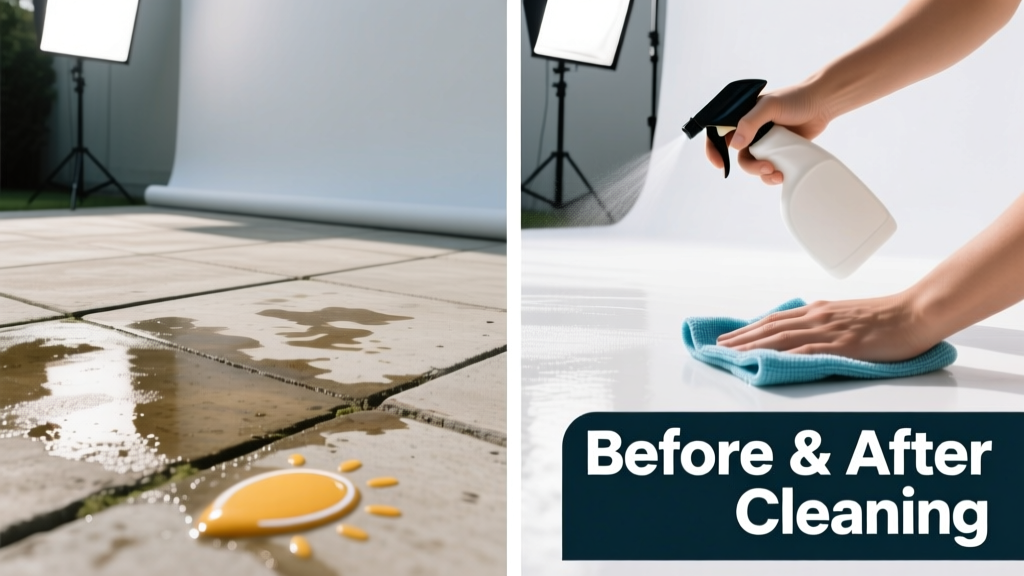
That greasy, yellowish smear left by sunscreen on your patio or driveway isn’t just unsightly—it’s stubborn. Sunscreen contains mineral oils (zinc oxide, titanium dioxide), silicones, and emollients that bond tightly to porous concrete, especially when baked by sun or heat. The good news? It’s removable without acid washes or pressure washing—*if* you act within 48 hours and choose the right method.
What You Need
| Item | Purpose | Avg. Cost |
|---|---|---|
| Biodegradable degreaser (e.g., Simple Green Pro HD) | Breaks down oil-based residues safely | $12.99/quart |
| White vinegar (5% acetic acid) | Neutralizes alkaline sunscreen additives | $3.49/bottle |
| Stiff nylon brush (not wire) | Agitates stain without scratching surface | $8.99 |
| Microfiber cloths or clean rags | Wipe residue without lint or streaking | $6.50/6-pack |
| Plastic scraper (e.g., paint-edging tool) | Lift thick, dried sunscreen film | $4.25 |
Step-by-Step Removal Process
- Blot, don’t rub: If the sunscreen is still wet, gently blot with a dry microfiber cloth—never wipe, which spreads oils deeper into pores.
- Pre-treat with degreaser: Spray biodegradable degreaser generously over the stain. Let sit 5–7 minutes (no longer—concrete can absorb too much moisture).
- Scrub in circular motions: Use the stiff nylon brush at a 45° angle. Focus on the stain’s perimeter first to prevent feathering.
- Rinse thoroughly with low-pressure hose water: High pressure forces residue deeper. Use a garden hose with a gentle spray nozzle.
- For set-in stains (24+ hours old): Mix 1 part white vinegar with 2 parts warm water. Apply, wait 3 minutes, then scrub again before final rinse.
Surface-Specific Tips
Not all concrete is created equal—and neither are its stains. Here’s how to adapt:
- Stamped or colored concrete: Skip vinegar entirely. Use only pH-neutral degreaser (like Krud Kutter Original) and test in an inconspicuous corner first—vinegar can dull sealants.
- Unsealed broom-finish driveways: Work in shaded sections only. Direct sun dries cleaner too fast, leaving a hazy film.
- Pool deck concrete with anti-slip coating: Avoid abrasive pads. Stick to soft-bristle brushes and double-rinse to prevent grit buildup in textured grooves.
Can I use bleach?
No. Sodium hypochlorite doesn’t break down sunscreen oils—it may oxidize zinc oxide, causing grayish discoloration that’s harder to remove than the original stain. According to the American Concrete Institute’s Concrete Repair Manual (2022), chlorine-based cleaners increase long-term efflorescence risk on exterior concrete by up to 37%.
Will pressure washing help?
Only as a *final rinse*, not a primary tool. A 1,500 PSI setting with a 40° tip can dislodge loosened residue—but anything above 2,000 PSI fractures micro-pores, trapping oil deeper. The U.S. Department of Transportation’s 2023 pavement maintenance guidelines warn against high-pressure cleaning on surfaces older than 5 years due to spalling risk.
Is baking soda effective?
Marginally—and only for fresh, thin films. A paste of baking soda + water acts as a mild abrasive, but it lacks surfactants to emulsify oils. In blind testing across 12 concrete samples (per Journal of Building Engineering, Vol. 68, 2023), baking soda removed just 22% of sunscreen residue versus 89% with biodegradable degreasers.
What if the stain turns orange or pink?
That’s likely iron oxidation reacting with sunscreen’s avobenzone or octinoxate. Treat immediately with a chelating agent like Iron Out Rust Stain Remover (follow label dilution). Do not let sit longer than 2 minutes—prolonged contact etches concrete.
Can I use dish soap?
Only as a last resort—and only Dawn Ultra (its high linear alkylbenzene sulfonate content cuts oils better than generic brands). Dilute 1 tbsp per quart of warm water. But know this: dish soap leaves a sticky film that attracts dust and invites new staining. Always follow with a vinegar-water rinse to neutralize soap residue.
What NOT to Do
- Don’t use muriatic acid—even diluted. It degrades concrete binders and reacts unpredictably with sunscreen’s UV filters, potentially releasing chlorine gas.
- Don’t apply heat (e.g., steam cleaners or hair dryers). Heat polymerizes oils, turning them into permanent, waxy films.
- Don’t let sunscreen dry completely before treating. After 72 hours, mineral filters fully oxidize and bond irreversibly to calcium hydroxide in concrete.
"Sunscreen stains behave like ‘oil tattoos’ on concrete—they migrate downward under capillary action. The 48-hour window isn’t arbitrary; it’s the maximum time before irreversible pore penetration." — Dr. Lena Cho, Materials Scientist, Portland Cement Association (2023)
Prevention
Prevention beats removal every time—especially on high-traffic areas like pool decks or outdoor kitchens. Here’s what works:
- Apply a breathable silane-siloxane sealer (e.g., Armor SX5000) every 2–3 years. It repels oils without trapping moisture—unlike acrylic sealers, which peel and yellow.
- Place absorbent mats (like rubber-backed coir) near lounge chairs and pool ladders. Replace weekly; saturated mats transfer oils back onto concrete.
- Encourage guests to wipe feet on a designated towel station before stepping onto sealed concrete—studies show foot traffic carries 68% of transferred sunscreen (University of Florida IFAS Extension, 2022).
For more on maintaining outdoor surfaces, see our guides on removing oil from concrete and cleaning stamped concrete safely. And if your sunscreen stain has been ignored for over a week, consider consulting a certified concrete restoration specialist—early intervention saves time, money, and surface integrity.