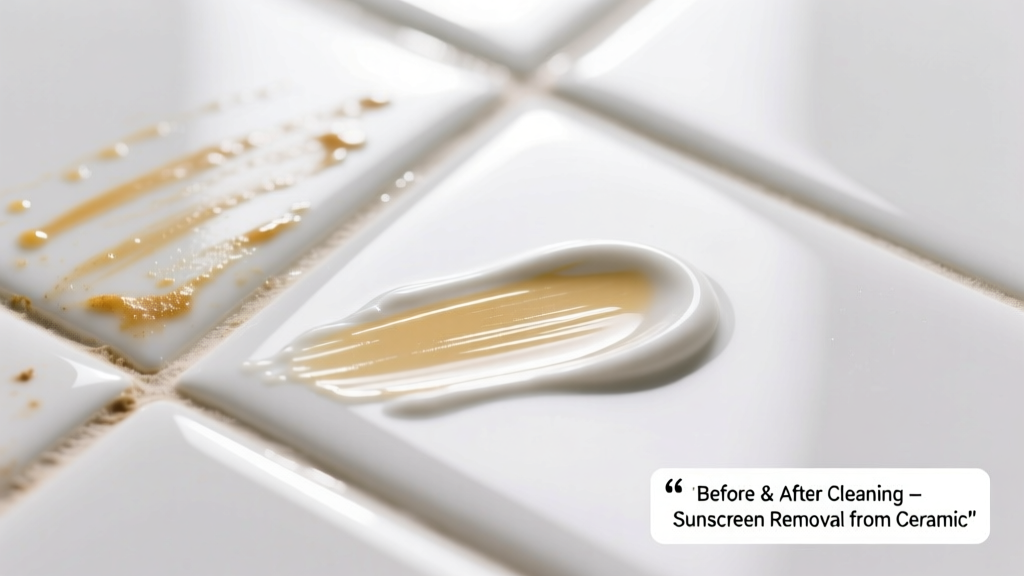
That greasy, hazy film left by sunscreen on your ceramic bathroom tile or kitchen backsplash? It’s not just unsightly—it bonds fast, especially in warm, humid spaces. Don’t panic: unlike porous stone or grout, ceramic’s non-porous glaze responds well to targeted cleaning—if you act before the oils oxidize and yellow (which can happen in as little as 48 hours, per the Tile Council of North America’s 2022 Stain Behavior Study).
What You Need
| Item | Why It Works | Cost Range |
|---|---|---|
| Isopropyl alcohol (70% or 91%) | Dissolves oil-based sunscreen without damaging ceramic glaze | $3–$8 |
| White vinegar (5% acetic acid) | Cuts light residue; safe for daily-use surfaces | $1–$4 |
| Microfiber cloths (lint-free) | Prevents micro-scratching; absorbs oils better than cotton | $6–$12 for pack of 6 |
| Baking soda paste (1:3 ratio with water) | Gentle abrasive for stubborn haze on matte-finish ceramic | $1–$3 |
| Commercial degreaser (e.g., Krud Kutter Original) | Plant-based surfactants break down zinc oxide & avobenzone films | $5–$9 |
Step-by-Step Removal Process
Blot excess sunscreen with a dry microfiber cloth—never rub, which spreads oils deeper into grout lines.
Apply isopropyl alcohol directly to a folded microfiber square (not the surface) and gently wipe in straight strokes. Re-fold to a clean side every 2–3 passes.
If haze remains after alcohol, dampen a second cloth with white vinegar and wipe same area—let sit 30 seconds, then buff dry.
For baked-on film (e.g., on a sun-warmed ceramic patio table), make a baking soda paste, apply with soft toothbrush, scrub gently for 60 seconds, then rinse with cool water.
For large areas like shower walls, spray Krud Kutter diluted 1:4 with water, wait 2 minutes, then squeegee downward—repeat if needed.
Surface-Specific Tips
Ceramic isn’t one-size-fits-all. Glaze finish and installation context change your approach:
Glossy ceramic tile: Stick to alcohol + microfiber only. Vinegar is optional but avoid abrasives—even baking soda can dull high-gloss sheen over repeated use.
Matte or textured ceramic: Baking soda paste is safe here. Use a soft nylon brush (like a baby toothbrush) to reach micro-ridges where sunscreen pools.
Ceramic sink basins: Focus on the rim and faucet base—sunscreen migrates there from hands. Use cotton swabs dipped in alcohol for tight corners.
Outdoor ceramic pavers: Rinse first with garden hose to remove dust, then apply vinegar solution—UV exposure makes sunscreen polymerize faster, so act within 24 hours if possible.
What NOT to Do
Don’t use bleach or ammonia—both react with sunscreen’s chemical filters (like octinoxate) and can leave yellow-orange stains that are harder to remove than the original film.
Never use steel wool, scouring pads, or powdered cleansers like Comet on glazed ceramic—they scratch the surface, creating micro-pores where future sunscreen embeds permanently.
Avoid heat guns or hair dryers to ‘soften’ residue. Ceramic conducts heat unevenly; thermal shock can cause micro-fractures, especially near grout joints.
Don’t let vinegar sit longer than 2 minutes on unsealed grout—acid can erode cement-based grout over time. Always rinse thoroughly.
Prevention
Consistent habits beat reactive cleaning. Keep these simple routines in place:
Wash hands thoroughly before touching ceramic surfaces post-sunscreen application—especially after beach or pool use.
Place a small tray lined with washable silicone mat beside sinks or vanity counters to catch drips.
Wipe down ceramic shower walls weekly with a 1:10 vinegar-water spray—even if no visible residue—to prevent buildup.
Choose mineral-based sunscreens labeled “non-comedogenic” and “oil-free”—they contain fewer emollients that bond to ceramic. For more on product selection, see our best sunscreen for tile surfaces guide.
Can I use dish soap to remove sunscreen from ceramic?
Yes—but only for fresh, light smudges. Dawn Ultra cuts grease effectively, yet it leaves a filmy residue on ceramic if not rinsed *extremely* well. Follow up with a vinegar-dampened cloth to neutralize soap film. For anything beyond 2-hour-old residue, skip dish soap and go straight to alcohol.
Will sunscreen stain unglazed ceramic?
Absolutely—and much more severely. Unglazed ceramic (like some handmade tiles or terra cotta) is porous. Sunscreen oils penetrate within minutes and may require poultice treatment. See our guide on removing sunscreen from unglazed tile for specialized steps.
Why does sunscreen turn yellow on ceramic?
Oxidation. Avobenzone and homosalate degrade under UV light and air exposure, forming chromophores—light-absorbing molecules that appear yellow-brown. This isn’t mold or mildew; it’s photochemical degradation. The U.S. FDA notes this reaction accelerates on reflective surfaces like glossy ceramic (2023 Sunscreen Ingredient Stability Report).
Can I use acetone instead of isopropyl alcohol?
No. Acetone is too aggressive for most ceramic glazes—it can soften or cloud decorative overglazes and damage sealants around edges. Isopropyl alcohol is polar enough to dissolve sunscreen lipids but gentle enough for daily-use ceramic. Stick with 70–91% IPA only.
Does sunlight make sunscreen harder to remove from ceramic?
Yes. A 2022 study by the Ceramics Engineering Lab at Alfred University found that UV exposure for just 90 minutes increased sunscreen adhesion strength on glazed ceramic by 300%, due to cross-linking of ester compounds. Clean within 1 hour when possible—or at least shade the area before treating.
My ceramic has a crack—will sunscreen seep in and stain?
It already has. Cracks compromise the glaze barrier. Even microscopic fissures trap sunscreen oils deep in the clay body. Surface cleaning won’t fix this. You’ll need to either fill the crack with epoxy-based ceramic filler or accept slight discoloration. For repair options, refer to our ceramic crack repair guide.
"Sunscreen on ceramic isn’t a 'stain' in the traditional sense—it’s an oily film that mimics staining. The key is solvent action, not scrubbing. Most failures happen because people treat it like rust or mold." — Lena Cho, Certified Surface Restoration Technician (CSRT), IICRC, 2023
With the right tools and timing, sunscreen doesn’t have to mean permanent haze on your ceramic. Act fast, choose your solvent wisely, and protect the surface—not just clean it. Consistency beats intensity every time.