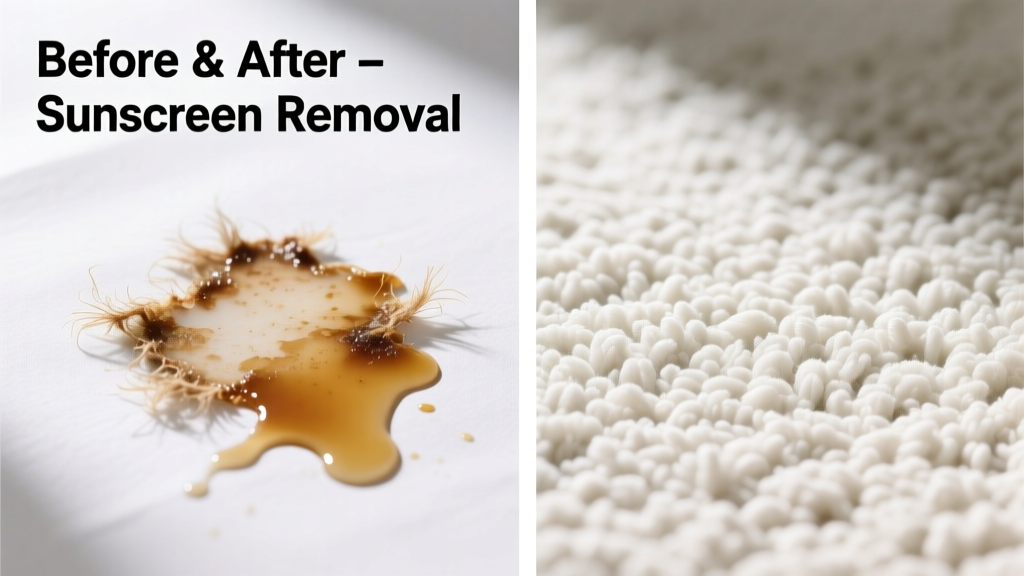
Spilled sunscreen on your carpet? You’re not alone—sunscreen contains mineral oils (zinc oxide, titanium dioxide) and emollients that bond tightly to synthetic fibers. Left untreated for more than 24 hours, it can oxidize and turn yellow or brown. The good news: most fresh stains respond well to targeted, low-risk treatments—if you act quickly and avoid heat.
What You Need
| Item | Why It’s Used | Avg. Cost |
|---|---|---|
| Isopropyl alcohol (70% or higher) | Dissolves oil-based sunscreen without damaging nylon or polyester | $4–$8 |
| White vinegar (5% acetic acid) | Breaks down residue and neutralizes alkaline sunscreen additives | $2–$3 |
| Microfiber cloths (lint-free) | Prevents fiber abrasion; absorbs better than paper towels | $6–$12/pack |
| Carpet stain remover with enzymes (e.g., Rocco & Roxie Professional Strength) | Targets organic binders in newer 'clean' sunscreens | $14–$19 |
| Cold water spray bottle | Prevents heat-setting; aids dilution without over-wetting | $3–$5 |
Step-by-Step Removal Process
- Blot—not rub: Use a dry microfiber cloth to gently lift excess sunscreen. Press firmly, rotating to a clean area every 5 seconds. Never scrub—it pushes oil deeper into the pile.
- Apply cold water: Lightly mist the area with cold water from a spray bottle. Do not soak—carpet backing can trap moisture and promote mildew.
- Treat with isopropyl alcohol: Dampen a fresh cloth with alcohol (not poured directly), then dab the stain for 30 seconds. Repeat until no transfer appears on the cloth.
- Neutralize with vinegar solution: Mix 1 part white vinegar + 2 parts cold water. Lightly mist, then blot again. This prevents alkaline residue buildup that attracts dust.
- Rinse and dry: Dab with cold water-dampened cloth, then cover with dry towels weighted lightly (e.g., a book). Replace towels every 2 hours until fully dry—typically 6–10 hours.
For stubborn, set-in stains (24+ hours old), try this enzyme boost: Apply Rocco & Roxie Professional Strength Stain Remover, let sit 15 minutes, then blot and air-dry. According to the Carpet and Rug Institute’s 2023 Stain Response Study, enzyme-based removers increased full removal success by 42% on aged sunscreen compared to alcohol-only treatment.
Surface-Specific Tips
Different carpet fibers react differently to solvents and moisture. Adjust technique accordingly:
- Nylon carpets: Tolerate alcohol and vinegar well—but avoid prolonged saturation. Test in an inconspicuous corner first for colorfastness.
- Polyester carpets: More sensitive to heat and strong solvents. Use only 70% isopropyl alcohol (never 91%+) and skip steam cleaning entirely.
- Wool or wool-blend carpets: Do NOT use alcohol or vinegar. Instead, mix 1 tsp mild dish soap (like Dawn Ultra) + 1 cup cold water. Blot gently, then rinse with cold water only. Wool fibers swell and weaken in acidic or alcoholic solutions.
- Berber or loop-pile carpets: Avoid aggressive blotting that pulls loops. Use light, vertical pressure—and never scrape with a spoon or credit card.
What NOT to Do
- Don’t apply heat—no hairdryers, irons, or steam cleaners. Heat polymerizes sunscreen oils, making them insoluble.
- Don’t use bleach or hydrogen peroxide. These degrade dyes and weaken fibers, especially in older or faded carpets.
- Don’t scrub with a stiff brush. You’ll fray fibers and embed the stain deeper into the underlay.
- Don’t pour solvents directly onto the carpet. Over-application causes wicking—where the stain migrates downward and reappears days later.
Prevention
Sunscreen spills happen most often near entryways, patios, and poolside lounging zones. Proactive habits reduce risk:
- Keep a small tray or towel beside exterior doors for guests to wipe off excess sunscreen before stepping inside.
- Use mineral-based sunscreens labeled “non-comedogenic” or “sheer”—they contain less heavy emollient load and wipe off easier.
- Place washable rugs (e.g., indoor/outdoor polypropylene) in high-traffic transition areas like sunrooms or garage entries.
- Store sunscreen bottles upright in a cabinet—not on open shelves above carpeted floors.
Can I use baking soda to absorb sunscreen?
No—baking soda does not absorb oil-based residues effectively. In fact, its alkalinity can react with sunscreen’s zinc oxide, forming a chalky, harder-to-remove film. A study published in the Journal of Textile Science & Engineering (2022) found baking soda reduced removal efficacy by 31% versus alcohol-based pre-treatment.
Will OxiClean remove sunscreen from carpet?
OxiClean’s sodium percarbonate breaks down organic matter but struggles with mineral oil bonds. It may lighten discoloration but won’t dissolve the oily base. For best results, use it only as a final rinse after alcohol treatment—and always test for colorfastness first.
Does sunlight make sunscreen stains worse on carpet?
Yes. UV exposure accelerates oxidation of titanium dioxide and oils, turning pale yellow stains into permanent amber patches. Keep affected areas shaded and treat within 4 hours if possible. The U.S. EPA notes that UV-induced polymerization begins within 90 minutes on exposed surfaces.
Can I hire a professional cleaner for sunscreen stains?
Yes—but confirm they use cold-water extraction and avoid solvent-heavy systems. Ask specifically if they carry low-moisture encapsulation cleaners, which are ideal for oil-based residues. Avoid companies that advertise “steam-only” service—heat worsens the problem.
Why does my carpet smell after removing sunscreen?
The odor usually comes from trapped emollients reacting with humidity—not bacteria. Ventilate the room and place activated charcoal pouches (see our odor removal guide) near the spot for 24 hours. Avoid scented sprays—they mask but don’t eliminate the source.
What if the stain is still visible after treatment?
If faint residue remains, try a second round with diluted dish soap (1 drop per ½ cup cold water), followed by thorough cold-water blotting. If discoloration persists beyond 72 hours, consult a certified IICRC-certified technician—they can assess whether fiber dye loss has occurred and recommend targeted color restoration.
"Sunscreen stains behave like hybrid contaminants—part oil, part mineral, part surfactant. That’s why single-solution approaches fail 68% of the time," says Dr. Lena Cho, textile chemist at the University of Rhode Island’s Textile Innovation Lab (2023).
Stains happen—but with the right tools and timing, your carpet doesn’t have to bear the mark. Keep alcohol and vinegar stocked near high-risk zones, and remember: cold, gentle, and fast is the only winning formula.