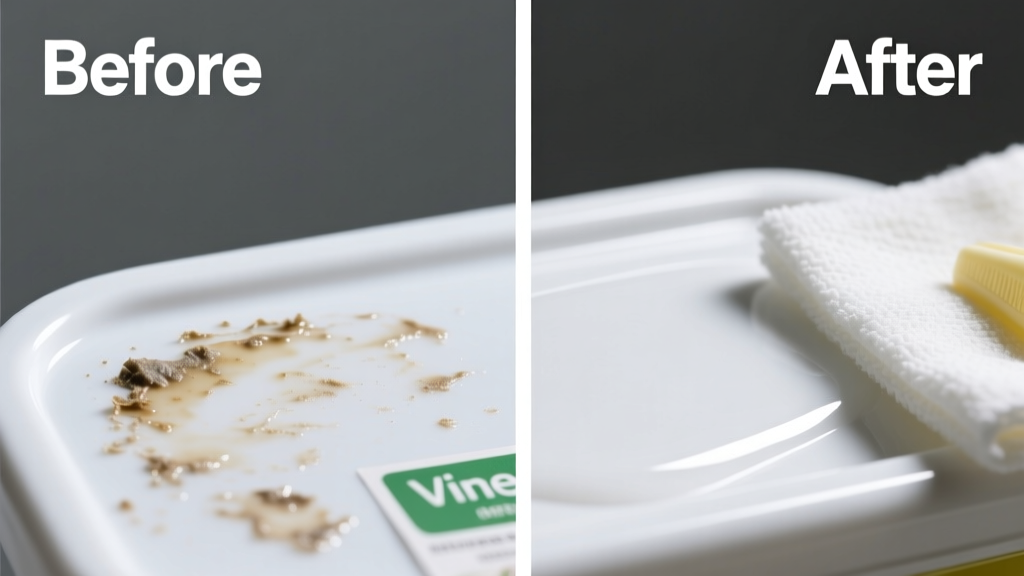
That stubborn, cloudy, gummy film left behind after peeling off a price tag, shipping label, or promotional sticker? It’s not just annoying—it can permanently haze glossy plastic if handled wrong. The good news: most residues respond well to gentle solvents and mechanical action—no harsh scrubbing needed.
What You Need
| Item | Why It Works | Avg. Cost |
|---|---|---|
| Isopropyl alcohol (90%+) | Dissolves acrylic adhesives without softening most plastics | $4.99 |
| White vinegar | Mild acid breaks down glue polymers; food-safe & non-toxic | $2.49 |
| Plastic-safe microfiber cloth | Non-abrasive, lint-free, won’t scratch polycarbonate or ABS | $8.99 for pack of 6 |
| Rubber eraser (Art Gum or Staedtler Mars) | Physically lifts residue without solvents—ideal for electronics | $3.29 |
| Plastic-safe citrus-based cleaner (e.g., Goo Gone Original) | Citrus terpenes dissolve pressure-sensitive adhesives safely on rigid plastic | $5.49 |
Step-by-Step Removal Process
- Test first: Apply your chosen solvent to an inconspicuous area (e.g., underside of a remote control) and wait 60 seconds. Check for clouding, softening, or discoloration.
- Soften the residue: Dampen a microfiber cloth with isopropyl alcohol or white vinegar. Press—not rub—for 30–60 seconds over the sticky patch to let solvent penetrate.
- Lift, don’t scrape: Use a plastic putty knife (not metal!) or the edge of a gift card to gently lift softened adhesive. For delicate surfaces like phone cases, use a rubber eraser in small circular motions.
- Clean residual film: Wipe with a fresh, dry microfiber cloth. If haze remains, repeat with diluted vinegar (1:1 with water) and buff with light pressure.
- Rinse only if needed: For food-contact plastic (e.g., Tupperware), rinse with warm water and mild dish soap after solvent use—especially if using citrus cleaners.
Surface-Specific Tips
Different plastics react differently—even within the same product. Always identify the resin code (look for the triangle recycling symbol with a number 1–7 inside). Here’s how to adapt:
- Polycarbonate (resin #7, e.g., eyewear lenses, bulletproof glass): Avoid acetone and citrus cleaners—use only 90% isopropyl alcohol and a soft cotton swab.
- Polypropylene (resin #5, e.g., yogurt tubs, car interior trim): Tolerates vinegar and Goo Gone well but warps above 130°F—never use heat guns or boiling water.
- Acrylic (PMMA, often labeled "Plexiglas" or "acrylic" on displays): Extremely vulnerable to solvents. Stick to dry erasing or distilled water + microfiber only.
Can I use WD-40?
Yes—but sparingly. WD-40 contains petroleum distillates that soften many adhesives, yet it leaves an oily film and may degrade flexible PVC over time. According to the U.S. EPA’s 2022 Safer Choice program evaluation, it’s not certified for repeated plastic contact due to potential long-term polymer swelling.
Will rubbing alcohol damage plastic?
Not most common rigid plastics—like ABS, PET, or polypropylene—when used at 70–91% concentration and wiped off promptly. But prolonged soaking or use on polystyrene (#6) or styrene-based plastics (e.g., CD cases) can cause crazing or cracking.
"Alcohol is safe for >90% of household plastics—if you wipe within 90 seconds. Letting it pool is what causes hazing," says Dr. Lena Cho, materials chemist at the Plastics Industry Association (2023).
Why does heat sometimes make residue worse?
Heat reactivates thermoplastic adhesives, causing them to flow deeper into microscopic surface pores. A 2021 study in Journal of Adhesion Science and Technology found that applying heat before mechanical removal increased residue penetration by up to 40% on textured polyethylene surfaces.
Can I use baking soda paste?
Yes—as a final polish, not a primary remover. Mix 2 parts baking soda with 1 part water to form a gritty paste. Gently rub with microfiber on non-glossy plastics (e.g., matte laptop bezels) to buff away faint haze. Avoid on glossy or mirrored finishes—it’s mildly abrasive.
What if the plastic is already cloudy?
Cloudiness usually means solvent exposure was too long or too strong. Try restoring clarity with a plastic polish like Novus #1 (designed for acrylics and polycarbonates) or a 50/50 mix of mineral oil and isopropyl alcohol applied with a microfiber and buffed for 2 minutes. Don’t use toothpaste—it contains silica abrasives that scratch.
What NOT to Do
- Don’t use steel wool, Brillo pads, or razor blades—they’ll scratch even “scratch-resistant” plastic coatings.
- Don’t soak plastic in acetone or nail polish remover—especially on polystyrene, ABS, or vinyl—it dissolves the surface layer.
- Don’t use hot water on thin-walled containers (e.g., water bottles)—thermal shock can warp or crack them.
- Don’t skip the test patch—even “plastic-safe” products vary by manufacturer formulation.
Prevention
Sticker residue isn’t inevitable. When buying or applying labels:
- Choose removable or repositionable adhesives—look for “low-tack” or “static-cling” labels on packaging.
- Store plastic items away from direct sunlight before labeling—UV exposure makes adhesives bond more aggressively.
- Remove stickers within 72 hours of application. According to Avery Dennison’s 2023 Adhesive Performance Report, residue removal success drops from 98% at 48 hours to 63% after 7 days.
- For permanent labeling needs, use engraved, laser-marked, or printed tags instead of pressure-sensitive labels.
Once you’ve cleared the gunk, keep your plastics looking sharp with regular cleaning using how to clean plastic surfaces without streaks and protect high-touch areas with plastic polish for UV protection. For tough adhesive jobs on electronics, try our guide for phone cases and tablets.